Giriraj Singh hails Vikram-1 launch as India's private space leap
Synopsis
Union Textiles Minister Giriraj Singh hailed the successful launch of Vikram-1 — India's first privately developed orbital rocket by Skyroot Aerospace — from Sriharikota on 18 July 2026, calling it proof of private sector strength in space and a new milestone for Atmanirbhar Bharat.
Key Takeaways
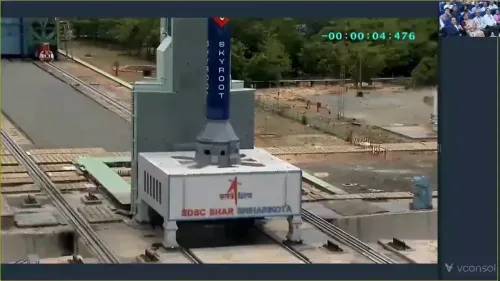
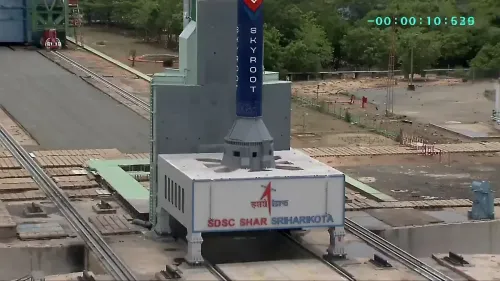
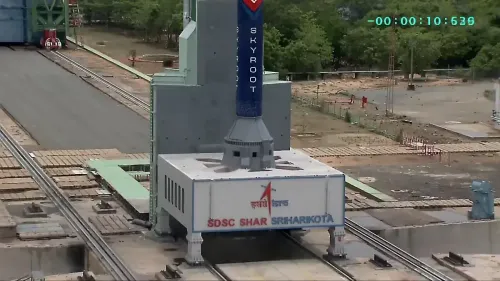
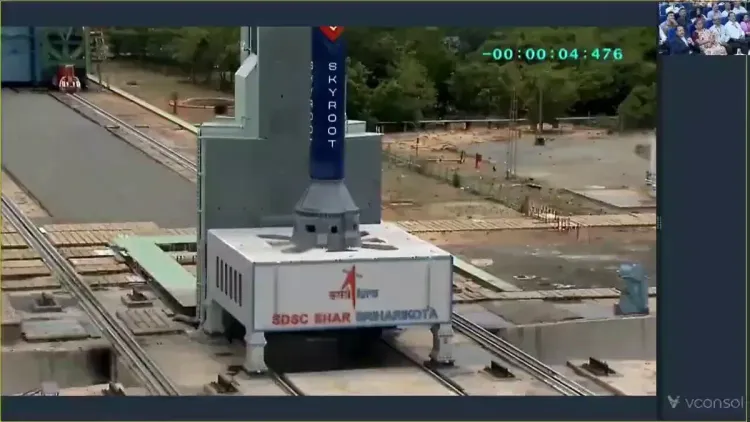
Vikram-1 , India's first privately developed orbital rocket by Skyroot Aerospace , was successfully launched from Sriharikota on 18 July 2026 under #MissionAagaman .
Union Textiles Minister Giriraj Singh stated that India has become the third country in the world after the United States and China to achieve a privately developed orbital launch.
The launch is expected to enable faster and lower-cost satellite deployments for domestic and international customers.
Skyroot Aerospace , founded in 2018 and based in Hyderabad , developed the Vikram series of small satellite launch vehicles.
The milestone is a direct outcome of India's 2020 space sector liberalisation through IN-SPACe , which opened orbital launch activities to private players.
Singh linked the success to the Atmanirbhar Bharat framework, calling it 'the new flight of self-reliant India.'
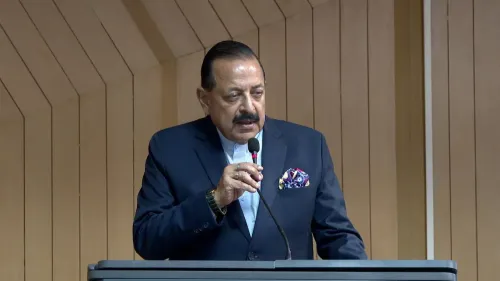
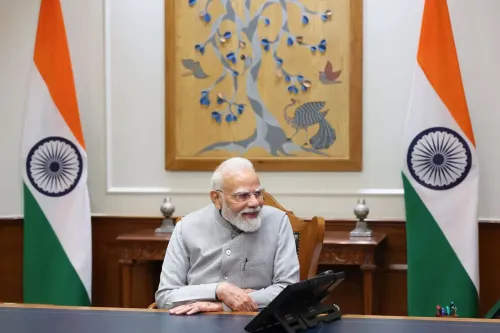
Union Textiles Minister Giriraj Singh on Saturday, 18 July 2026, took to X to celebrate the successful launch of Vikram-1, India's first privately developed orbital rocket, built by Hyderabad-based Skyroot Aerospace and lifted off from Sriharikota under #MissionAagaman. Singh described the milestone as proof of the growing strength of private participation in India's space sector and hailed it as 'the new flight of Atmanirbhar Bharat.'
Context
In his post, Singh wrote: 'Bharat ke pehle niji orbital rocket Vikram-1 ko aaj Sriharikota se safaltapoorvak launch kiya gaya' — 'India's first private orbital rocket Vikram-1 was successfully launched today from Sriharikota.' He noted that with this achievement, India has become the third country in the world after the United States and China to demonstrate a privately developed orbital launch capability. The minister added that satellites can now be sent to space faster and at lower cost, opening new commercial avenues.
Singh specifically congratulated the full team at Skyroot Aerospace, calling the feat a symbol of 'the talent, resolve, and entrepreneurial spirit of our youth.' He linked the success directly to reforms in the space sector that, in his words, are 'continuously advancing innovation, startups, and new opportunities.'
Policy Backdrop
The launch is the most visible outcome yet of India's 2020 space sector liberalisation, when the government created IN-SPACe — the Indian National Space Promotion and Authorisation Centre — to regulate and enable non-government entities to undertake launch vehicle and satellite activities alongside ISRO. That structural shift mirrored the global pivot toward commercial launch services and was explicitly framed within the Atmanirbhar Bharat self-reliance framework.
Skyroot Aerospace, founded in 2018, has been developing its Vikram series of small satellite launch vehicles since inception. Sriharikota, located on the Andhra Pradesh coast, houses ISRO's Satish Dhawan Space Centre — India's primary orbital launch facility — and provided the infrastructure base for the private mission. The Vikram-1 orbital flight marks a step beyond earlier sub-orbital demonstrations by Indian private players.
Stakeholders and Impact
The successful orbital launch directly benefits domestic and international satellite operators seeking faster, cost-competitive launch options. Small satellite constellations for earth observation, communications, and IoT applications are among the primary customers that private launch services like Vikram-1 are designed to serve. Lower launch costs and shorter lead times could make India a more competitive player in the global commercial launch market.
For India's growing space startup ecosystem, the milestone provides a proof-of-concept that could attract fresh venture capital and government support. IN-SPACe's authorisation framework is expected to face increased demand as peer startups seek similar clearances for their own launch programmes. The broader Atmanirbhar Bharat push gains a high-profile demonstration that indigenous, non-state aerospace capability is now operationally real.
What's Next
Attention will now shift to whether Skyroot Aerospace can convert this milestone into a regular commercial launch cadence and announce its first paying orbital payload customers. Observers will also watch for any revisions to the Indian Space Policy or the IN-SPACe authorisation framework that could further streamline private missions. Peer startups working on competing launch vehicles are likely to accelerate their own timelines, signalling that India's private space sector is entering a more competitive phase.
Point of View
While from a minister outside the space portfolio, reflects the BJP government's broader strategy of associating Atmanirbhar Bharat with tangible technological firsts — using every milestone to reinforce the self-reliance narrative ahead of electoral cycles. The framing of India as the 'third country' after the US and China is politically significant, positioning the country as a peer in the global space economy rather than a follower. The emphasis on youth entrepreneurship also signals an attempt to connect space policy to the jobs-and-innovation discourse that resonates with urban, aspirational voters. If Skyroot converts this launch into a commercial cadence, it will validate the IN-SPACe liberalisation model and likely invite further deregulation.
NationPress
18 Jul 2026
Frequently Asked Questions
What is Vikram-1 and who made it?
Vikram-1 is India's first privately developed orbital rocket, built by Hyderabad-based startup Skyroot Aerospace, which has been developing the Vikram series of small satellite launch vehicles since its founding in 2018.
Where was Vikram-1 launched from?
Vikram-1 was launched from Sriharikota in Andhra Pradesh, which houses ISRO's Satish Dhawan Space Centre — India's primary orbital launch facility.
What is Mission Aagaman?
Mission Aagaman is the name given to the Vikram-1 orbital launch mission by Skyroot Aerospace, which took place on 18 July 2026 from Sriharikota.
Which countries have private orbital rockets besides India?
According to Union Minister Giriraj Singh's post, India is now the third country after the United States and China to have a privately developed orbital rocket successfully launched.
What is IN-SPACe and how does it relate to Vikram-1?
IN-SPACe, the Indian National Space Promotion and Authorisation Centre, was set up in 2020 to regulate and enable private companies to conduct launch vehicle and satellite activities in India — the regulatory framework that made the Vikram-1 private orbital mission possible.