Giriraj Singh Inaugurates Indian Cotton Summit 2026 in Nagpur
Synopsis
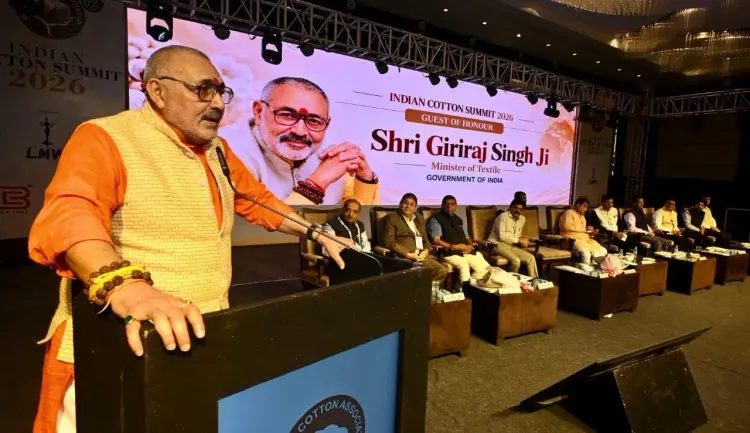
Union Textiles Minister Giriraj Singh and Union Minister Nitin Gadkari inaugurated the Indian Cotton Summit 2026 in Nagpur on 26 September 2026, focusing on cotton productivity, farmer income, sustainable cultivation and strengthening India's full textile value chain under the Atmanirbhar Bharat framework.
Key Takeaways
Indian Cotton Summit 2026 was inaugurated in Nagpur on 26 September 2026 by Union Textiles Minister Giriraj Singh and Union Minister Nitin Gadkari .
The summit focused on four pillars: cotton productivity enhancement, farmer income strengthening, sustainable farming promotion, and full value chain integration.
India became the world's largest cotton producer after Bt cotton adoption in 2002 , but per-hectare yields have since stagnated relative to global peers.
The Production Linked Incentive scheme for textiles (announced 2021 ) and the Atmanirbhar Bharat framework ( 2020 ) form the existing policy backbone the summit builds upon.
Nagpur , gateway to the distressed Vidarbha cotton belt, was chosen as host city, lending the summit direct regional significance for cotton-farming communities.
Follow-up policy actions — productivity schemes, sustainability pilots and potential budget allocations — will determine the summit's real-world impact.
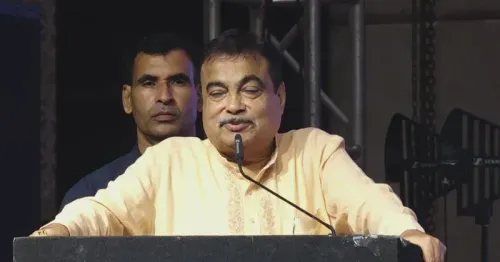
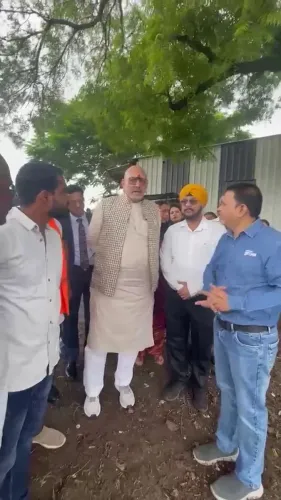
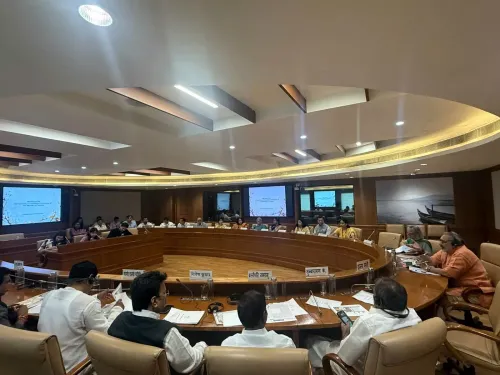
Cotton — the fibre that clothes hundreds of millions and sustains livelihoods across India's most vulnerable farm belts — took centre stage in Nagpur on Saturday, 26 September 2026, as Union Textiles Minister Giriraj Singh joined Union Minister Nitin Gadkari to inaugurate the Indian Cotton Summit 2026, signalling a focused governmental push to reshape India's most strategically important agricultural-industrial chain.
Posting after the ceremony, Giriraj Singh described cotton as hamare kisanon ki mehnat, desh ki arthvyavastha aur textile udyog ki mazboot neenv — 'the hard work of our farmers, the backbone of the nation's economy, and the strong foundation of the textile industry.' The Summit, he said, placed special emphasis on four pillars: raising cotton productivity, strengthening farmer income, promoting sustainable cultivation, and fortifying the entire value chain from field to finished fabric.
Why Nagpur, and Why Now
Nagpur is no accidental venue. The city sits at the heart of Vidarbha, India's most distressed cotton belt, where agrarian debt and erratic yields have defined rural life for decades. Holding a national summit here places policymakers physically inside the problem they seek to solve. The presence of Nitin Gadkari, whose political base is the region and who has long championed rural infrastructure investment, amplified that signal considerably.
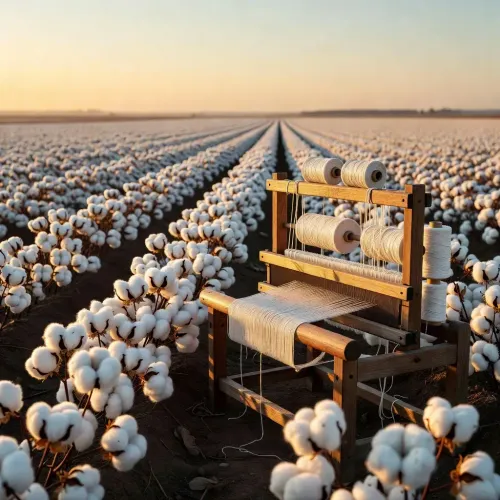
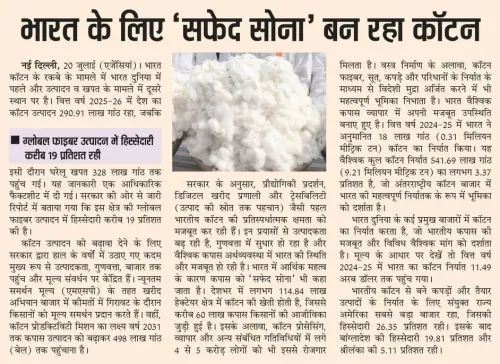
India's relationship with cotton is one of scale and contradiction. The country became the world's largest cotton producer following the introduction of Bt cotton technology in 2002, with output rising sharply in the years that followed. Yet productivity per hectare has stagnated relative to global peers, sustainable farming adoption remains uneven, and the fibre-to-garment value chain has historically leaked value abroad rather than capturing it domestically.
The Policy Scaffolding Behind the Summit
The Summit arrives on the back of a series of structural interventions. The Production Linked Incentive scheme for textiles, announced in 2021, was designed to attract large-scale investment into domestic manufacturing — specifically targeting segments where India was import-dependent. That scheme forms part of the broader Atmanirbhar Bharat self-reliance framework launched in 2020, which explicitly identified textiles and cotton as sectors where domestic capacity needed to be deepened rather than offset by imports.
Giriraj Singh's statement connected these threads directly: a 'strong cotton ecosystem,' he argued, will carry India 'to new heights in the global textile sector' and give momentum to the Atmanirbhar Bharat resolve. The framing is deliberate — cotton positioned not merely as a farm commodity but as a sovereign industrial asset.
From Field to Factory: The Value Chain Imperative
The summit's emphasis on the 'entire value chain' reflects a hard lesson absorbed over years. India exports raw cotton and imports value-added textile products — a pattern that suppresses farmer realisation and inflates the import bill simultaneously. Integrating ginning, spinning, weaving, processing and garmenting into a coherent domestic chain, while shifting cultivation toward sustainable practices, is the policy ambition this summit is designed to accelerate.
For cotton farmers, income enhancement is inseparable from yield improvement and market access. The structural fix — higher productivity through better seed technology, precision inputs and water management — requires exactly the coordinated industry-government action the Summit is intended to catalyse. The commitments articulated in Nagpur now face their real test: whether specific productivity schemes, sustainability pilots or budgetary allocations follow before the next Union Budget cycle closes.
Point of View
Suggesting cotton is being consciously plugged into the Atmanirbhar Bharat playbook. The real policy test will be whether summit rhetoric translates into traceable budget lines and measurable yield improvements before the next election cycle.
NationPress
27 Sept 2026
Frequently Asked Questions
What is the Indian Cotton Summit 2026?
The Indian Cotton Summit 2026 is a national-level summit inaugurated in Nagpur on 26 September 2026, focused on improving cotton productivity, increasing farmer incomes, promoting sustainable cultivation, and strengthening India's fibre-to-garment textile value chain.
Who inaugurated the Indian Cotton Summit 2026?
Union Textiles Minister Giriraj Singh and Union Minister Nitin Gadkari jointly inaugurated the Indian Cotton Summit 2026 in Nagpur.
Why was Nagpur chosen for the Cotton Summit?
Nagpur is the gateway to Vidarbha, one of India's most prominent and historically distressed cotton-growing belts, making it a symbolically and logistically relevant venue for a summit aimed at cotton farmers and the textile industry.
What is India's position in global cotton production?
India became the world's largest cotton producer following the introduction of Bt cotton technology in 2002, though per-hectare productivity has since stagnated compared to leading global cotton-producing nations.
How does the Cotton Summit connect to Atmanirbhar Bharat?
Giriraj Singh explicitly linked the summit's goals to the Atmanirbhar Bharat self-reliance initiative launched in 2020, arguing that a strong domestic cotton ecosystem will help India capture more value in global textile trade and reduce import dependence.