Giriraj Singh Hails India's 154 GW Solar Milestone
Synopsis
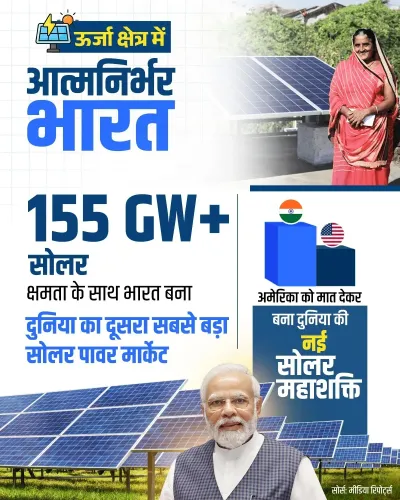
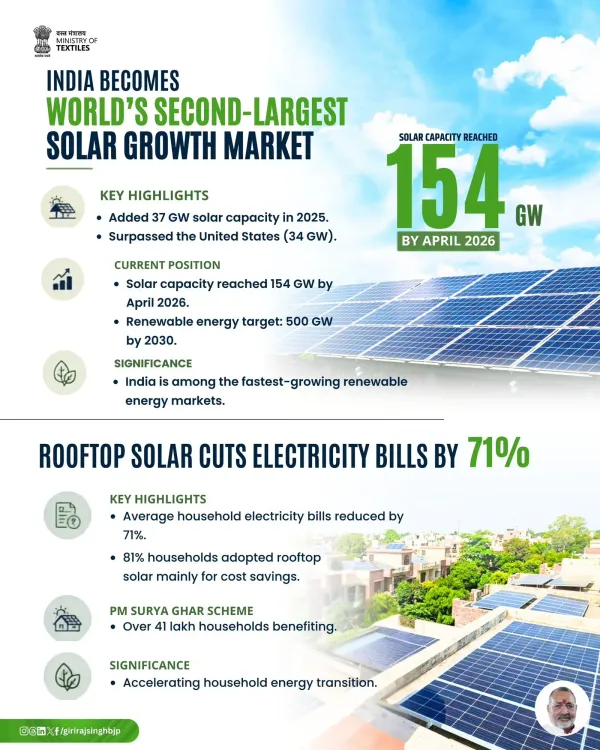
Union Textiles Minister Giriraj Singh on 11 June 2026 lauded India's 154 GW solar capacity and its rise as the world's second-largest solar development market, crediting PM Surya Ghar Yojana for cutting electricity costs for lakhs of households.
Key Takeaways
Giriraj Singh declared India the world's second-largest solar energy development market in a post dated 11 June 2026 .
India's installed solar capacity has reached 154 GW , according to the minister's post.
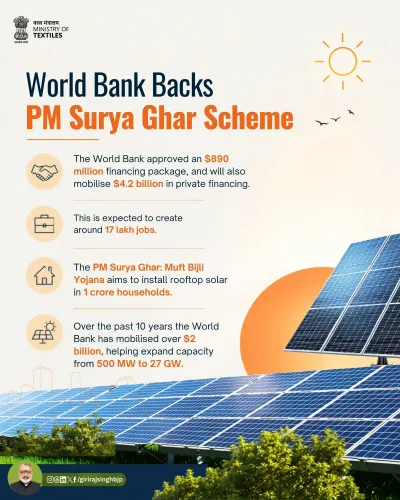
The PM Surya Ghar Muft Bijli Yojana , launched in 2024 , targets rooftop solar installation in one crore households .
The scheme has delivered a 'notable reduction' in electricity bills for lakhs of families , as stated by Singh.
India pledged 500 GW non-fossil fuel capacity by 2030 at COP26 in 2021 , providing the overarching policy target.
The Jawaharlal Nehru National Solar Mission (2010) laid the foundation for India's current solar scale-up.
Union Textiles Minister Giriraj Singh on Thursday, 11 June 2026, highlighted India's emergence as the world's second-largest solar energy development market, citing the country's 154 GW installed solar capacity and the measurable reduction in household electricity bills through the PM Surya Ghar Yojana as landmark achievements in the nation's clean energy journey.
Context
In his post, Singh wrote — 'विश्व का दूसरा सबसे बड़ा सौर ऊर्जा विकास बाजार बनना, 154 GW सौर क्षमता तक पहुँचना' ['Becoming the world's second-largest solar energy development market, reaching 154 GW solar capacity'] — framing these milestones as evidence of India's commitment to energy self-reliance and sustainable development. He added that the achievement is the result of 'effective policies, swift implementation, and the government's firm commitment to clean energy.'
The post, shared under hashtags including #PMSuryaGhar, #RenewableEnergy, and #ViksitBharat, reflects a broader effort by senior BJP leaders to amplify flagship government schemes across portfolios.
Policy Backdrop
India's solar ambitions trace back to the Jawaharlal Nehru National Solar Mission, launched in 2010, which set the foundation for grid-connected solar generation at scale. The trajectory accelerated after India pledged 500 GW of non-fossil fuel capacity by 2030 at COP26 in 2021, aligning domestic targets with international climate commitments.
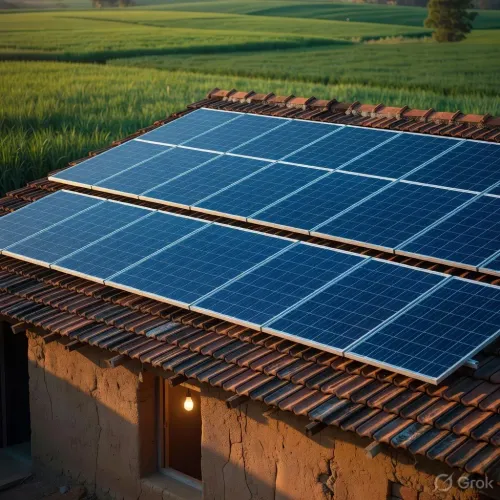
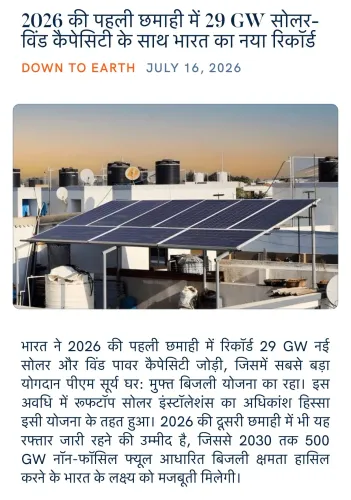
The PM Surya Ghar Muft Bijli Yojana, announced in 2024, shifted the policy emphasis toward distributed rooftop solar generation, targeting installation of rooftop systems in one crore households and providing subsidised electricity to reduce bills at the family level. The scheme is designed to simultaneously cut transmission losses and bring tangible savings to ordinary consumers.
Stakeholders and Impact
For households enrolled under PM Surya Ghar Yojana, the scheme promises a direct reduction in monthly electricity expenditure — a benefit Singh specifically highlighted as reaching 'lakhs of families' ['lakhon parivaron']. Renewable energy developers and distributed-generation installers stand to gain from continued policy support and subsidy disbursements.
The cross-sectoral promotion of clean-energy milestones by a Textiles Minister underscores the BJP government's strategy of using every ministerial platform to reinforce its flagship welfare and infrastructure programmes ahead of continued scrutiny on energy transition commitments.
What's Next
Quarterly capacity addition data from the Ministry of New and Renewable Energy will be closely tracked to verify whether the 154 GW solar milestone is sustained and expanded toward the 500 GW target by 2030. Parliamentary updates on PM Surya Ghar subsidy disbursements will indicate how effectively the rooftop solar rollout is reaching its intended one-crore-household goal.
As India advances toward its net-zero 2070 target, the pace of both utility-scale and distributed solar addition will serve as a key indicator of whether policy ambition is translating into durable energy self-reliance.
Point of View
Subsidy-driven scheme — suggests the messaging is calibrated as much for domestic electoral optics as for energy policy credibility. Reaching 154 GW and the second-largest market ranking, if verified by official data, would represent a significant acceleration from the 2010 baseline of the Jawaharlal Nehru National Solar Mission. The broader arc points to India repositioning itself from a climate-commitments laggard to an active clean-energy protagonist, with distributed rooftop generation now central to that narrative.
NationPress
14 Sept 2026
Frequently Asked Questions
What is PM Surya Ghar Yojana and who benefits from it?
PM Surya Ghar Muft Bijli Yojana is a central government scheme announced in 2024 that installs rooftop solar systems in one crore households and provides subsidised electricity, directly reducing monthly electricity bills for enrolled families.
Is India really the second-largest solar energy market in the world?
Union Textiles Minister Giriraj Singh claimed this in his post on 11 June 2026, citing 154 GW of installed solar capacity. Official quarterly data from the Ministry of New and Renewable Energy would provide verification.
What is India's solar capacity target by 2030?
India pledged 500 GW of non-fossil fuel capacity by 2030 at the COP26 climate summit in 2021, of which solar power is expected to form the largest share.
Why is the Textiles Minister talking about solar energy?
Senior BJP leaders routinely promote flagship government schemes across portfolios as part of a coordinated government communication strategy, even when the scheme falls outside their direct ministerial responsibility.
What was the Jawaharlal Nehru National Solar Mission?
The Jawaharlal Nehru National Solar Mission was launched in 2010 as India's flagship programme to scale up grid-connected solar power generation, forming the policy foundation for the country's current renewable energy ambitions.