Giriraj Singh: India-UK FTA Lifts Exports 8% to $2.43 Bn
Synopsis
Union Textiles Minister Giriraj Singh cited early data showing Indian exports to the UK rose 8% year-on-year to $2.43 billion in August-September 2026, framing the figures as the first positive signal from the India-UK Free Trade Agreement that entered negotiations in January 2022.
Key Takeaways
India's exports to the United Kingdom grew 8% year-on-year during August–September 2026 .
The export value reached $2.43 billion over the two-month period.
Union Textiles Minister Giriraj Singh attributed the growth to the India-UK Free Trade Agreement .
Formal India-UK FTA negotiations were launched in January 2022 , following intent signalled in 2021 .
The UK deal is part of India's broader strategy of pursuing FTAs, which also includes agreements with the UAE and Australia .
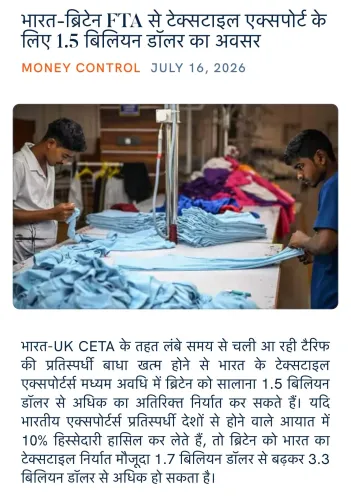
The textiles sector — under Giriraj Singh's ministry — is among the key Indian industries expected to benefit from expanded UK market access.
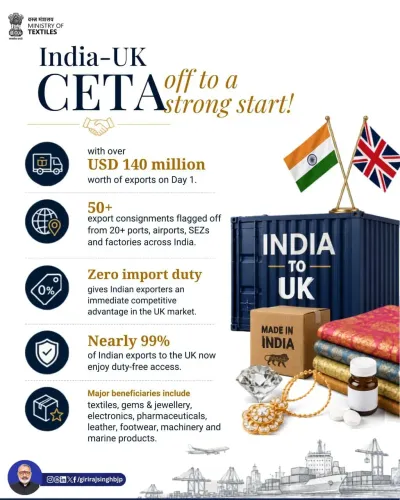
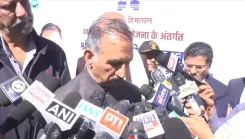
The numbers are starting to speak. Union Textiles Minister Giriraj Singh on Wednesday, October 21, 2026, cited early trade data suggesting the India-UK Free Trade Agreement is delivering measurable results — with Indian exports to the United Kingdom climbing 8% year-on-year during August–September 2026, reaching $2.43 billion.
Posting on X in Hindi, the Minister wrote: 'भारत-ब्रिटेन मुक्त व्यापार समझौते के सकारात्मक परिणाम दिखने लगे हैं' — 'The positive results of the India-UK Free Trade Agreement are beginning to show.' He called the uptick 'a positive beginning in the direction of expanding trade opportunities between both countries and giving new momentum to Indian exports.'
A deal years in the making — now claiming its first wins
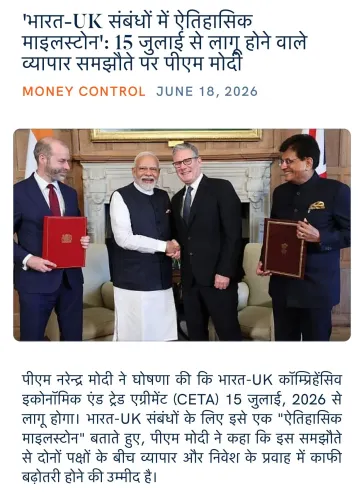
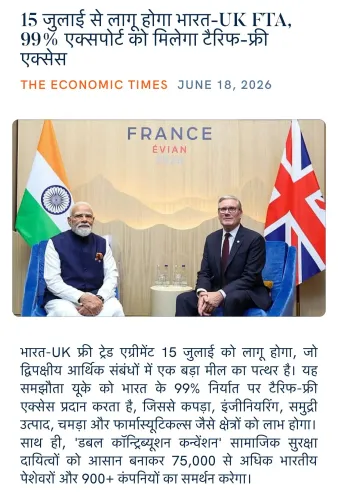
The India-UK FTA has had a long runway. Both governments signalled intent to pursue a bilateral pact during high-level meetings in 2021, and formal negotiations were formally launched in January 2022 — a milestone for the UK as it sought to establish new commercial relationships after leaving the European Union. The agreement sits within India's broader push to diversify export markets, a strategy that also produced deals with the UAE and Australia around the same period.
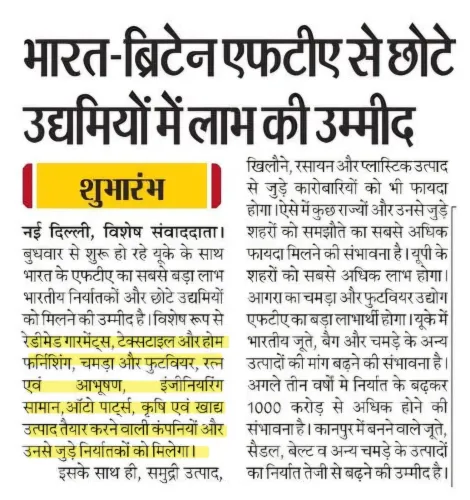
The 8% growth over two consecutive months marks one of the first sets of data points attributed to the pact's commercial impact. For context, India-UK trade had historically been constrained by tariff barriers that the FTA was designed to dismantle — giving Indian goods, including textiles, pharmaceuticals, and engineering products, improved access to British shelves.
Why textiles have a direct stake in this number
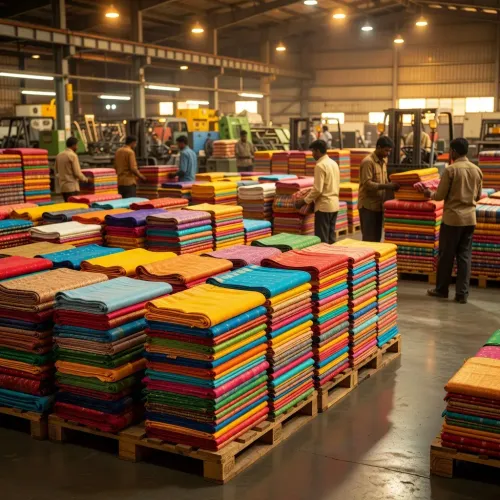
Giriraj Singh, as the minister responsible for India's textiles sector — one of the country's largest export industries and a major employer — has particular skin in this game. British consumers represent a significant market for Indian fabrics, garments, and home textiles. Any structural reduction in tariffs under the FTA would disproportionately benefit the very sector he oversees, which may explain why he is among the first cabinet voices to flag these early export figures publicly.
The broader pattern is clear: India has been deliberately threading itself into global value chains through trade agreements, and the UK deal is a critical stitch in that fabric. Two months of data do not make a trend — but $2.43 billion in just August and September is a baseline worth watching.
If subsequent monthly trade figures sustain or accelerate this trajectory, the India-UK FTA will move from diplomatic achievement to economic proof-of-concept — and the minister will have the receipts to show for it.
Point of View
Numbers-backed win for the Modi government's trade diplomacy at a time when India's export growth story needs reinforcing. The choice of the Textiles Minister, rather than the Commerce Ministry, to lead this messaging underscores how central the garment and fabric sector is to the FTA's political economy. This fits a larger pattern where India has used bilateral FTAs — with the UAE, Australia, and now the UK — to demonstrate that post-pandemic economic statecraft is delivering results on the ground. The key question going forward is whether this two-month uptick hardens into a structural export trend, or whether it reflects a short-term surge ahead of tariff-implementation windows.
NationPress
21 Oct 2026
Frequently Asked Questions
What is the India-UK Free Trade Agreement?
The India-UK Free Trade Agreement is a bilateral trade pact between India and the United Kingdom aimed at reducing tariffs and expanding market access for goods and services. Negotiations were formally launched in January 2022 after both governments signalled intent in 2021, following the UK's exit from the European Union.
How much have India's exports to the UK grown in 2026?
According to Union Textiles Minister Giriraj Singh, India's exports to the UK rose 8% year-on-year during August and September 2026, reaching a combined value of $2.43 billion for the two-month period.
Why did Giriraj Singh comment on India-UK trade figures?
As Union Textiles Minister, Giriraj Singh oversees one of India's largest export sectors, which stands to gain significantly from reduced UK tariffs under the FTA. He cited the August-September 2026 data as early evidence of the agreement's positive commercial impact.
Which other FTAs has India signed recently?
India signed Free Trade Agreements with the UAE and Australia around 2022 as part of its broader strategy to diversify export markets and integrate into global value chains. The India-UK FTA is part of the same diplomatic push.
What should we watch for next on the India-UK FTA?
Key indicators to track include subsequent monthly trade data for the UK market, any official updates on FTA ratification milestones, and announcements regarding specific tariff-reduction phases that will shape long-term export trajectories.