CM Sukhu to Congress rebels: 'Those with other interests can leave too'

Synopsis
Himachal Pradesh CM Sukhvinder Singh Sukhu publicly declared the Congress party has no interest in taking back legislators who defected, and openly dared those with 'other interests' to leave as well — a combative signal of confidence from the ruling party's top office.
Key Takeaways
CM Sukhu declared on October 21, 2026 that Congress does not want to take back MLAs who have already left the party.
He went further, openly inviting legislators with 'other interests' to also exit — an unusually aggressive public posture.
Congress has governed Himachal Pradesh since the December 2022 assembly elections; its legislative majority has been periodically questioned.
India's Tenth Schedule (anti-defection law, 1985) provides constitutional tools against defections, but their application in state politics has had mixed results.
The statement signals Sukhu's confidence in the party's numbers while setting a clear discipline benchmark ahead of the next assembly session.
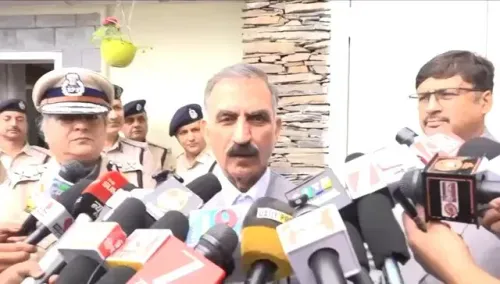
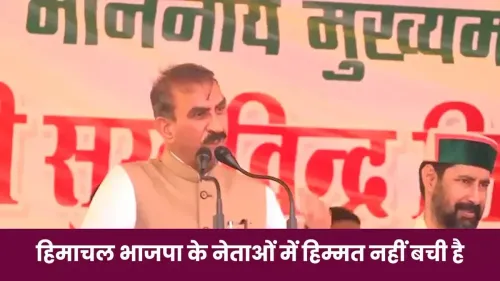
A line has been drawn. Himachal Pradesh Chief Minister Sukhvinder Singh Sukhu issued a blunt, unambiguous challenge on Wednesday, October 21 to dissident legislators in the state Congress unit — making clear the party has zero appetite for reconciliation with those who have walked out, and even less patience for those who may be considering it.
In a sharply worded post on X, Sukhu said in Hindi: 'Kांग्रेस छोड़कर गए vidhāyakoṃ ko pārṭī vāpas lenā hī nahīṃ cāhtī, unse bāt kyā karegī? Maiṃ to kahtā hūṃ, jinoṃ kā aur interest hai, ve bhī cale jāeṃ.' — 'The party does not want to take back the MLAs who left Congress; so why would it even talk to them? I say, those who have other interests should also go ahead and leave.'
A ruling party draws a hard line
The statement is striking not just for its directness but for its political logic. Rather than coaxing wavering legislators back into the fold — the conventional playbook for a ruling party anxious about its majority — Sukhu is publicly daring potential defectors to make their move. The message to the Congress rank and file in Himachal Pradesh is clear: loyalty is expected, and the door out is wide open for those who feel otherwise.
Congress has governed Himachal Pradesh since the December 2022 state assembly elections. The party's majority in the Himachal Pradesh Legislative Assembly has been a recurring subject of political scrutiny, with internal dissent periodically surfacing. Sukhu's statement arrives in that context — framing any further attrition not as a crisis, but as a self-cleansing exercise the leadership is actively welcoming.
Anti-defection law and the limits of the Constitution
India's Tenth Schedule of the Constitution, enacted in 1985, was designed precisely to deter legislators from switching parties by making them liable for disqualification. Yet its record in checking defections — particularly in fragile state governments — has been mixed. The law disqualifies members who voluntarily give up party membership or vote against party direction, but political history is littered with workarounds: resignations, engineered 'mergers', and floor-crossing dressed as conscience votes.
By publicly refusing to negotiate, Sukhu is betting that a hard line signals strength, not vulnerability. Whether that calculus holds will depend on what the coming weeks bring in the state assembly.
What the party watchers will track next
Any formal response from the Indian National Congress central leadership, and the arithmetic inside the assembly during its next session, will be the real test of Sukhu's confidence. A chief minister who tells his own legislators to leave is either very certain of his numbers — or very certain that making the offer publicly is the shrewder political move. Either way, the combative posture is now on the record.
For dissident MLAs weighing their options, Sukhu has just removed ambiguity from the equation.
Point of View
He is using public pressure and projection of strength. It fits a pattern seen in Indian state politics where ruling-party CMs occasionally opt for a scorched-earth posture to deter fence-sitters and signal to the central party leadership that they have the situation under control. The real test is whether the bravado is backed by arithmetic; if it is, it consolidates Sukhu's command over the Pradesh Congress. If it is not, the statement becomes a liability that opposition benches will cite at every session.
NationPress
21 Oct 2026
Frequently Asked Questions
What did CM Sukhu say about Congress MLAs who defected?
CM Sukhu said the Congress party does not wish to take back legislators who left, so there is no question of talking to them. He added that those who have 'other interests' should also feel free to leave.
How many MLAs have left the Himachal Pradesh Congress?
The specific number of MLAs who have defected or are considering defection as of October 2026 has not been officially confirmed; CM Sukhu's statement referred to them collectively without naming individuals.
Can an MLA who leaves Congress be disqualified in Himachal Pradesh?
Yes. Under the Tenth Schedule of the Indian Constitution (the anti-defection law, enacted in 1985), a legislator who voluntarily gives up party membership can be disqualified from the assembly, subject to the Speaker's ruling.
Is the Congress government in Himachal Pradesh at risk of losing its majority?
Congress has governed Himachal Pradesh since December 2022. The state government's majority has been a subject of political debate; CM Sukhu's statement is widely read as a signal that the party is confident of its legislative numbers despite internal dissent.
When did Congress come to power in Himachal Pradesh?
The Indian National Congress won the Himachal Pradesh assembly elections and formed the government in December 2022 , with Sukhvinder Singh Sukhu taking oath as Chief Minister.