Giriraj Singh hails free jute bag training for 35 women in Trichy
Synopsis
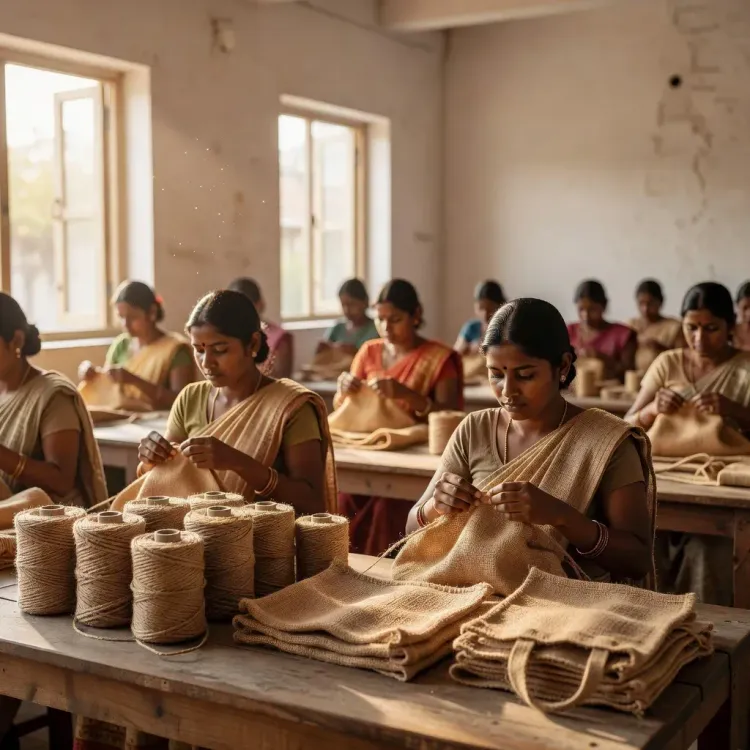
Union Textiles Minister Giriraj Singh highlighted EDII's free jute bag training for 35 women in Tiruchirapalli, Tamil Nadu under the SANKALP scheme, framing it as a concrete step toward women's economic self-reliance through skill-linked self-employment.
Key Takeaways
35 women in Tiruchirapalli, Tamil Nadu received free jute bag manufacturing training under the SANKALP project .
The programme was delivered by the Entrepreneurship Development Institute of India (EDII) , a national autonomous body established in 1983 in Ahmedabad.
SANKALP is a World Bank-assisted centrally sponsored scheme launched in 2018 under the Skill India Mission to improve market-linked skill training outcomes.
Union Textiles Minister Giriraj Singh shared the initiative on October 16, 2026 , calling it a step toward women's economic empowerment through self-employment.
Jute bag production has received specific policy attention from the Ministry of Textiles as a plastic-alternative livelihood option for women.
The training was provided at no cost to participants, removing the capital barrier for women from lower-income households.
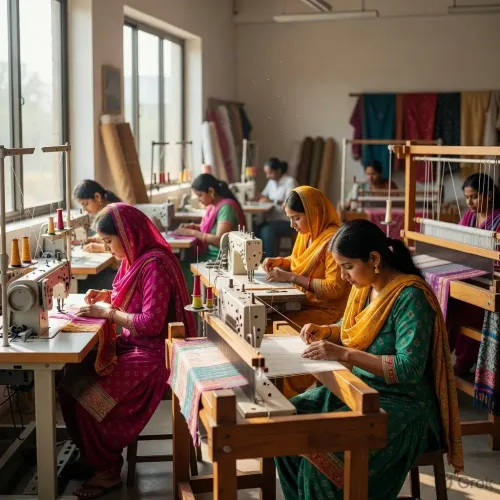
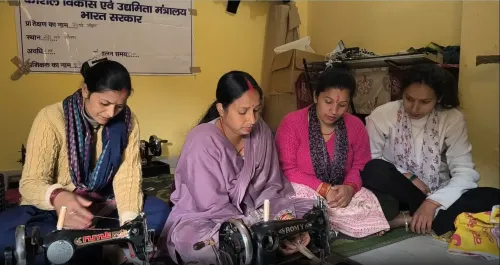
Thirty-five women in Tiruchirapalli, Tamil Nadu have completed a free, hands-on training programme in jute bag manufacturing — a quiet but pointed example of how India's skill-development machinery is reaching into southern cities to build livelihoods from the ground up. Union Textiles Minister Giriraj Singh spotlighted the initiative on Friday, October 16, 2026, calling it a commendable step toward connecting women with skills and self-reliance.
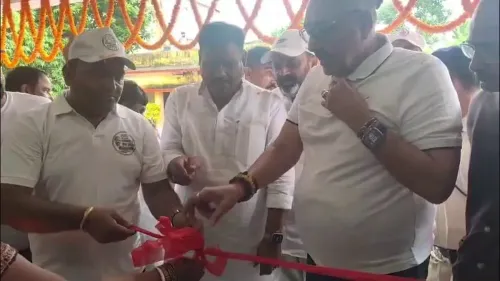
Posting in Hindi, the Minister said the Entrepreneurship Development Institute of India (EDII) had delivered the training under the Centre's SANKALP project, adding that the initiative 'will help empower women economically by linking them to self-employment.' The post carries a photograph from the training session, putting faces to the policy.What SANKALP and EDII brought to Trichy
SANKALP — Skill Acquisition and Knowledge Awareness for Livelihood Promotion — is a World Bank-assisted centrally sponsored scheme under the Ministry of Skill Development and Entrepreneurship, launched in 2018 to sharpen the delivery of demand-driven, market-linked skill programmes under the broader Skill India Mission announced in 2015. Its architecture relies heavily on partnerships: a national-level body sets standards and funding, while implementing agencies take programmes directly into districts. EDII, the Entrepreneurship Development Institute of India, is exactly that kind of implementing partner. Established in 1983 in Ahmedabad, it is an autonomous national institute with decades of experience designing entrepreneurship education and micro-enterprise training. Its involvement signals that this programme is structured not just as skills transfer, but as a launch pad for small businesses.Why jute bags — and why now
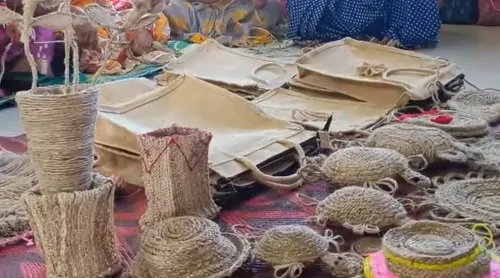
The choice of jute as the training medium is itself a policy signal. The Ministry of Textiles has long promoted jute bag production as both a plastic-alternative livelihood option and a way to revive a traditional Indian industry. For women in a city like Trichy — a central Tamil Nadu hub with active small-scale industrial clusters — the ability to manufacture and sell jute bags opens a real path to self-employment that requires low capital entry but has clear market demand as India's plastic curbs deepen. The training was offered at no cost to participants, removing the single biggest barrier to entry for women from economically marginal households.The bigger picture: women, skills, and self-employment
This Trichy batch sits within a wider pattern. Successive central government programmes have sought to weave women's economic participation into skill training — moving beyond awareness campaigns toward tangible, income-generating outcomes. The textile sector, which Minister Giriraj Singh oversees, has become a recurring arena for such interventions, combining women's empowerment goals with industry-development priorities. The next test for programmes like this is what happens after the certificate: whether trained women secure market linkages, access credit, and actually launch micro-enterprises — or whether the momentum stalls without follow-through support. Thirty-five women in Trichy now have a skill and a choice. What they build with it will be the real measure of the programme's worth.Point of View
Skill-driven self-reliance. By invoking SANKALP and EDII together, it connects the Textiles Ministry's mandate with the Skill India ecosystem, signalling inter-ministerial coordination on women's economic participation. The jute angle is not accidental: with India's plastic ban continuing to evolve, jute-based livelihoods are positioned as both environmentally aligned and economically sensible. The real policy gap these programmes must eventually close is the post-training bridge — market access and micro-credit — where many similar schemes have historically underdelivered.
NationPress
16 Oct 2026
Frequently Asked Questions
What is the SANKALP scheme in India?
SANKALP — Skill Acquisition and Knowledge Awareness for Livelihood Promotion — is a World Bank-assisted centrally sponsored scheme under India's Ministry of Skill Development and Entrepreneurship, launched in 2018 to deliver demand-driven, market-linked short-term skill training under the broader Skill India Mission.
What did EDII do in Tiruchirapalli for women?
The Entrepreneurship Development Institute of India (EDII) conducted a free jute bag manufacturing training programme for 35 women in Tiruchirapalli, Tamil Nadu, under the central government's SANKALP project, aimed at linking participants to self-employment.
Who is Giriraj Singh and what ministry does he head?
Giriraj Singh is a senior BJP leader and Lok Sabha MP from Begusarai, Bihar. He serves as Union Minister of Textiles in the central government of India.
Why is jute bag making promoted as a skill for women in India?
The Ministry of Textiles has promoted jute bag manufacturing as a low-capital, plastic-alternative livelihood option, making it well-suited for women's self-employment programmes, particularly as India's regulations on single-use plastics continue to expand demand for jute alternatives.
What is EDII and where is it based?
The Entrepreneurship Development Institute of India (EDII) is an autonomous national-level institution established in 1983 in Ahmedabad, Gujarat. It designs and delivers entrepreneurship education, training and research programmes, including micro-enterprise training for women.