Tripura SHG women get jute bag training in Sipahijala's 20-day programme
Synopsis
In Tripura's Sipahijala district, more than 30 SHG women are wrapping up a 20-day jute bag training programme — and a full production unit is set to follow within a month. The initiative blends the Lakhpati Didi income target with an eco-friendly product line, positioning rural women as the frontline of India's push to replace plastic with jute.
Key Takeaways
More than 30 SHG women from Charilam block, Sipahijala district are undergoing a 20-day jute bag making programme from 9 July to 31 July .
The training is organised by Gramin Jivika Mission at the Charilam RD Block office in Tripura .
A dedicated jute bag production unit is planned to open approximately one month after training concludes.
Products in the pipeline include keybags, doormats, decorative wall mats, and file covers targeted at government departments.
The programme is linked to Lakhpati Didi Yojana , which aims to secure an annual household income of at least ₹1 lakh for rural SHG women.
Charilam Block Panchayat Samiti Chairperson Khela Bhowmik Debnath visited the training camp, indicating official support.
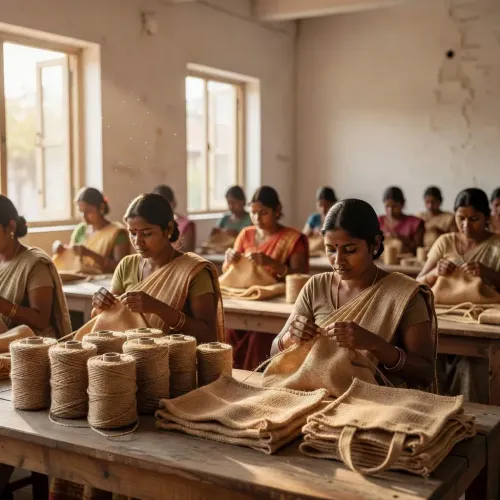
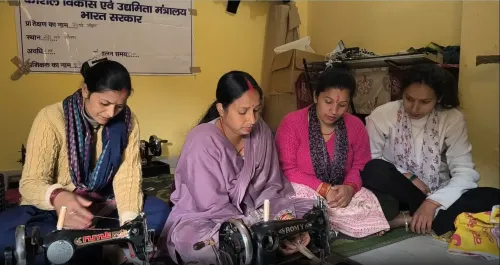
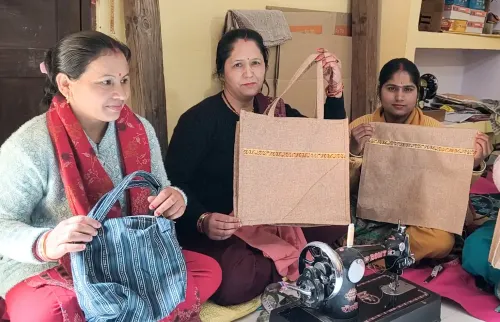
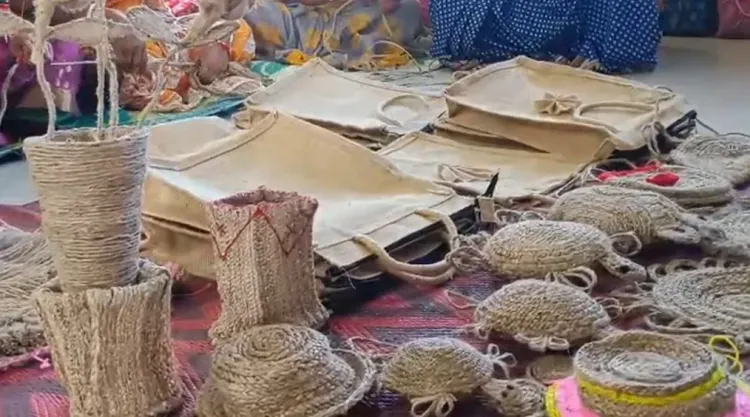
More than 30 women from Self-Help Groups (SHGs) in Tripura's Sipahijala district are undergoing a 20-day jute bag making training programme at the Charilam RD Block office, in a push to build sustainable livelihoods for rural women under the Gramin Jivika Mission. The programme, which began on 9 July and runs through 31 July, covers tailoring techniques for producing jute file covers, keybags, doormats, and home décor items.
Programme Details and Setting
The training is being conducted at the two-storey building of the Charilam Rural Development (RD) Block office in Sipahijala district. Participants — all drawn from the Charilam block — are learning to craft a range of jute products intended for both household use and commercial sale. The initiative falls under the broader umbrella of the Lakhpati Didi Yojana, a central government scheme that aims to help rural SHG women earn a sustained annual household income of at least ₹1 lakh.
A Unit in the Making
The Gramin Jivika Mission, Charilam RD Block plans to establish a dedicated jute bag production unit approximately one month after the training concludes. The unit will enable participants to manufacture keybags, jute doormats, decorative wall mats, and assorted home décor products for open-market sale. Officials also intend to promote these goods across government departments as eco-friendly alternatives for file covers and official bags.
Charilam Block Panchayat Samiti Chairperson Khela Bhowmik Debnath visited the training camp to review progress, signalling administrative backing for the initiative.
What the Women Are Saying
Sampa Datta, a participant who has already achieved 'Lakhpati Didi' status, highlighted the breadth of skill-building underway in the block. 'Around 30 women here are working on jute bag making. Our Prime Minister wants every woman to become self-reliant and independent. That is why training programmes are being provided for various crafts. In our Charilam, many training sessions take place, such as bamboo craft and toy making,' she said, adding that jute bag training has drawn particular enthusiasm among participants.
Fellow SHG member Pintu Bhowmik said the group is already producing market-ready goods and has its sights set on broader distribution. 'We want to promote these products in the coming days across various government departments for file covers, bags, etc., so that the sisters can become self-reliant. Our next plan is to create a full unit so they can earn an income and gain employment. Our mission is for all SHG sisters to become 'Lakhpati Didis',' she said.
The Environmental Angle
Participants also framed the initiative as an environmental intervention. Bhowmik noted that public awareness around plastic pollution has created a ready market for jute alternatives. 'Using jute bags will help the environment, and right now, the demand for these bags is very high; they are used in almost every event,' she said. Jute's natural durability and biodegradability make it a viable substitute for single-use plastic bags, which continue to dominate retail channels.
Broader Context
This programme is one of several skill-building drives running in Charilam block, which has previously hosted training in bamboo craft and toy making. The convergence of the Lakhpati Didi Yojana with local missions like the Gramin Jivika Mission reflects a wider policy push to translate SHG membership into measurable income gains for rural women across India's northeastern states. With the production unit expected to come online within weeks, the Sipahijala initiative will be an early test of whether short-duration training can translate into durable employment at the grassroots level.
Point of View
But their real test is what happens after the training ends. The Charilam initiative has a concrete next step — a production unit within a month — which is more than most such programmes offer at the announcement stage. The harder question is market linkage: jute products compete on sentiment and sustainability, not price, and without a reliable procurement channel — whether government departments or private buyers — income gains can stall. The Lakhpati Didi target of ₹1 lakh annually is achievable only if the unit runs consistently, not just at launch. Tripura's track record with bamboo and handicraft clusters suggests the infrastructure intent is real; execution and sustained offtake will determine whether this becomes a model or a footnote.
NationPress
28 Oct 2026
Frequently Asked Questions
What is the jute bag training programme in Sipahijala, Tripura?
It is a 20-day skill-building programme organised by the Gramin Jivika Mission for more than 30 SHG women from Charilam block in Sipahijala district. Running from 9 July to 31 July, it trains participants in making jute bags, file covers, doormats, and home décor items.
What is the Lakhpati Didi Yojana and how is it connected?
Lakhpati Didi Yojana is a central government scheme that aims to help rural women in Self-Help Groups earn a sustained annual household income of at least ₹1 lakh. The Sipahijala jute bag programme is aligned with this scheme, with participants aspiring to reach the Lakhpati Didi income milestone.
What happens after the 20-day training ends?
The Gramin Jivika Mission plans to open a dedicated jute bag production unit approximately one month after the training concludes. The unit will allow women to manufacture and sell keybags, doormats, decorative mats, and file covers, including to government departments.
Why are jute bags being promoted over plastic bags?
Participants and organisers have highlighted jute's biodegradability and durability as key advantages over single-use plastic, which is a significant environmental pollutant. Demand for jute products is also reported to be high, with the bags used at a wide range of events and in office settings.
Who oversees the programme and which block is it based in?
The programme is run by the Gramin Jivika Mission under the Charilam RD Block in Sipahijala district, Tripura. Charilam Block Panchayat Samiti Chairperson Khela Bhowmik Debnath has visited the training camp, reflecting local administrative support.