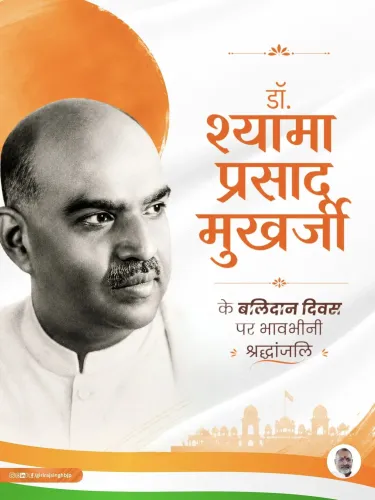
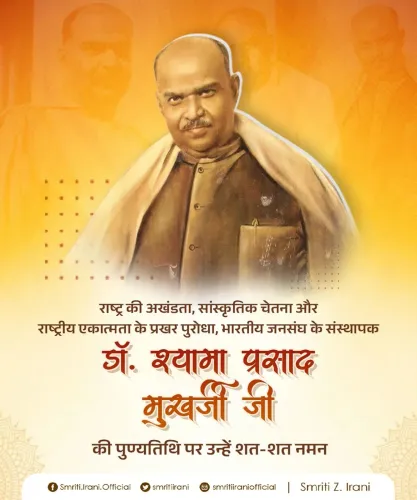
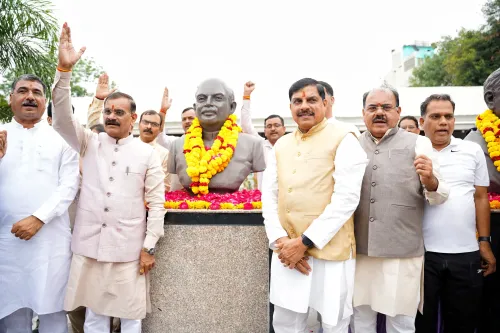
Giriraj Singh pays tribute to Dr. Syama Prasad Mookerjee in Begusarai
Synopsis
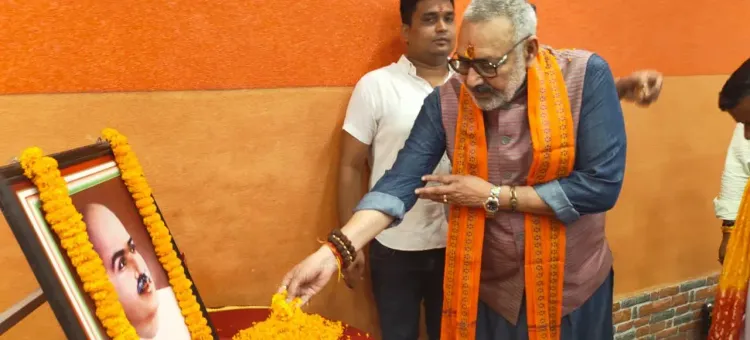
Union Textiles Minister Giriraj Singh paid tribute to Dr. Syama Prasad Mookerjee at a birth anniversary event in Begusarai on 4 July 2026, citing the Jana Sangh founder's slogan against dual constitutional arrangements and linking the 2019 revocation of Article 370 to his vision of national integration.
Key Takeaways
Giriraj Singh attended a birth anniversary commemoration for Dr.
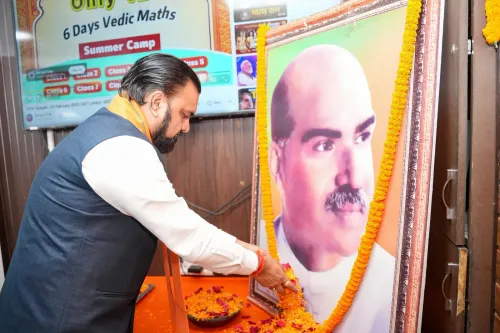
Syama Prasad Mookerjee at Harsh Garden, Singhoul, Begusarai on 4 July 2026 .
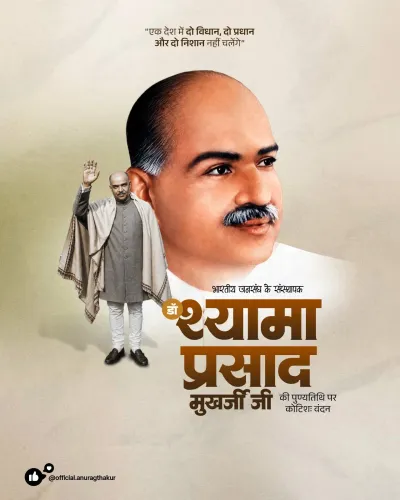
He quoted Mookerjee's signature slogan opposing two constitutions, two heads of state, and two flags within one nation.
Syama Prasad Mookerjee founded the Bharatiya Jana Sangh in 1951 , the ideological predecessor of the BJP.
Singh linked the 2019 revocation of Article 370 and the reorganisation of Jammu and Kashmir into two Union Territories to Mookerjee's founding vision.
Singh noted that Mookerjee's nationalist legacy, rooted in West Bengal , continues to inspire crores of Indians.
The BJP frames its J&K policy as the fulfilment of a commitment that dates to the Jana Sangh's founding principles.
Union Textiles Minister Giriraj Singh attended a birth anniversary commemoration of Dr. Syama Prasad Mookerjee at Harsh Garden, Singhoul, Begusarai on Saturday, 4 July 2026, paying tribute to the founder of the Bharatiya Jana Sangh and invoking his vision of national integration.
Context
Posting on X, Singh wrote that he participated in the birth anniversary programme and offered his respectful salutations to the leader. He quoted Mookerjee's defining slogan: 'Ek desh mein do vidhaan, do pradhaan aur do nishaan nahin chalenge' — 'In one nation, two constitutions, two heads of state, and two flags cannot be allowed.' The slogan encapsulates the ideological opposition to any separate constitutional arrangement for any part of India that defined Mookerjee's political life.
Singh added that Jammu and Kashmir's national integration had been further strengthened today, giving new force to that resolve. He noted that the nationalist consciousness Mookerjee ignited in West Bengal continues to inspire crores of citizens, and that the Bharatiya Janata Party carries his ideals and commitments forward.
Policy Backdrop
Dr. Syama Prasad Mookerjee founded the Bharatiya Jana Sangh in 1951 with the explicit goal of ending separate constitutional provisions for Jammu and Kashmir, then guaranteed under Article 370. He died in detention in Kashmir in 1953 while agitating against the requirement that Indians carry a permit to enter the state. The BJP, the Jana Sangh's successor, has long framed his slogan as the ideological origin of its J&K policy.
In August 2019, Parliament revoked Article 370, ending Jammu and Kashmir's special status and reorganising it into two Union Territories. BJP leaders have consistently described that action as the fulfilment of Mookerjee's foundational commitment — a framing Singh repeated in his post.
Stakeholders and Impact
The annual commemoration in Begusarai — Singh's own Lok Sabha constituency — draws BJP workers and local leaders and serves as a moment to reinforce the party's ideological lineage. For residents of Jammu and Kashmir, references to Mookerjee's legacy remain politically significant, as they are tied directly to the 2019 reorganisation that reshaped the region's governance and constitutional standing.
Singh's tribute also highlighted Mookerjee's roots in West Bengal, where he served as a minister and was a prominent educationist before founding the Jana Sangh. That dimension of his legacy continues to be invoked by the BJP as it seeks to expand its presence in the state.
What's Next
The BJP's practice of marking Mookerjee's birth anniversary with programmatic events across its organisational network is expected to continue. Going forward, parliamentary debates on Jammu and Kashmir governance and the rollout of centrally sponsored development projects in the two Union Territories are likely to draw further references to his ideological legacy. Singh's post signals that the party intends to keep the Mookerjee-to-J&K policy narrative active ahead of any legislative or electoral milestones in the region.
Point of View
Lending historical legitimacy to decisions made more than six decades after Mookerjee's death. By invoking the slogan at a constituency event, Singh simultaneously performs ideological fidelity to the party's founding narrative and reinforces his own credentials as a senior BJP voice in Bihar. The West Bengal reference is also deliberate: it keeps Mookerjee's Bengali identity politically salient at a time when the BJP continues to contest that state aggressively. Taken together, the tribute illustrates how the party uses commemorative occasions as low-cost, high-resonance vehicles for policy communication.
NationPress
4 Jul 2026
Frequently Asked Questions
Who was Dr. Syama Prasad Mookerjee?
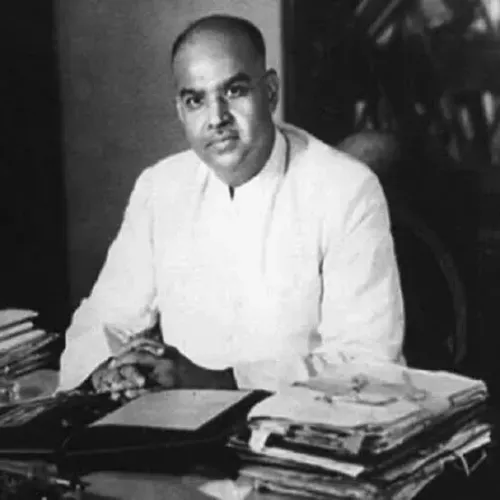
Dr. Syama Prasad Mookerjee was a prominent educationist, nationalist leader, and the founder of the Bharatiya Jana Sangh in 1951 . He is best known for opposing separate constitutional provisions for Jammu and Kashmir and died in detention in Kashmir in 1953 while protesting the permit system for Indians entering the state.
What is Mookerjee's famous slogan and what does it mean?
Mookerjee's defining slogan — 'Ek desh mein do vidhaan, do pradhaan aur do nishaan nahin chalenge' — translates as 'In one nation, two constitutions, two heads of state, and two flags cannot be allowed.' It expressed his opposition to the special constitutional status granted to Jammu and Kashmir under Article 370.
How does the BJP connect Mookerjee's legacy to Article 370?
The BJP has consistently argued that the 2019 revocation of Article 370 and the reorganisation of Jammu and Kashmir into two Union Territories fulfilled the foundational commitment of the Bharatiya Jana Sangh , which Mookerjee established specifically to end separate constitutional arrangements for the state.
Why did Giriraj Singh hold this event in Begusarai?
Begusarai is the Lok Sabha constituency represented by Giriraj Singh , and the BJP holds annual commemorative events there for Mookerjee's birth anniversary, drawing local party workers and reinforcing the organisation's ideological lineage.
What is the connection between Syama Prasad Mookerjee and West Bengal?
Dr. Syama Prasad Mookerjee was born and politically active in West Bengal , where he served as a minister and was a respected educationist before founding the Jana Sangh. The BJP frequently highlights his Bengali roots as part of its effort to connect with voters in that state.