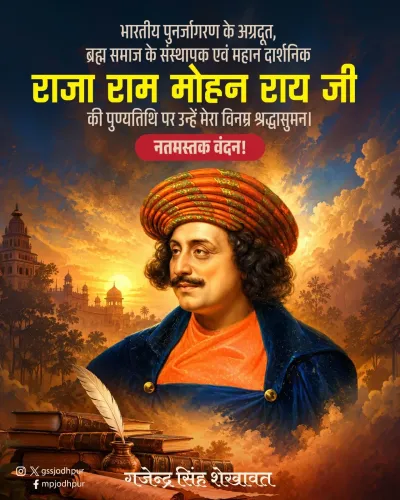
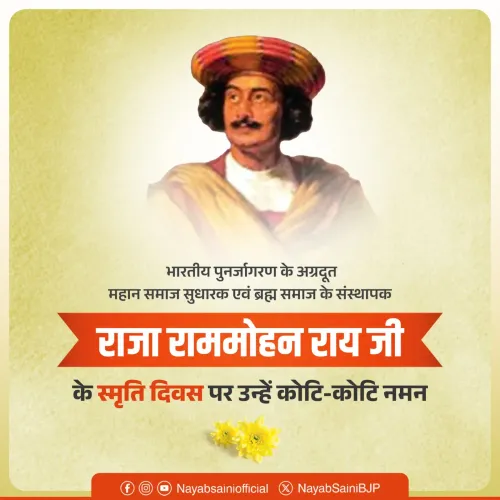
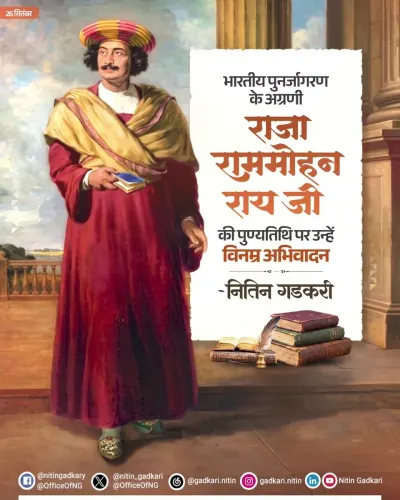
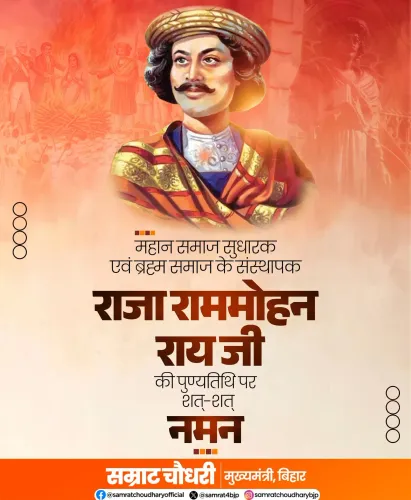
Giriraj Singh pays tribute to Raja Ram Mohan Roy on death anniversary
Synopsis
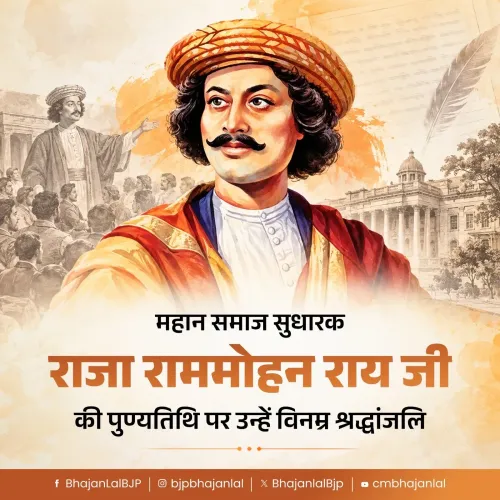
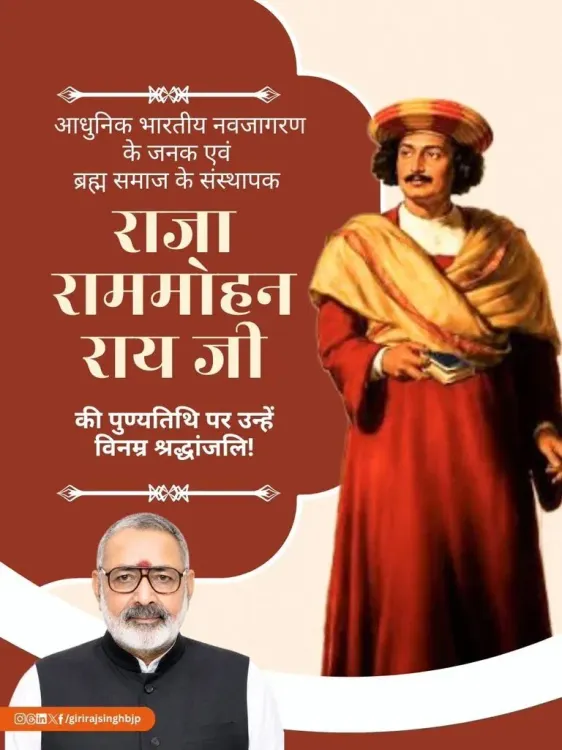
Union Textiles Minister Giriraj Singh paid homage to Raja Ram Mohan Roy on his death anniversary on 27 September 2026, honouring the 19th-century reformer's campaign to abolish sati and advance women's education through the Brahmo Samaj.
Key Takeaways
Union Textiles Minister Giriraj Singh posted a tribute to Raja Ram Mohan Roy on 27 September 2026 , Roy's death anniversary.
Singh described Roy as the 'father of the modern Indian Renaissance' and founder of Brahmo Samaj , established in 1828 .
Roy's advocacy directly contributed to the Bengal Sati Regulation of 1829 , one of colonial India's earliest legislative social reforms.
The tribute highlighted Roy's work on women's empowerment , access to education, and dismantling regressive social practices.
Annual commemorations of Roy on 27 September draw tributes from political leaders across parties, reflecting his cross-partisan legacy.
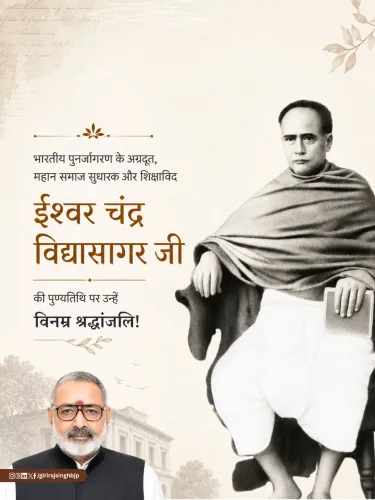
On the death anniversary of the man who helped drag 19th-century India out of its darkest social practices, Union Textiles Minister Giriraj Singh on Sunday, 27 September 2026, paid homage to Raja Ram Mohan Roy — the reformer credited with abolishing sati and laying the foundations of modern Indian thought.
Posting in Hindi, the minister described Roy as 'aadhunik Bharatiya navjagaran ke janak' — 'the father of the modern Indian Renaissance' — and the founder of Brahmo Samaj. He wrote that the nation will 'always remember his historic work' in ending evils like the sati practice, empowering women, and spreading education.
The reformer who rewrote the rules of Indian society
Raja Ram Mohan Roy founded the Brahmo Samaj in 1828, a monotheistic reform movement that challenged caste rigidity, idol worship, and the deeply entrenched practice of sati — the immolation of widows on their husbands' funeral pyres. His relentless advocacy directly led to the Bengal Sati Regulation of 1829, one of the earliest legislative victories for social reform in colonial India.
Roy's vision extended well beyond one law. He championed women's right to education, inheritance, and remarriage at a time when each of those ideas was considered radical. His embrace of rational inquiry and Western education, alongside pride in Indian intellectual heritage, gave him the designation of father of the Indian Renaissance — a label that has endured nearly two centuries.
27 September and the annual ritual of remembrance
27 September marks Roy's death anniversary — he died on this date in 1833 in Bristol, England. Each year, political leaders across the spectrum issue tributes, a reflection of how completely Roy's legacy has passed into national consensus. What was once a radical programme — gender equality, secular education, opposition to superstition — is now the stated common ground of Indian public life.
Giriraj Singh's tribute follows that tradition, anchoring contemporary political expression to a reformist lineage that cuts across party lines and reminds a modern audience of how contested the most basic social rights once were.
The fire that Roy lit in a Calcutta drawing room nearly two hundred years ago still illuminates the arguments India has about itself today.
Point of View
Yet specific enough — sati abolition, women's education — to signal alignment with constitutional values. Such commemorations also subtly reinforce the narrative that India's reformist impulse is indigenous and centuries-deep, not merely a colonial import. The real marker to watch is whether such tributes ever translate into concrete policy announcements tied to Roy's themes.
NationPress
27 Sept 2026
Frequently Asked Questions
Why is 27 September significant for Raja Ram Mohan Roy?
27 September is the death anniversary of Raja Ram Mohan Roy , who died on this date in 1833 in Bristol, England. Indian leaders across parties mark the day with tributes each year.
What did Raja Ram Mohan Roy do for women in India?
Raja Ram Mohan Roy campaigned against the practice of sati, which led to the Bengal Sati Regulation of 1829 banning the practice. He also advocated for women's right to education, inheritance, and remarriage.
What is Brahmo Samaj and who founded it?
Brahmo Samaj was a Hindu reform movement founded by Raja Ram Mohan Roy in 1828 . It promoted monotheism, rationalism, opposition to caste discrimination, and social reforms including the abolition of sati.
Why is Raja Ram Mohan Roy called the father of the Indian Renaissance?
Raja Ram Mohan Roy earned the title because he combined pride in Indian intellectual heritage with rational inquiry and Western education, driving a sweeping social and intellectual transformation in 19th-century India .
What did Giriraj Singh say about Raja Ram Mohan Roy?
Union Textiles Minister Giriraj Singh described Roy as the 'father of the modern Indian Renaissance' and said the nation will always remember his historic work in ending sati, empowering women, and spreading education.