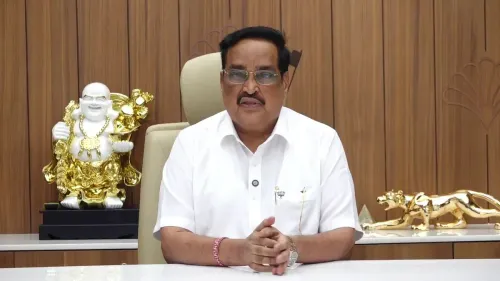
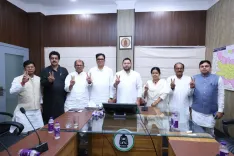
Giriraj Singh backs Catch the Rain campaign for water conservation

Synopsis
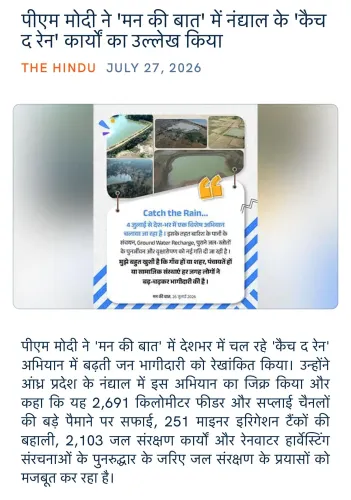
Union Textiles Minister Giriraj Singh on 26 July 2026 backed the Catch the Rain campaign on X, calling for nationwide public participation in rainwater harvesting, groundwater recharge, and revival of ponds and wells, linking the message to the Jal Shakti Abhiyan and Mann Ki Baat.
Key Takeaways
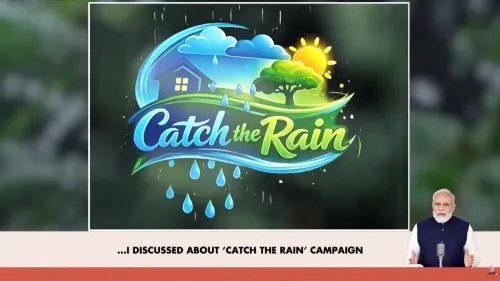
Giriraj Singh promoted the Catch the Rain campaign on 26 July 2026 , urging citizens to conserve rainwater wherever and whenever it falls.
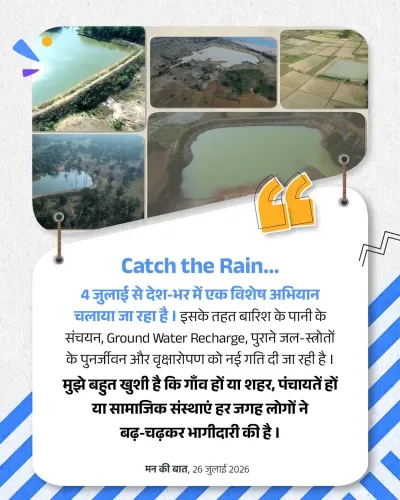
The campaign focuses on rainwater harvesting , groundwater recharge , and revival of ponds and wells through community participation.
The post referenced Mann Ki Baat , linking the conservation message to the Prime Minister's public outreach programme.
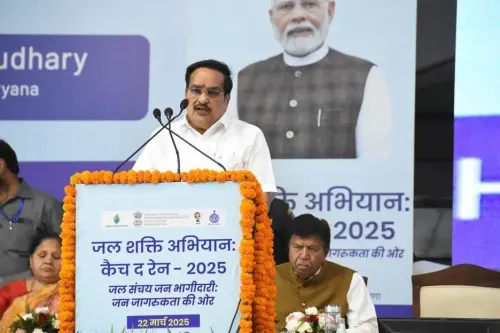
The Jal Shakti Abhiyan , launched in 2019 , provides the broader policy framework for the Catch the Rain initiative.
Primary beneficiaries include rural communities and farmers facing seasonal water stress and falling groundwater levels.
Singh framed water conservation as an intergenerational responsibility, calling saved water 'the greatest asset for coming generations.'
Union Textiles Minister Giriraj Singh on Sunday, 26 July 2026, amplified the Catch the Rain campaign, urging citizens across India to conserve every drop of rainwater and participate in groundwater recharge and revival of traditional water bodies.
Context
Posting in Hindi on X, Giriraj Singh invoked the campaign's central message — 'जहाँ बारिश गिरे, जब बारिश गिरे, पानी को वहीं सहेजिए' ('Wherever it rains, whenever it rains, conserve the water right there') — calling it a vehicle for mass public participation. He highlighted efforts in rainwater harvesting, groundwater recharge, and the rejuvenation of ponds and wells as encouraging signs of citizen engagement. The post carried hashtags #CatchTheRain, #WaterConservation, #JalShakti, and #MannKiBaat, linking the message to the Prime Minister's monthly radio outreach programme.
Policy Backdrop
The Catch the Rain campaign is a national initiative promoting rainwater harvesting and the revival of water bodies through community participation, operating under the broader Jal Shakti Abhiyan framework. The Jal Shakti Abhiyan was launched in 2019 to accelerate water conservation and groundwater recharge across states, with a focus on water-stressed districts. Over the years, the government has used Mann Ki Baat — the Prime Minister's monthly radio programme — as a platform to spotlight citizen-led conservation efforts and scale low-cost interventions such as rooftop harvesting and pond rejuvenation.
The campaign reflects a multi-year strategy of combining social media messaging with on-ground community action to address seasonal water scarcity and long-term groundwater depletion. Senior leaders from across ministries have periodically backed the initiative on public platforms, reinforcing its cross-government character.
Stakeholders and Impact
The primary beneficiaries of Catch the Rain are rural communities and farmers, who face acute water stress during dry seasons when groundwater tables fall. Pond and well rejuvenation directly supports agricultural water security, while rooftop harvesting benefits both rural and urban households. Public participation — from individuals constructing small recharge pits to panchayats restoring traditional tanks — is central to the campaign's design, reducing dependence on large infrastructure investments.
Giriraj Singh called water saved today 'the greatest asset for the secure future of coming generations,' framing conservation as an intergenerational responsibility rather than a seasonal activity.
What's Next
State governments are expected to report progress on water-conservation structures created under Catch the Rain, with measured changes in groundwater levels serving as a key metric of success. Any parliamentary discussion on water resources in the coming session could bring renewed scrutiny to the campaign's reach and outcomes. The continued alignment of senior BJP leaders' social media communication with Mann Ki Baat themes suggests the campaign will remain a visible part of the government's public outreach through the monsoon season and beyond.
Point of View
Broadening the campaign's social media footprint beyond its nodal department. The explicit linkage to Mann Ki Baat signals coordination with the Prime Minister's communication cycle, reinforcing a top-down yet community-framed narrative around Jal Shakti. This cross-ministry amplification also serves a political purpose: it positions the BJP's governance record on environmental stewardship ahead of any electoral cycle. The campaign's long-term credibility, however, will hinge on measurable outcomes — groundwater level data and the number of structures created — rather than messaging alone.
NationPress
24 Oct 2026
Frequently Asked Questions
What is the Catch the Rain campaign in India?
The Catch the Rain campaign is a national initiative that promotes rainwater harvesting, groundwater recharge, and the revival of ponds and wells through public participation, operating under the Jal Shakti Abhiyan framework launched in 2019.
What did Giriraj Singh say about water conservation?
On 26 July 2026, Giriraj Singh urged citizens to conserve rainwater wherever and whenever it falls, calling water saved today 'the greatest asset for the secure future of coming generations.'
What is Jal Shakti Abhiyan?
Jal Shakti Abhiyan is a government programme launched in 2019 focused on water conservation, source strengthening, and sustainable water management, with a particular emphasis on water-stressed districts across India.
What is Mann Ki Baat and how is it related to water conservation?
Mann Ki Baat is the Prime Minister's monthly radio programme that highlights citizen initiatives and policy themes; it has been used as a platform to promote water conservation efforts including the Catch the Rain campaign.
Who benefits from the Catch the Rain campaign?
Rural communities and farmers are the primary beneficiaries, as pond and well rejuvenation supports agricultural water security, while rooftop harvesting benefits both rural and urban households facing seasonal water scarcity.