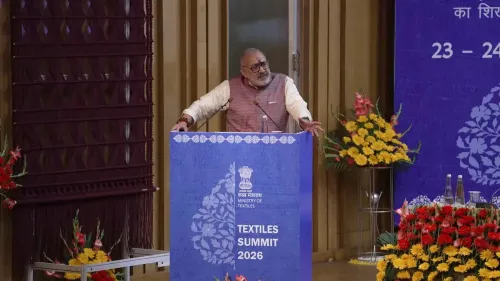
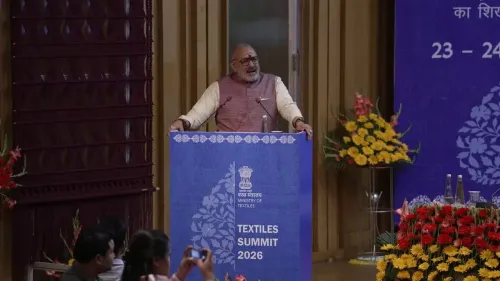
Giriraj Singh pushes district-led textile export vision
Synopsis
Union Textiles Minister Giriraj Singh has articulated a district-based export strategy, spotlighting Champion and Aspirational Districts as engines for connecting local craft and textile capacity to national and global markets.
Key Takeaways
Giriraj Singh posted on 30 September 2026 outlining the Ministry of Textiles' district-based development approach.
The framework targets both Champion Districts (existing textile strengths) and Aspirational Districts (latent, underdeveloped capacity).
It draws on NITI Aayog's Aspirational Districts Programme , launched in January 2018 , covering 112 backward districts .
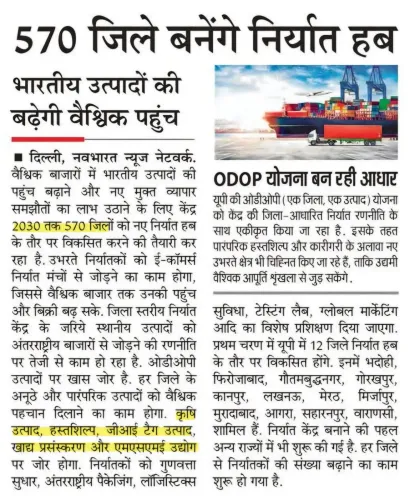
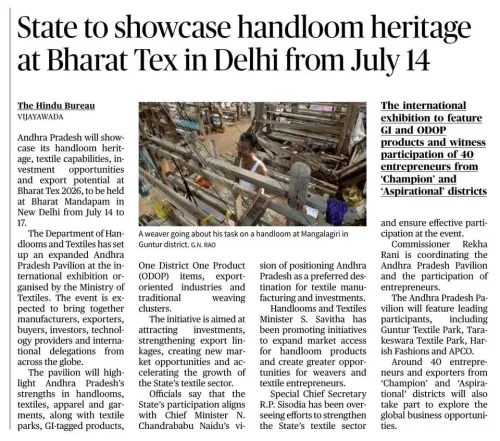
The One District One Product (ODOP) approach, active since 2018 , maps each district to a signature product for promotion and supply-chain development.
Key beneficiaries include district artisans, textile MSMEs, and small export units across India.
Exact list of Champion Districts and specific ministry export data remain unconfirmed pending official announcements.
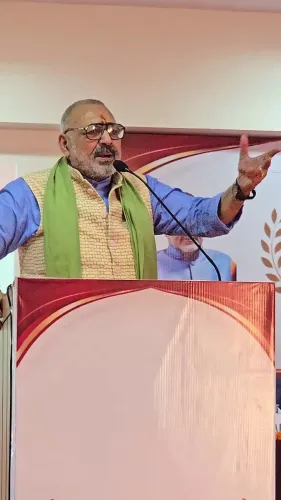
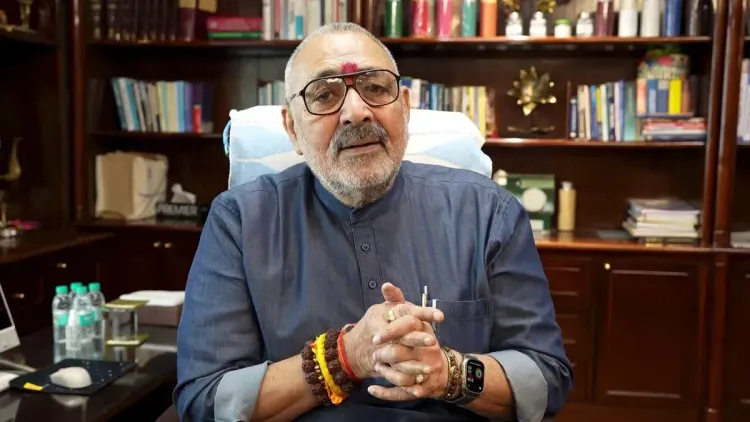
Every district in India holds a distinct craft, a latent skill, and an untapped market — and Union Textiles Minister Giriraj Singh wants those assets converted into export earnings. In a post on X on 30 September 2026, Singh outlined the Ministry of Textiles' district-based approach, arguing that identifying and nurturing local strengths can lift homegrown products from regional obscurity to global shelves.
Singh wrote — 'भारत के हर जिले की अपनी विशेषता, हुनर और संभावनाएं हैं' — ('Every district of India has its own speciality, skill and potential') — and called on the ministry's framework to connect that potential directly to export opportunities. The mechanism he points to: a deliberate push on Champion and Aspirational Districts, rewarding those that perform while lifting those that lag.
Champion districts and the Aspirational framework behind the push
The architecture Singh is referencing draws from two existing pillars. NITI Aayog's Aspirational Districts Programme, launched in January 2018, targets 112 backward districts across India for concentrated improvement in health, education, and economic indicators. The Ministry of Textiles has layered its own district-based lens on top of that foundation — identifying 'Champion' districts where textile clusters already show strength, and 'Aspirational' ones where investment and mentoring can unlock dormant capacity.
Running parallel is the One District One Product (ODOP) approach, active since 2018, which maps each district to a signature product and builds a promotion and supply-chain story around it. For the textiles sector, that could mean a handloom cluster in one district, a power-loom hub in another, or a craft tradition that has never found a buyer beyond the weekly haat (local market).
Why local artisans and textile MSMEs are the real audience
The policy language is ministerial, but the stakes are artisan-level. District artisans, textile MSMEs, and small export units stand to gain — or lose — the most depending on how seriously the framework is implemented. India's textile sector is already one of the country's largest employers, and decentralised growth models have long been seen as the most durable path to spreading that employment beyond established hubs like Surat, Tiruppur, and Ludhiana.
Singh's framing — national identity first, global market second — also signals a sequencing that policymakers have debated for years: build domestic brand recognition before chasing foreign buyers, so that export success is built on a stable foundation rather than a race to the bottom on price.
What the ministry's next moves will reveal
The real test of this district-based vision lies in execution detail: which districts earn 'Champion' status, how performance is tracked, and whether export linkages materialise in verifiable trade data. Those specifics are yet to be publicly confirmed. But the direction of travel — decentralised, product-specific, export-oriented — is consistent with the broader 'Aatmanirbhar Bharat' self-reliance framework that has shaped manufacturing policy across multiple ministries over the past several years.
If the Ministry of Textiles can turn district craft into a measurable export line, it will not just be a policy win — it will be proof that India's most overlooked economic geography is also its most underpriced asset.
Point of View
He is signalling continuity with NITI Aayog's decentralised development logic while staking out a distinctly export-forward ambition for the sector. The district-as-unit-of-growth model has been central to the government's broader 'Aatmanirbhar Bharat' narrative, and Singh is reinforcing that the textiles ministry sees itself as a delivery vehicle for that agenda, not a bystander. The real political test comes when Champion District lists and export performance data are made public — that is when the vision either validates or strains under scrutiny.
NationPress
30 Sept 2026
Frequently Asked Questions
What is the Ministry of Textiles' district-based approach?
The Ministry of Textiles' district-based approach identifies Champion Districts with existing textile strengths and Aspirational Districts with untapped potential, then works to connect both to national and global export opportunities.
What is the Aspirational Districts Programme and how does it relate to textiles?
The Aspirational Districts Programme is a NITI Aayog initiative launched in January 2018 targeting 112 backward districts for development. The textiles ministry layers its own framework on this, using it to identify and promote districts with textile and craft potential.
What is One District One Product (ODOP) and when was it launched?
One District One Product (ODOP) is a government approach launched in 2018 that maps each district to a signature product and builds promotion and supply-chain support around it, including in the textiles and handicrafts sector.
Who benefits from the textiles ministry's Champion District framework?
The primary beneficiaries are district-level artisans, textile MSMEs, and small export units that gain access to promotion, infrastructure support, and export linkages under the programme.
Which districts are designated as Champion Districts under the textiles ministry?
The exact list of Champion Districts under the textiles ministry's framework has not been officially confirmed in publicly available information; the ministry is expected to release specifics as the programme progresses.