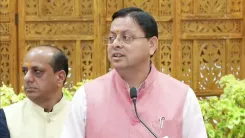
Giriraj Singh urges citizens to self-enumerate in Census
Synopsis
Union Textiles Minister Giriraj Singh on 27 September 2026 called on all Indians to participate in the Census of India and use the self-enumeration facility to record their family's details, linking the appeal to PM Modi's Mann Ki Baat initiative.
Key Takeaways
Giriraj Singh , Union Minister of Textiles, posted on 27 September 2026 urging citizens to participate in the Census of India .
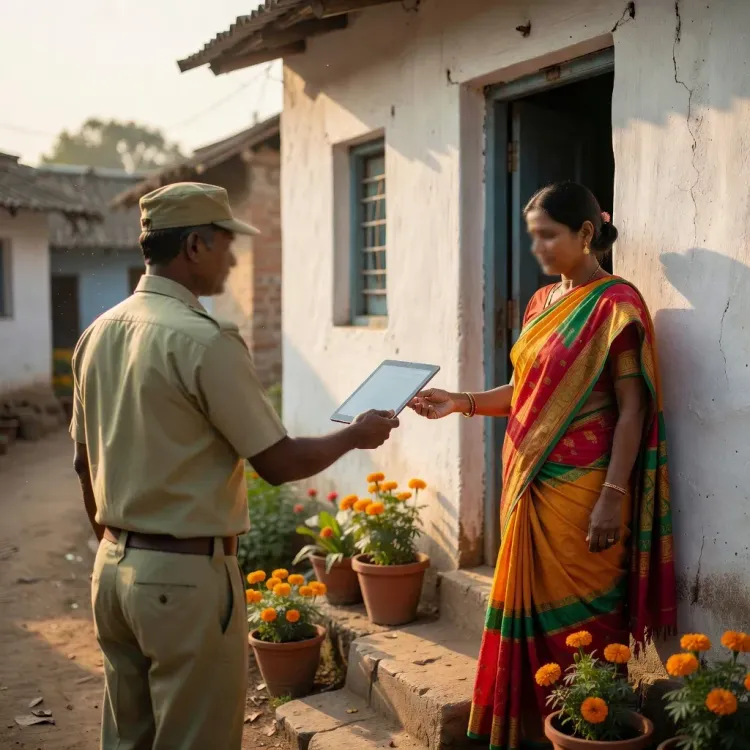
He specifically promoted the self-enumeration facility , allowing households to record their own data without waiting for a field enumerator.
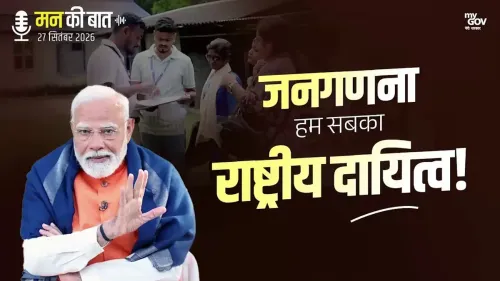
The post was tagged with #MannKiBaat , linking the appeal to PM Modi's monthly radio address and its civic mobilisation themes.
The last complete Census of India was conducted in 2011 , making the upcoming exercise critical for updated welfare targeting, delimitation, and federal resource allocation.
Ministers across portfolios have been coordinating social media campaigns to boost census response rates as part of a broader awareness drive.
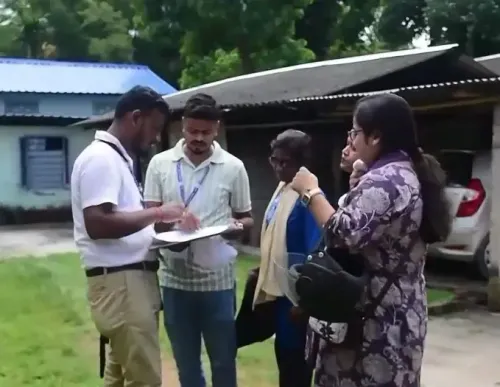
Every ten years, India attempts something extraordinary: counting itself. On Sunday, 27 September 2026, Union Textiles Minister Giriraj Singh joined the national chorus urging every Indian household to participate in the Census of India — and to do so through the self-enumeration facility, filling in their own family's details without waiting for a field enumerator to knock on the door.
Posting in Hindi on X, the minister wrote: 'Do make sure to ensure your participation in the census. Take advantage of the self-enumeration facility and record your own and your family's information yourself. This small effort of yours will become the cornerstone of an accurate picture of the country and a better future.' The post was tagged with #MannKiBaat and #जनगणना, linking the appeal to Prime Minister Narendra Modi's monthly radio address — a platform routinely used to amplify civic participation drives.
Why this Census matters more than most
The last complete Census of India was conducted in 2011 — making it, by 2026, a fifteen-year-old snapshot of a nation that has changed beyond recognition. Population shifts, urbanisation, migration, and the expansion of digital infrastructure have all reshaped the country since that count. Every welfare scheme — from subsidised grain to women's health benefits — is still calibrated to data that predates a whole generation of policy decisions.
The stakes are enormous. Census figures directly determine parliamentary delimitation, the distribution of central funds across states, and the targeting of flagship welfare programmes. An undercounted household is an invisible household — one that slips through the net of the state entirely.
Self-enumeration: the push to modernise India's count
The self-enumeration option Singh highlighted represents a significant modernisation of how India gathers this data. Rather than relying entirely on field enumerators visiting each home, a digital self-enumeration pathway — where citizens log their own household's details — can dramatically improve accuracy, reduce costs, and reach households that enumerators might otherwise miss or miscount.
Ministers across portfolios have been amplifying census awareness on social media, a coordinated effort to lift participation rates ahead of what would be one of the most consequential data exercises in the country's post-independence history. Singh's post, riding the Mann Ki Baat wave, carries that broader mobilisation forward.
A census is only as good as the people who fill it in. Every blank form is a gap in the national record — and gaps have a cost that falls hardest on those least able to absorb it.
Point of View
Cross-ministerial social media push to drive participation in a census that is long overdue — the last complete count dates to 2011. Politically, the exercise carries high stakes: fresh census data will trigger parliamentary delimitation, a process expected to shift seat weightage toward faster-growing northern states and reshape the federal balance of power. By anchoring the appeal to Mann Ki Baat, the BJP is deploying its most trusted civic-outreach channel to frame census participation as a patriotic act, embedding the exercise in the government's broader narrative of data-driven, citizen-centric governance.
NationPress
27 Sept 2026
Frequently Asked Questions
What is the self-enumeration facility in the Indian Census?
The self-enumeration facility allows households to fill in their own census details digitally, without waiting for a government field enumerator to visit their home, improving accuracy and convenience.
When was the last Census of India conducted?
The last complete Census of India was conducted in 2011 . The subsequent census, due in 2021, was delayed, making the upcoming exercise the first full national count in over a decade.
Why is census participation important for ordinary citizens?
Census data determines how welfare schemes, subsidies, healthcare, and education resources are allocated. Households that are not counted can miss out on government benefits they are entitled to.
What is Mann Ki Baat and why is it linked to the Census drive?
'Mann Ki Baat' is PM Narendra Modi's monthly radio programme used to highlight government initiatives and civic themes. Ministries often align their social media campaigns with its episodes to amplify public outreach.
How does the Census affect parliamentary delimitation in India?
Census population figures form the basis for delimitation — the redrawing of parliamentary and assembly constituency boundaries. The next delimitation exercise will use fresh census data, potentially altering seat distribution across states.