Giriraj Singh hails cow as symbol of Indian culture
Synopsis
Union Textiles Minister Giriraj Singh on 29 May 2026 described the cow as a symbol of Indian culture, compassion, and Sanatana values. The statement aligns with the BJP's long-standing cultural positioning and the central government's Rashtriya Gokul Mission for indigenous cattle conservation.
Key Takeaways
Giriraj Singh posted on 29 May 2026 venerating the cow as a symbol of Indian culture, compassion, and Sanatana values.
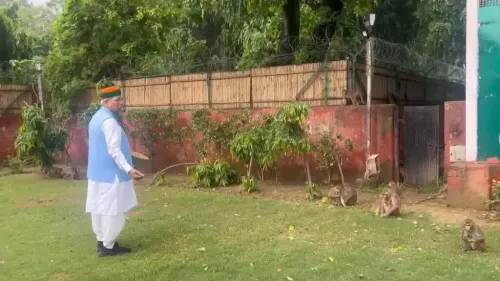
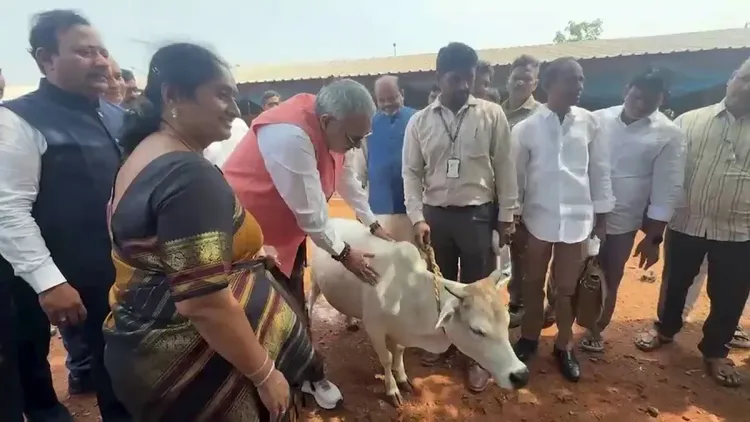
The post was in Hindi and accompanied by a video .
The statement aligns with the BJP 's broader cultural framework linking traditional values to governance priorities.
The Rashtriya Gokul Mission , launched in 2014 , is the central government's flagship scheme for indigenous cattle conservation and rural dairy development.
Stakeholders include livestock farmers , indigenous cattle breeders , and gaushala operators who benefit from allied central and state schemes.
Policy watchers will monitor Department of Animal Husbandry announcements for fresh funding or scheme updates in the next budget cycle.
Union Textiles Minister Giriraj Singh on Friday, 29 May 2026, posted a message on X venerating the cow as a living symbol of Indian civilisational values, describing the experience of being in her presence as a confluence of service, compassion, and Sanatana principles.
Context
In the Hindi-language post, Giriraj Singh wrote: 'Gau Mata Bharatiya sanskriti, karuna aur prakriti ke prati samman va hamari aastha ka pratik hain' — 'The cow is a symbol of Indian culture, compassion, respect for nature, and our faith.' He added that her gentle presence offers a remarkable confluence of service, sensitivity, and Sanatana values. The post was accompanied by a video, the contents of which were not independently verified.
The statement is consistent with the senior BJP leader's long-standing public articulation of cultural and religious themes alongside his ministerial responsibilities. Giriraj Singh represents the Begusarai constituency in Bihar and has frequently invoked traditional values in public communication.
Policy Backdrop
The sentiment expressed by the minister aligns with the policy architecture that the central government has built around indigenous cattle since 2014. The Rashtriya Gokul Mission, launched that year, is the flagship scheme for conserving and developing indigenous bovine breeds, improving their genetic quality, and strengthening the rural dairy economy through infrastructure support for gaushalas and breeding centres.
State governments, particularly those led by the BJP, have also enacted or tightened cow-protection legislation over the same period, weaving cultural reverence for the cow into a broader legislative and administrative framework. Central funding for animal husbandry and dairy development has grown in successive Union Budgets, reinforcing the policy link between traditional values and rural livelihoods.
Stakeholders and Impact
The primary beneficiaries of policies flowing from this cultural-policy intersection are livestock farmers and indigenous cattle breeders across rural India, who access subsidies, veterinary support, and breed-improvement programmes under the Rashtriya Gokul Mission and allied schemes. Gaushala operators — many of them registered trusts — also receive state and central support tied to the upkeep of unproductive or stray cattle.
For a broader public, statements of this nature from senior ministers reinforce the government's cultural positioning, signalling continuity in the ruling party's emphasis on Sanatana heritage as a pillar of national identity alongside economic development priorities.
What's Next
Observers will watch for any follow-up policy signals from the Department of Animal Husbandry, Dairying and Fisheries in the coming weeks, particularly around fresh funding allocations for bovine conservation or updates to gaushala support norms ahead of the next budget cycle. Ministerial statements of this kind have, in past cycles, preceded or accompanied formal scheme announcements targeting rural cattle infrastructure.
Point of View
Reinforcing the party's consistent framing of the cow as both a religious symbol and a policy subject. The statement sits at the intersection of civilisational rhetoric and concrete rural-economy programmes like the Rashtriya Gokul Mission, a pairing the BJP has cultivated since 2014. For the minister, whose public identity is closely tied to Hindu cultural assertion, such posts serve as low-cost affirmations to a core constituency. The timing — mid-year, outside any obvious religious calendar peak — suggests this is ambient cultural communication rather than a precursor to a specific policy announcement.
NationPress
15 Oct 2026
Frequently Asked Questions
What did Giriraj Singh say about the cow in his May 2026 post?
Giriraj Singh wrote that the cow is a symbol of Indian culture, compassion, respect for nature, and faith, and that her gentle presence offers a confluence of service, sensitivity, and Sanatana values.
What is the Rashtriya Gokul Mission?
The Rashtriya Gokul Mission is a central government scheme launched in 2014 to conserve and develop indigenous bovine breeds, improve their genetic quality, and support rural dairy economies through infrastructure for gaushalas and breeding centres.
Why do BJP leaders frequently speak about cow protection?
BJP leaders link cow veneration to both cultural heritage and rural policy, aligning religious sentiment with state-level cow-protection legislation and central schemes targeting indigenous cattle and dairy farmers.
Who benefits from India's indigenous cattle conservation schemes?
Livestock farmers, indigenous cattle breeders, and gaushala operators are the primary beneficiaries, accessing subsidies, veterinary support, and breed-improvement programmes under the Rashtriya Gokul Mission and allied initiatives.
Is Giriraj Singh's post connected to any new policy announcement?
No specific policy announcement accompanied the post. Observers are watching for any Department of Animal Husbandry updates on bovine conservation funding in the next budget cycle.