BRICS Summit 2026: Modi says Global South's confidence in bloc has grown
Synopsis
At the close of the 18th BRICS Summit in New Delhi, PM Modi made a pointed case that the grouping has earned genuine trust among Global South nations — not by speaking for them, but by building solutions with them. Backed by new institutional mechanisms on clean energy and regenerative agriculture, India's summit presidency signals a deliberate pivot: BRICS as a development-first multilateral alternative, not just a geopolitical counterweight.
Key Takeaways
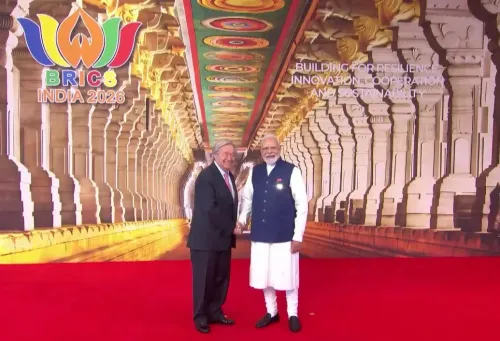
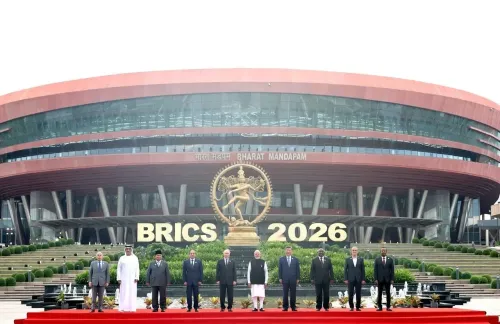
PM Narendra Modi addressed the closing session of the 18th BRICS Summit at Bharat Mandapam, New Delhi , on 13 September 2026 .
Modi said the Global South's confidence in BRICS has grown because their voices are heard and solutions are co-created with them.
The summit formalised the BRICS Digital Centre of Excellence for Smart Grids and Energy Storage to strengthen clean energy access.
Centres of Excellence for Agroecology and Regenerative Agriculture were established to connect traditional knowledge with modern science.
Principles for community-based climate adaptation were adopted, making indigenous knowledge a formal pillar of BRICS climate action.
Modi argued that development and environmental protection are complements, not alternatives , rooting the argument in India's civilisational values.
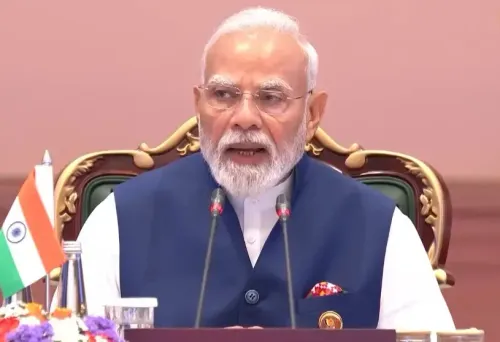
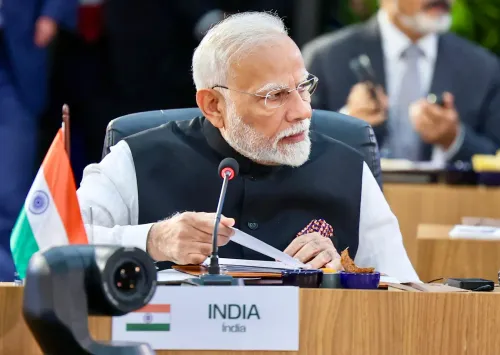
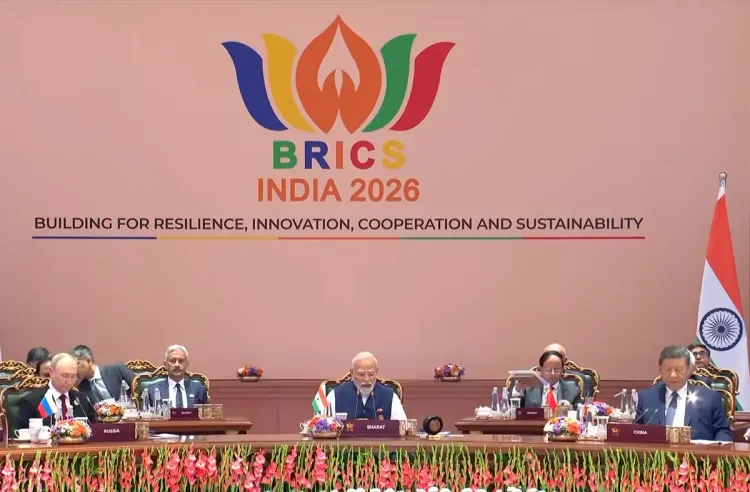
Prime Minister Narendra Modi on Sunday, 13 September 2026 declared that countries of the Global South have grown increasingly confident in BRICS because the grouping gives their voices genuine weight, stressing that the bloc's core strength lies in its diversity and cooperative spirit. Modi made these remarks while addressing the closing session of the 18th BRICS Summit held at Bharat Mandapam in New Delhi.
Modi's message on Global South inclusion
Drawing on what he described as personal experience, Prime Minister Modi said the relationship between BRICS and the developing world has evolved into a partnership of co-creation rather than a top-down arrangement. 'I can say from my personal experience that the confidence of the countries of the Global South in BRICS has increased because their voices are heard in BRICS, their experiences are respected, and solutions are developed not just for them, but together with them. The strength of BRICS lies in our diversity and cooperation,' he said in his closing address.
The remarks come as BRICS has expanded its membership significantly in recent years, with several developing nations either joining or seeking closer alignment with the grouping. Modi's framing positions BRICS as an alternative multilateral forum to Western-dominated institutions — one that, he argued, better reflects the aspirations of the majority world.
Development and environment: India's civilisational pitch
A notable thread running through Modi's address was India's civilisational approach to balancing economic growth with environmental stewardship. 'In Indian civilisation, nature has been given the status of a mother. For centuries, it has been our belief that development and the environment are not alternatives to each other, but complements,' he said.
This framing carries strategic weight at a time when Global South nations are pushing back against what they see as a double standard — Western countries that industrialised without environmental constraints now pressing developing economies to bear a disproportionate share of the climate burden. Modi's remarks align India with that sentiment while presenting the country as a thought leader on green development pathways.
Key BRICS initiatives announced
The Prime Minister highlighted several institutional initiatives formalised during the summit. These include the BRICS Digital Centre of Excellence for Smart Grids and Energy Storage, aimed at making clean energy systems more reliable, efficient, and accessible across member economies.
Additionally, the summit saw the establishment of Centres of Excellence for Agroecology and Regenerative Agriculture, designed to bridge traditional knowledge systems with contemporary scientific approaches. Modi also referenced the adoption of principles for community-based climate adaptation, which he said would elevate indigenous knowledge as a foundational pillar of climate action. These are the first such institutional BRICS mechanisms explicitly linking local ecological wisdom to global sustainability frameworks.
The broader significance for multilateralism
India's hosting of the 18th BRICS Summit at Bharat Mandapam marks a high-profile diplomatic moment for New Delhi, which has increasingly positioned itself as a bridge between the Global South and major powers. The summit's outcomes — from clean energy infrastructure to agricultural knowledge-sharing — reflect an agenda shaped as much by development concerns as by geopolitical signalling.
Modi closed with a call for unity across difference: 'We may be rooted in different realities, but together we rise through cooperation and blossom for humanity. May our diversity be our identity, may our cooperation be our inspiration and may our progress serve all humanity.'
With BRICS now representing a substantial share of global GDP and population, the grouping's next steps on reform of multilateral financial institutions — a persistent demand from Global South members — will be closely watched in the months ahead.
Point of View
But the proof will lie in whether the new Centres of Excellence and the smart grids initiative translate into measurable outcomes for smaller member economies or remain institutional gestures. Notably, the summit produced no public consensus on the long-standing Global South demand for reform of the IMF and World Bank voting structures — the most substantive ask that BRICS has yet to deliver on. India's civilisational pitch on environment-development harmony is politically astute, but it also sidesteps the harder question of finance: who funds adaptation for the countries least responsible for climate change?
NationPress
13 Sept 2026
Frequently Asked Questions
What did PM Modi say at the 18th BRICS Summit closing session?
Prime Minister Modi said the confidence of Global South countries in BRICS has grown because their voices are genuinely heard and solutions are developed in partnership with them, not just for them. He also highlighted new BRICS initiatives on clean energy, agroecology, and climate adaptation.
Where was the 18th BRICS Summit held?
The 18th BRICS Summit was held at Bharat Mandapam in New Delhi, with India serving as the host nation. The closing session took place on 13 September 2026.
What new BRICS institutions were announced at the summit?
The summit formalised the BRICS Digital Centre of Excellence for Smart Grids and Energy Storage, and established Centres of Excellence for Agroecology and Regenerative Agriculture. Principles for community-based climate adaptation, rooted in indigenous knowledge, were also adopted.
Why does BRICS matter to Global South countries?
BRICS is increasingly seen by developing nations as a multilateral forum that reflects their development priorities more faithfully than Western-led institutions. PM Modi argued that the grouping's expansion and inclusive approach have made it a trusted platform where Global South experiences directly shape outcomes.
What is India's position on balancing development and environment within BRICS?
PM Modi presented India's civilisational philosophy — that development and environmental protection are complementary, not contradictory — as a guiding framework for BRICS climate and sustainability initiatives. This includes linking traditional agricultural knowledge to modern science through the new Centres of Excellence.