Goa CM Launches Climate Dashboard, Biodiversity Awards 2025
Synopsis
Goa's Chief Minister launched an Inter Departmental Climate Change Dashboard and released the GSBB brochure and ONGC Biodiversity Report on 23 May 2026. Salt-pan conservers and recipients of the State Biodiversity Conservation Awards 2025 were also felicitated, linking digital climate governance with community-level ecosystem stewardship.
Key Takeaways
The Chief Minister of Goa launched an Inter Departmental Climate Change Dashboard on 23 May 2026 to integrate climate data across state departments.
The Goa State Biodiversity Board (GSBB) brochure and an ONGC Biodiversity Report were officially released at the same event.
Beneficiaries actively conserving active salt pans — traditional coastal ecosystems — were felicitated, recognising community-level climate adaptation.
Recipients of the State Biodiversity Conservation Awards 2025 were honoured for exemplary biodiversity protection work.
The initiatives align with India's Biological Diversity Act 2002 and the National Action Plan on Climate Change 2008 .
Goa's approach mirrors coastal states integrating sectoral data for India's Nationally Determined Contributions reporting.
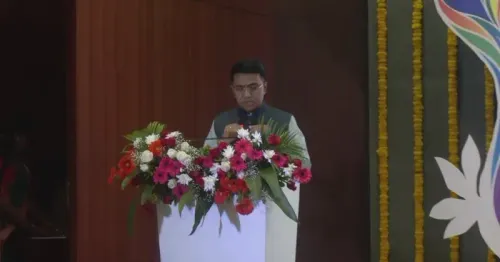
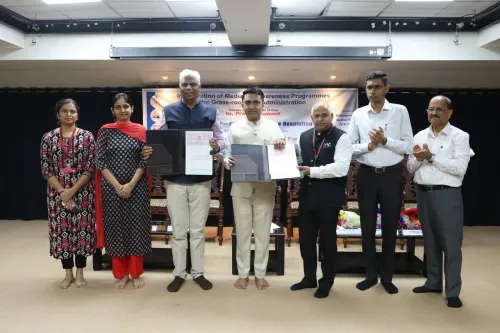
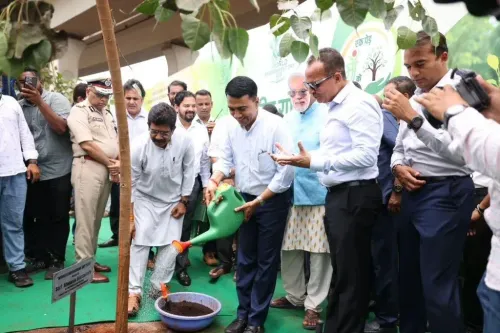
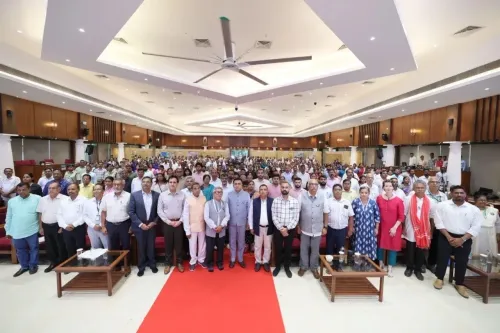
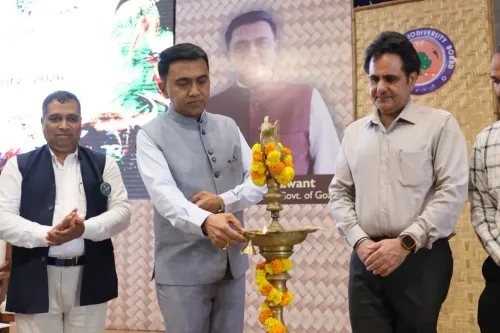
The Chief Minister's Office of Goa announced on Saturday, 23 May 2026 that the Chief Minister launched an Inter Departmental Climate Change Dashboard, released the Goa State Biodiversity Board (GSBB) brochure and an ONGC Biodiversity Report, and felicitated beneficiaries conserving active salt pans alongside recipients of the State Biodiversity Conservation Awards 2025.
Context
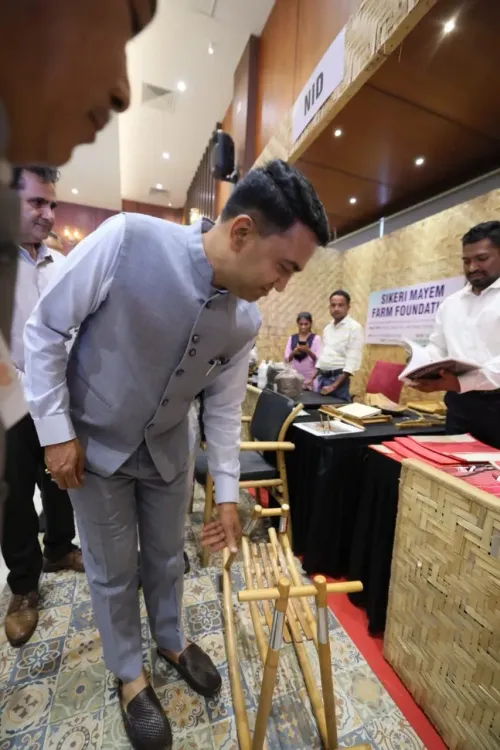
The event brought together multiple environmental initiatives under a single occasion, signalling the state government's effort to consolidate its climate and biodiversity agenda. The Inter Departmental Climate Change Dashboard is designed to integrate data across government departments, providing a unified monitoring tool for Goa's climate commitments. The simultaneous release of the GSBB brochure and the ONGC Biodiversity Report added a documentation dimension to the event.
Policy Backdrop
The Goa State Biodiversity Board is a statutory body constituted under the Biological Diversity Act 2002, mandated to advise the state on conservation, sustainable use, and documentation of biological resources. India's National Action Plan on Climate Change 2008 required states to develop monitoring mechanisms, making integrated departmental dashboards a logical evolution of that mandate. ONGC, India's largest public-sector oil and gas company, has conducted periodic biodiversity studies related to its offshore operations near Goa, and the release of its biodiversity report reflects the intersection of industrial accountability and ecological stewardship.
Active salt pans in Goa are traditional coastal sites that sustain unique halophytic ecosystems while supporting local livelihoods. Their conservation is increasingly recognised as an ecosystem-based adaptation measure, linking cultural practice to climate resilience. The felicitation of salt-pan conservers places community actors at the centre of the state's biodiversity strategy.
Stakeholders and Impact
The State Biodiversity Conservation Awards 2025 honoured individuals and institutions for exemplary work in biodiversity protection and sustainable practices, reinforcing a recognition framework that the Goa government has institutionalised as an annual exercise. Salt-pan workers and local biodiversity groups stand to benefit directly from the visibility and policy attention that such awards generate. State government departments are now expected to feed data into the new climate dashboard, a step that demands inter-agency coordination and capacity building.
The move mirrors parallel efforts in other Indian coastal states to operationalise national climate frameworks at the sub-national level. By tying community awards to a digital monitoring tool, Goa is attempting to close the loop between ground-level conservation and state-level reporting under India's Nationally Determined Contributions.
What's Next
Attention will now turn to whether the Inter Departmental Climate Change Dashboard will be made publicly accessible, and whether the recognition of salt-pan conservers translates into budgetary or legislative support for scaling those efforts. The state's ability to sustain inter-departmental data-sharing will determine the dashboard's long-term utility as a climate governance instrument. Goa's approach — combining digital tools, corporate environmental reporting, and community felicitation — could serve as a template for other small coastal states navigating similar biodiversity and climate pressures.
Point of View
Corporate biodiversity reporting, and community awards into a single event reflects a deliberate effort to project whole-of-government environmental credibility. The inclusion of salt-pan conservers is politically astute: it ties traditional livelihoods to the state's climate narrative, broadening the coalition behind what might otherwise be a technocratic exercise. The ONGC biodiversity report's release alongside state instruments also signals that the government is holding industrial actors to account within the same public frame. Sustained scrutiny will fall on whether the dashboard produces actionable inter-departmental outcomes or remains a symbolic display of coordination.
NationPress
6 Oct 2026
Frequently Asked Questions
What is the Goa Inter Departmental Climate Change Dashboard?
It is a digital monitoring tool launched by the Goa Chief Minister to integrate climate-related data across multiple state government departments, supporting coordinated climate governance and reporting.
What are the State Biodiversity Conservation Awards 2025?
These are annual state-level awards instituted by the Goa government to recognise individuals and institutions for outstanding contributions to biodiversity protection and sustainable practices in the state.
Why are active salt pans important for Goa's environment?
Active salt pans are traditional coastal sites that sustain unique halophytic ecosystems, support local livelihoods, and function as wetland habitats, making their conservation a key ecosystem-based climate adaptation measure.
What is the Goa State Biodiversity Board (GSBB)?
The GSBB is a statutory body set up under the Biological Diversity Act 2002 to advise the Goa government on conservation, sustainable use, and documentation of the state's biological resources.
What is the ONGC Biodiversity Report released in Goa?
It is a report by ONGC, India's largest public-sector oil and gas company, documenting biodiversity findings related to its operations near Goa, released at the state event on 23 May 2026.