Goa CM Sawant pays tribute to Lokmanya Tilak on birth anniversary
Synopsis
Goa Chief Minister Pramod Sawant marked Lokmanya Bal Gangadhar Tilak's birth anniversary on 23 July by invoking the nationalist leader's Swaraj declaration and calling for a stronger, self-reliant India — a message that connects independence-era nationalism to the BJP's contemporary Atmanirbhar Bharat framework.
Key Takeaways
Goa CM Pramod Sawant paid tribute to Lokmanya Bal Gangadhar Tilak on his birth anniversary, 23 July .
Sawant quoted Tilak's celebrated declaration: 'Swaraj is my birthright, and I shall have it.' The tribute linked Tilak's philosophy of self-rule to the goal of a 'stronger and self-reliant India,' echoing the Atmanirbhar Bharat framework launched in 2020 .
Tilak , born on 23 July 1856 , is credited with mass-mobilising India's independence movement through public festivals and political oratory.
BJP leaders have consistently connected Tilak's Swaraj ideal to contemporary self-reliance messaging since 2014 .
Annual tributes to Tilak have been a fixture of official Indian political calendars since 1947 .
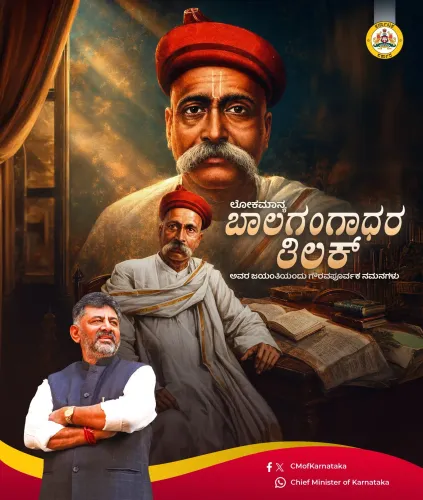
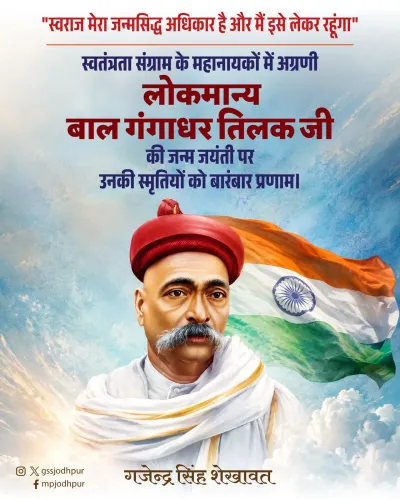
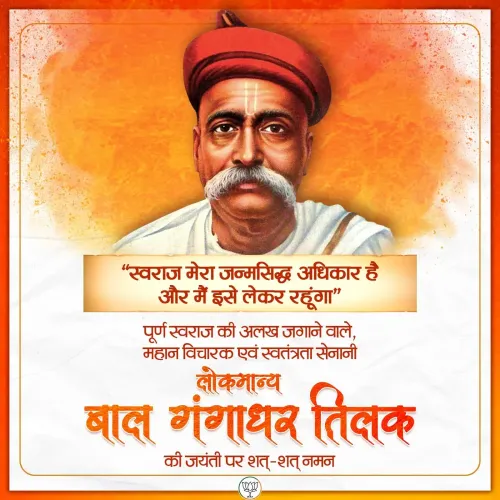
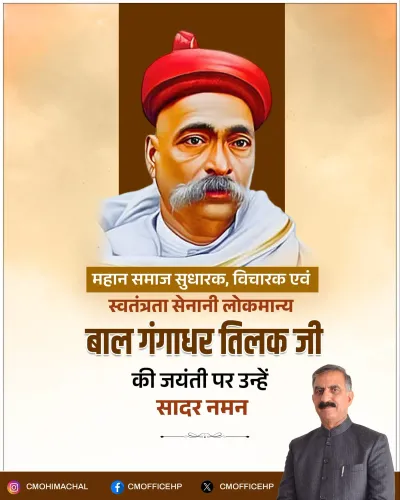
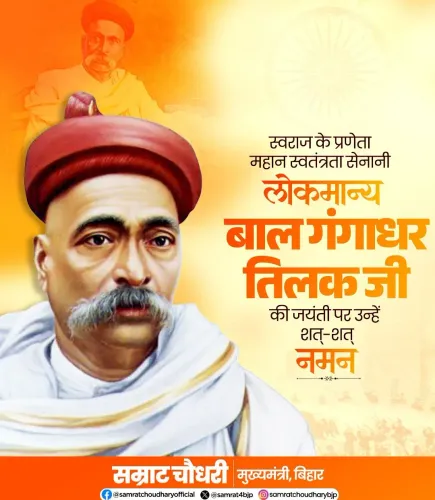
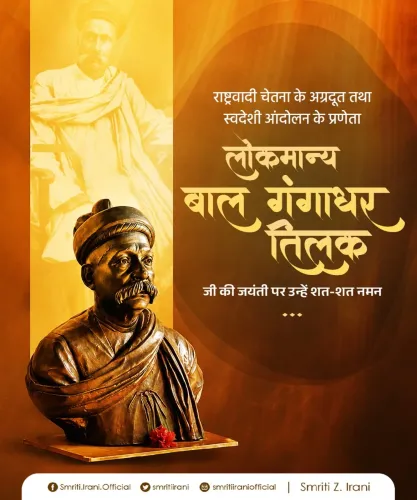
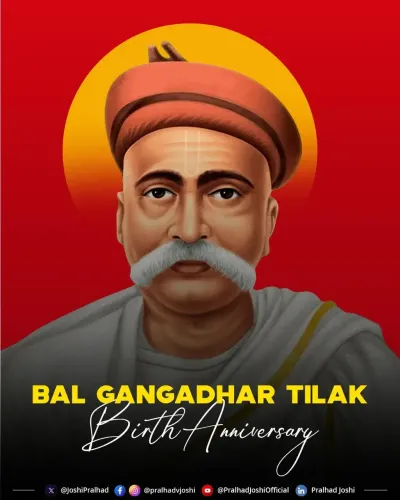
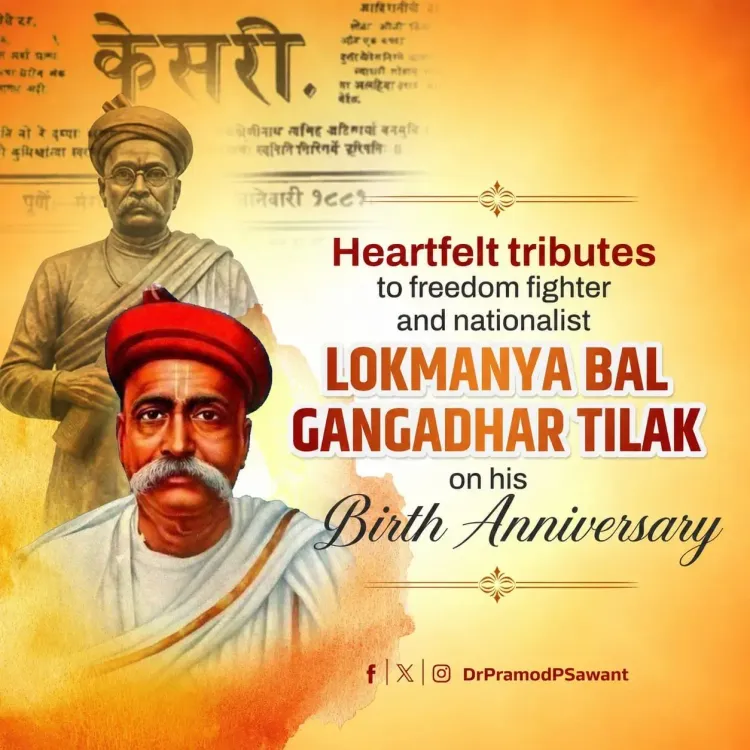
Goa Chief Minister Pramod Sawant on Thursday, 23 July paid tribute to freedom fighter and nationalist Lokmanya Bal Gangadhar Tilak on his birth anniversary, invoking Tilak's celebrated declaration that 'Swaraj is my birthright, and I shall have it' as a guiding ideal for building a stronger and self-reliant India.
Context
Bal Gangadhar Tilak, born on 23 July 1856, was one of the foremost leaders of India's independence movement and the first to articulate a mass political consciousness through the demand for self-rule. His rallying cry — 'Swaraj is my birthright, and I shall have it' — became one of the most enduring slogans of the nationalist era. Tilak championed the use of public festivals such as Ganesh Chaturthi and Shivaji Jayanti as platforms for political mobilisation, earning him the title Lokmanya, meaning 'accepted by the people as their leader.'
Tributes to Tilak on his birth anniversary have been a fixture of official and political calendars since 1947. Leaders across the political spectrum mark the occasion with statements and events, though BJP office-bearers have been particularly consistent in linking Tilak's Swaraj ideal to contemporary governance themes since 2014.
Policy Backdrop
CM Sawant closed his tribute with a call for a 'stronger and self-reliant India,' language that echoes the central government's Atmanirbhar Bharat framework launched in 2020. The framework, which promotes domestic manufacturing, supply-chain resilience, and reduced import dependence, has been a recurring reference point for BJP leaders when invoking historical nationalist figures.
By drawing a direct line from Tilak's Swaraj philosophy to present-day self-reliance policy, Sawant follows a pattern common among BJP chief ministers of grounding contemporary economic and governance goals in the legacy of independence-era icons. Goa's state government has regularly issued statements on national leaders as part of this broader messaging effort.
Stakeholders and Impact
The tribute is directed at Indian citizens broadly and BJP supporters in particular, reinforcing a political identity rooted in nationalist history. For Goa, a state that joined the Indian Union only in 1961 after liberation from Portuguese rule, invocations of the freedom movement carry a distinct resonance — the state's own struggle for self-determination is woven into its civic memory.
Tilak's legacy also holds significance for Maharashtra, the state of his birth, and for Marathi-speaking communities across western India. Tributes from BJP leaders in neighbouring Goa reinforce cultural and political ties with that constituency.
What's Next
Similar tributes from other BJP chief ministers and central government ministers are expected throughout the day, as Tilak Jayanti is observed nationally. State-level commemorative events — lectures, exhibitions, and youth programmes — are typically organised in Maharashtra and other states with strong historical connections to Tilak's legacy. Whether Goa's state government plans any formal event beyond the social-media tribute has not been announced.
The broader pattern of linking Tilak's Swaraj ideal to Atmanirbhar Bharat is likely to intensify as the BJP approaches upcoming electoral cycles, with historical nationalism remaining a central pillar of the party's political communication.
Point of View
The message does double duty — honouring a historical figure while validating a present-day policy framework. Tilak is a particularly strategic reference for a party seeking to consolidate support in Maharashtra and among Marathi communities in Goa. The consistency of this messaging across BJP chief ministers signals a coordinated communications posture rather than a spontaneous personal tribute.
NationPress
23 Jul 2026
Frequently Asked Questions
Who is Lokmanya Bal Gangadhar Tilak?
Lokmanya Bal Gangadhar Tilak was a prominent Indian nationalist leader and freedom fighter, born on 23 July 1856, who popularised the slogan 'Swaraj is my birthright, and I shall have it' and used public festivals to mobilise mass political consciousness against British rule.
Why is 23 July celebrated as Tilak Jayanti?
23 July is observed as Tilak Jayanti because it marks the birth anniversary of Lokmanya Bal Gangadhar Tilak, who was born on this date in 1856. Governments and political organisations across India mark the day with official tributes and commemorative events.
What did Goa CM Pramod Sawant say about Tilak?
Goa CM Pramod Sawant called Tilak a 'fearless leader of India's freedom movement' who 'awakened the spirit of patriotism,' and invoked his Swaraj declaration as a guide for building a stronger and self-reliant India.
What is the meaning of 'Swaraj is my birthright'?
The phrase 'Swaraj is my birthright, and I shall have it' was Tilak's declaration that self-rule was a fundamental right of every Indian, not a privilege to be granted by colonial rulers. It became one of the most powerful slogans of India's independence movement.
How does BJP connect Tilak's legacy to current policy?
BJP leaders have consistently linked Tilak's Swaraj philosophy to the central government's Atmanirbhar Bharat (self-reliant India) framework since 2014, framing present-day economic and governance goals as a continuation of the nationalist ideals Tilak championed.