Mumbai slum-free in 10 years: CM Fadnavis unveils cluster redevelopment plan
Synopsis
Maharashtra CM Devendra Fadnavis has put a 10-year deadline on making Mumbai slum-free, with Dharavi's redevelopment targeting 10,000 units by January 2029 and a $1.5 trillion MMR economy by 2047. The scale of ambition — from a Uttan-Virar sea link to a 'Fourth Mumbai' around Vadhavan Port — is striking. The real question is whether execution will match the vision.
Key Takeaways
CM Devendra Fadnavis pledged to make Mumbai slum-free within 10 years using a cluster development model.
The Dharavi Redevelopment Project targets 10,000 rehabilitation housing units by January 2029 .
BEST bus depots will be redeveloped into mixed-use hubs with commercial, residential, and recreational spaces.
MMR's economy is targeted to reach $1.5 trillion by 2047 ; MMR hosts nearly 60% of India's data centre capacity.
Vadhavan Port — three times larger than JNPT — is projected to create 1 million jobs in Palghar district .
A 24-km sea link from Uttan to Virar and a Mumbai-Pune Quantum Corridor are among the planned infrastructure projects.
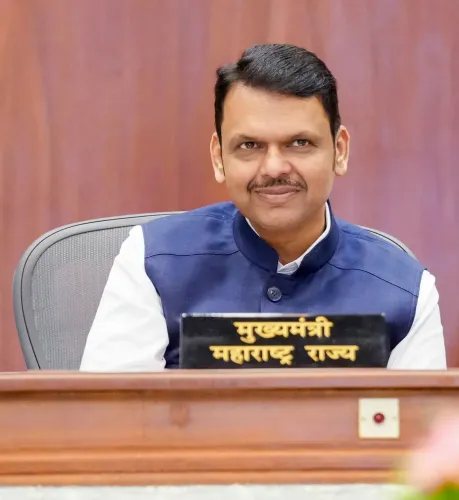
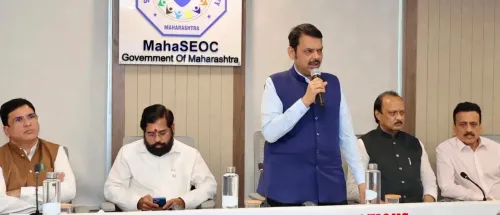
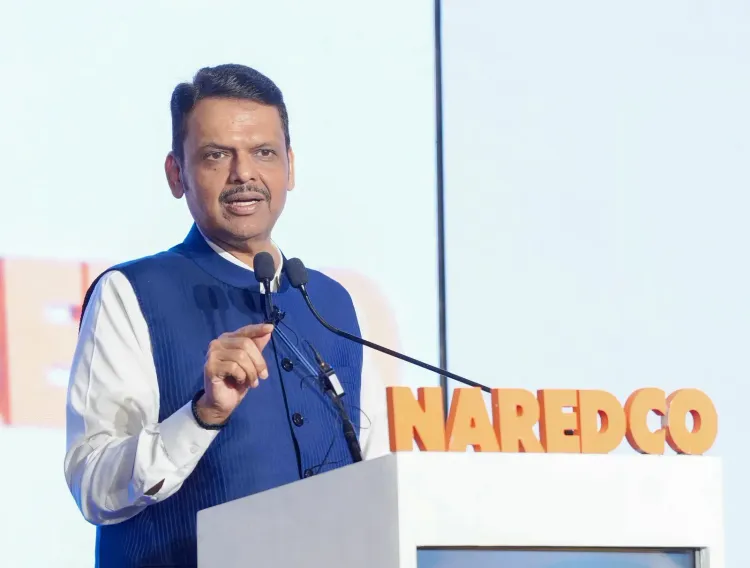
Maharashtra Chief Minister Devendra Fadnavis on Thursday, 3 September declared that Mumbai will be made slum-free within the next 10 years, with a cluster development model already in place to drive the city's comprehensive redevelopment. Speaking at NAREDCO Maharashtra's 'Change of Guard' ceremony, Fadnavis outlined an ambitious urban overhaul spanning the Dharavi Redevelopment Project, MHADA colony revitalisation, and the modernisation of BEST bus depots.
Dharavi and MHADA: The Redevelopment Pillars
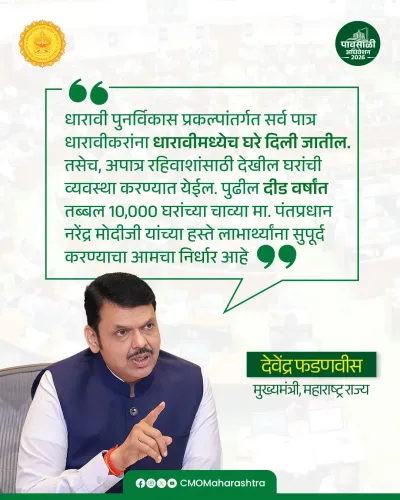
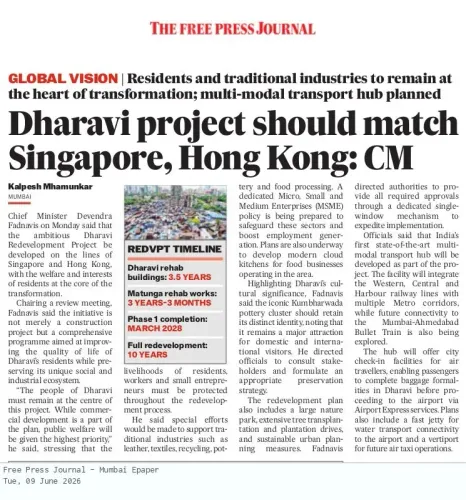
The Dharavi Redevelopment Project has already commenced under the cluster-based planning approach, with a target to deliver 10,000 rehabilitation housing units by January 2029. Fadnavis also stressed the urgent need to redevelop 50-year-old MHADA colonies, ensuring planned development through the maximisation of available land resources.
BEST bus depots are set for state-of-the-art redevelopment, incorporating modern bus stations, upgraded passenger amenities, and mixed-use spaces featuring commercial and residential units, museums, sports grounds, and recreational hubs. The Chief Minister said this approach will generate new revenue streams for BEST while reshaping Mumbai's urban design.
Maharashtra's Economic Ambitions
Fadnavis noted that while India recorded a GDP growth rate of 7.8% in the first quarter, Maharashtra outpaced the national figure with an 8.8% growth rate during the same period, crediting the real estate sector as a key driver. The Mumbai Metropolitan Region (MMR) development plan is structured to scale MMR's economy to $1.5 trillion by 2047.
MMR currently hosts nearly 60% of India's data centre capacity, with plans underway to build ecosystems for smart manufacturing, frontier technologies, and deep tech. Next-generation urbanisation is set to accelerate across the MMR, Pune Metropolitan Region, and Nagpur Metropolitan Region.
Mumbai 3.0, Sea Link, and Vadhavan Port
'Mumbai 3 is no longer just a future concept — its implementation has begun,' Fadnavis said, referencing the active development of Smart Cities, Edu-Cities, Medi-Cities, and Innovation Cities. A 24-kilometre sea link from Uttan to Virar is also planned as a critical infrastructure project to ease traffic flow and render Mumbai signal-free.
Vadhavan Port — described as nearly three times larger than JNPT — is expected to generate approximately 1 million job opportunities in Palghar district and lay the foundation for a 'Fourth Mumbai'. A dedicated freight corridor linking Vadhavan Port and JNPT to Nashik, with onward connectivity to Jalna, Wardha, and Gadchiroli via the Samruddhi Expressway, is also planned.
Pune, Nagpur, and the Quantum Corridor
In Nagpur, a 'New Nagpur' is being developed with plug-and-play industrial facilities. In Pune, land acquisition for a new airport is complete and tendering for construction will launch this year; the surrounding area is earmarked for Global Capability Centres (GCCs) and smart manufacturing ecosystems. The state government also aims to establish the Mumbai-Pune corridor as a 'Quantum Corridor'.
Fadnavis highlighted that with 65% of India's population being young — including nearly 30 million youth aged 18 to 28 in Maharashtra — and Artificial Intelligence set to reshape jobs and business models, the construction sector must adopt modern technology for faster, advanced building techniques. An agreement was also signed between NAREDCO Chairman Kamlesh Thakur and Nagpur NMRDA Commissioner Sanjay Meena at the event, alongside the unveiling of the 'New Nagpur' logo. The next phase of Maharashtra's urban story, Fadnavis indicated, will be defined by how swiftly these projects move from announcement to delivery.
Point of View
000-unit target by 2029 is the first hard number attached to a hard deadline, which is progress. But the broader vision — Fourth Mumbai, Quantum Corridor, $1.5 trillion MMR — risks becoming a catalogue of slogans unless land acquisition, financing, and resettlement timelines are published and tracked. Maharashtra's 8.8% growth rate is real, but past redevelopment promises in Mumbai have consistently collided with litigation, political resistance, and displacement disputes. The NAREDCO audience was receptive; the test will be what slum residents and civil society make of the fine print.
NationPress
4 Sept 2026
Frequently Asked Questions
What is Maharashtra CM Fadnavis's plan to make Mumbai slum-free?
CM Devendra Fadnavis announced on 3 September that Mumbai will be made slum-free within 10 years through a cluster development model. The plan centres on the Dharavi Redevelopment Project, revitalisation of MHADA colonies, and modernisation of BEST bus depots.
What is the Dharavi Redevelopment Project target?
The Dharavi Redevelopment Project, already underway, targets the delivery of 10,000 rehabilitation housing units by January 2029. It is being executed under a cluster-based planning approach as part of Mumbai's broader urban overhaul.
What is the economic vision for the Mumbai Metropolitan Region?
The MMR development plan aims to scale the region's economy to $1.5 trillion by 2047. MMR currently hosts nearly 60% of India's data centre capacity, with plans for smart manufacturing, frontier technology, and deep tech ecosystems.
What is 'Fourth Mumbai' and how does Vadhavan Port fit in?
'Fourth Mumbai' refers to new urban centres planned around Vadhavan Port in Palghar district. Vadhavan Port, described as nearly three times larger than JNPT, is expected to generate approximately 1 million jobs and will be linked to Nashik, Jalna, Wardha, and Gadchiroli via a dedicated freight corridor.
What infrastructure projects were announced for Mumbai and Maharashtra?
Key projects include a 24-kilometre sea link from Uttan to Virar, a Mumbai-Pune Quantum Corridor, a new Pune airport (land acquisition complete, tendering this year), plug-and-play industrial facilities in New Nagpur, and mixed-use redevelopment of BEST bus depots across Mumbai.