Kashmir's 'Mushroom King' Gowhar Ali Lone grows 500-tray empire from a single room
Synopsis
A farmer from Baramulla who started with 70 mushroom trays in a single room now runs a 500-tray integrated enterprise worth ₹6 lakh a year — employing 10 people and winning four national awards. Gowhar Ali Lone's story is the clearest proof yet that Kashmir's agri-schemes are producing real entrepreneurs, not just subsidy recipients.
Key Takeaways
Gowhar Ali Lone of Khonchipora village, Baramulla , began mushroom cultivation in 2007 with just 70 trays and has scaled to more than 500 trays .
He earns approximately ₹6 lakh annually , cultivating mushrooms twice a year .
His integrated model covers dairy farming, sheep rearing, poultry, vertical farming , rooftop vegetables, and compost sales.
Growth was enabled by the CAPEX scheme , Holistic Agriculture Development Programme (HADP) , and horticulture schemes of the Centre and J&K government.
Lone has won four national awards , including the Progressive Mushroom Grower Award from ICAR-Directorate of Mushroom Research, Solan .
His enterprise directly employs around 10 people ; he also trains farmers and unemployed youth across the valley.
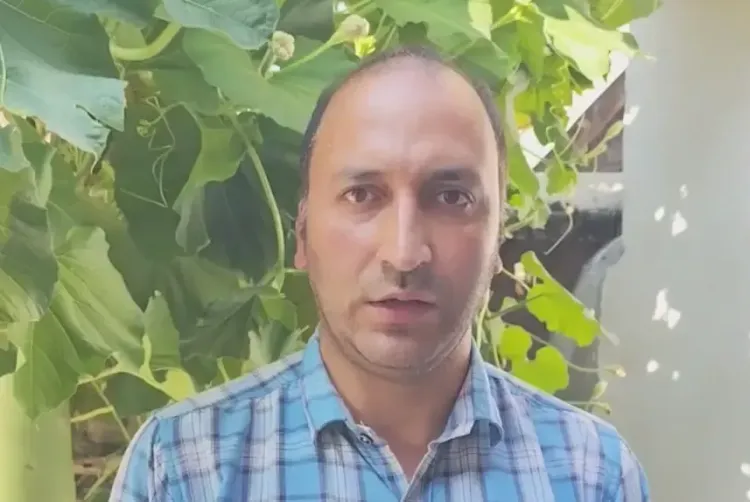
Gowhar Ali Lone, a progressive farmer from Khonchipora village in the Tangmarg area of Baramulla district, has built a thriving mushroom cultivation and integrated farming enterprise from scratch — starting with just 70 trays in a modest room and scaling to more than 500 trays today. Known across the valley as the 'Mushroom Man' and 'Mushroom King' of Kashmir, Lone's journey since 2007 illustrates how targeted government schemes can help small farmers transform into rural entrepreneurs and local job creators.
From a 20×40 Room to a Diversified Enterprise
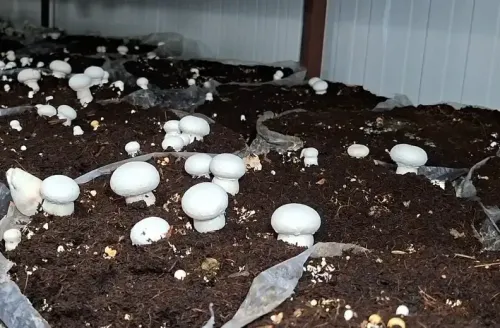
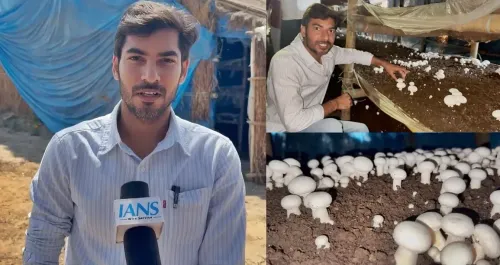
Lone began his venture in 2007 inside a 20×40-foot room at his home in Khonchipora, with limited resources and no prior formal training in commercial farming. He cultivates mushrooms twice a year and now earns approximately ₹6 lakh annually from the enterprise. Rather than limiting himself to mushrooms, he progressively adopted an integrated farming model that brings together dairy farming, sheep rearing, poultry, and vertical farming under one roof. He has also put his home's courtyard and rooftop to productive use, growing vegetables and fruit-bearing plants in spaces that would otherwise go idle.
To minimise waste and maximise returns, Lone sells the compost generated after mushroom cultivation, turning a byproduct into an additional revenue stream. This circular approach to farming is a key reason his unit has remained financially sustainable even through seasonal fluctuations.
Government Schemes That Made the Difference
Lone attributes his growth squarely to Central and Jammu and Kashmir government initiatives. He specifically credits the CAPEX scheme, the Holistic Agriculture Development Programme (HADP), and various horticulture-related schemes for enabling him to adopt modern agricultural practices and expand his operations.
'I started this work in 2007 from my home and gradually developed an integrated farming system. I benefited from several government schemes, particularly the CAPEX scheme, HADP and horticulture schemes. These initiatives helped me grow, and I am happy that I could not only establish my own business but also provide employment to others,' Lone said.
This comes amid a broader push by the Jammu and Kashmir administration to reduce youth dependence on government jobs by promoting agricultural entrepreneurship and allied sectors as viable career pathways.
National Recognition and Official Appreciation
Lone's work has earned him recognition at the national level, including four national awards — among them the Progressive Mushroom Grower Award from the ICAR-Directorate of Mushroom Research, Solan. He has also been featured among India's top 40 young agricultural experts.
Notably, Jammu and Kashmir Lieutenant Governor Manoj Sinha praised Lone's integrated farming model on his radio programme 'Awami Awaaz', lending official visibility to a grassroots success story that might otherwise have remained local in reach.
Employment Creation and a Message for Youth
Beyond building his own livelihood, Lone's enterprise directly employs around 10 people, including agricultural labourers and those engaged in transportation and associated activities. He also conducts training sessions for farmers and unemployed youth, encouraging them to explore agriculture and allied sectors rather than waiting for government jobs.
'I employ at least 10 people. A person who works should not earn only for himself but should also create opportunities for others. Government schemes have helped me achieve what would otherwise have been very difficult. I am grateful to the government for introducing such initiatives, especially for unemployed youth,' he said.
Looking ahead, Lone's model is increasingly being cited as a replicable blueprint for agri-entrepreneurship in Jammu and Kashmir, where youth unemployment remains a persistent challenge and the transition from subsistence farming to market-linked enterprise is still nascent.
Point of View
And anecdotal success stories, however inspiring, do not automatically translate into systemic change. The administration would do well to publish verifiable data on how many farmers have crossed the ₹5 lakh annual income threshold through these schemes, rather than allowing the narrative to rest on a handful of award-winning individuals. Lone himself is pushing that message — urging youth to stop waiting for government jobs — which may be the most subversive and valuable part of his story.
NationPress
9 Nov 2026
Frequently Asked Questions
Who is Gowhar Ali Lone, Kashmir's 'Mushroom King'?
Gowhar Ali Lone is a progressive farmer from Khonchipora village in the Tangmarg area of Baramulla district, Jammu and Kashmir, who has built a successful mushroom cultivation and integrated farming enterprise since 2007. He is widely known as the 'Mushroom Man' and 'Mushroom King' of Kashmir, and has received four national awards for his work.
How much does Gowhar Ali Lone earn from mushroom farming?
Lone earns approximately ₹6 lakh annually from mushroom cultivation, which he carries out twice a year across more than 500 trays. Additional income comes from compost sales, dairy, poultry, and other components of his integrated farming model.
Which government schemes helped Gowhar Ali Lone expand his farm?
Lone credits the CAPEX scheme, the Holistic Agriculture Development Programme (HADP), and various horticulture-related schemes launched by the Centre and the Jammu and Kashmir government for enabling him to adopt modern practices and scale his operations.
How many people does Gowhar Ali Lone employ?
Lone's enterprise directly employs around 10 people, including agricultural labourers and those involved in transportation and associated activities. He also trains farmers and unemployed youth to encourage agri-entrepreneurship in the region.
What awards has Gowhar Ali Lone won for mushroom cultivation?
Lone has received four national awards, including the Progressive Mushroom Grower Award from the ICAR-Directorate of Mushroom Research, Solan. He has also been recognised among India's top 40 young agricultural experts.