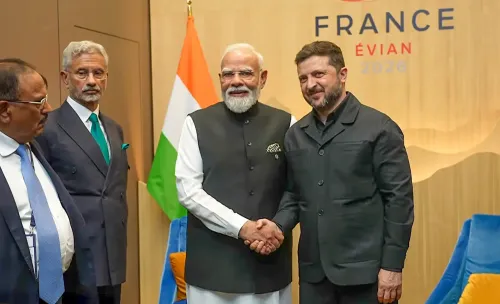
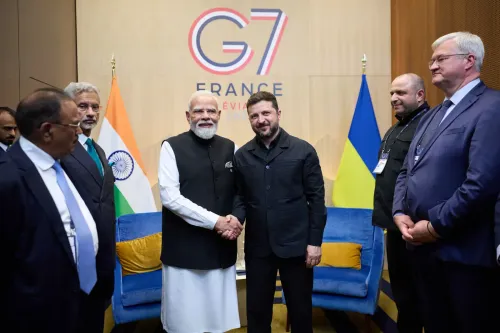
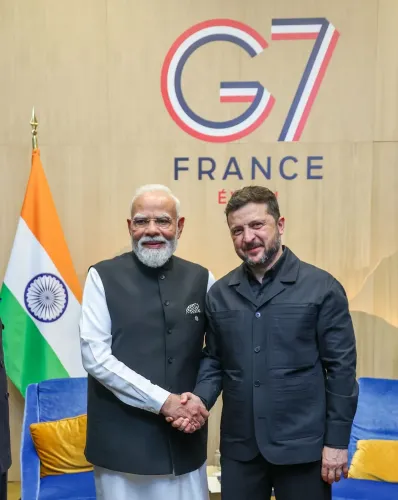
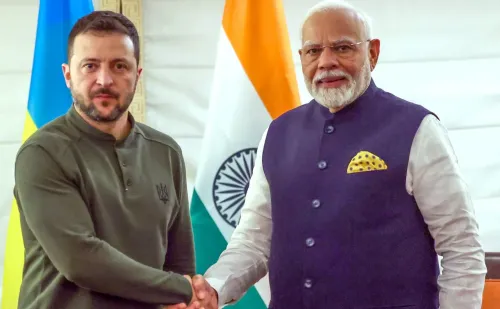
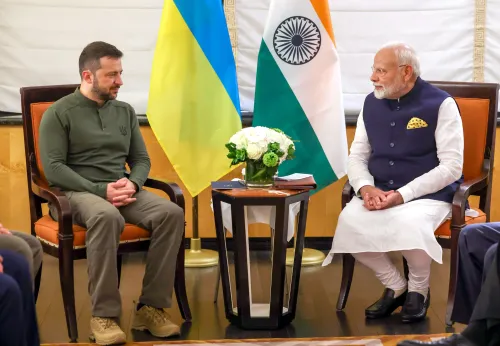
PM Modi speaks with Zelenskyy, pushes for peaceful resolution
Synopsis
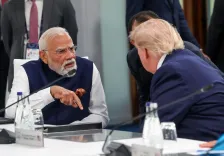
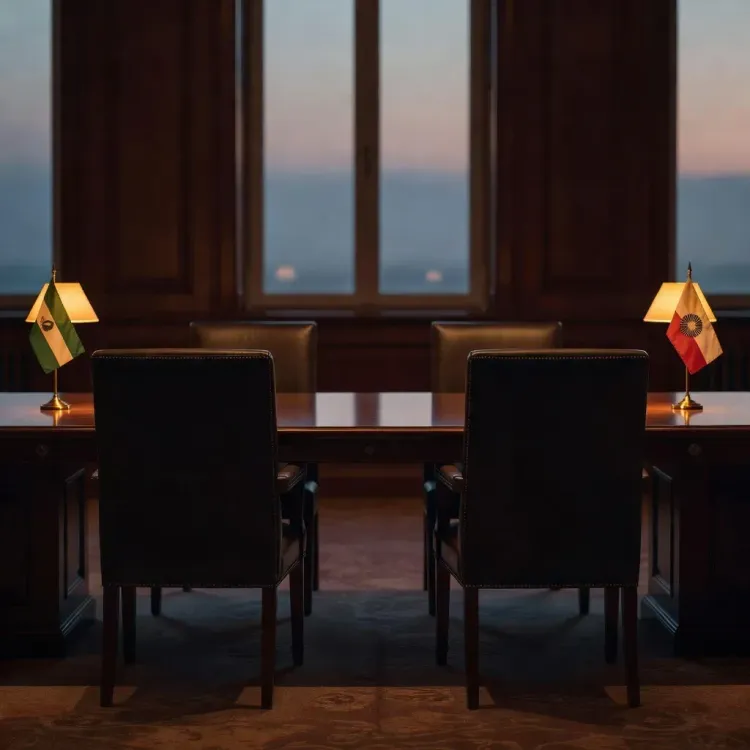
Prime Minister Narendra Modi held a telephone conversation with Ukrainian President Volodymyr Zelenskyy on November 9, 2026, reviewing India-Ukraine bilateral cooperation and reiterating India's firm commitment to contributing towards a peaceful resolution of the ongoing conflict.
Key Takeaways
PM Narendra Modi and Ukrainian President Volodymyr Zelenskyy spoke by telephone on November 9, 2026 .
The two leaders reviewed 'wide-ranging bilateral cooperation' and agreed to further strengthen India-Ukraine ties .
Modi thanked Zelenskyy for sharing perspectives on the conflict's humanitarian aspects and peace efforts.
India reiterated its 'firm commitment to contributing in every possible way towards a peaceful resolution.' The call continues India's pattern of dual-track engagement with both Kyiv and Moscow since the February 2022 escalation.
India has historically provided humanitarian aid to Ukraine including medicines and wheat, while abstaining on UN resolutions condemning Russia.
A phone call between two heads of state — one navigating a war, the other walking a diplomatic tightrope — has once again put India's balancing act at the centre of one of the world's most consequential conflicts. Prime Minister Narendra Modi spoke with Ukrainian President Volodymyr Zelenskyy on Monday, November 9, 2026, in a call described as productive and wide-ranging.
What was said — and what it signals
Modi confirmed the two leaders reviewed bilateral cooperation across multiple domains and 'agreed to further strengthen India-Ukraine ties.' He thanked Zelenskyy for sharing his perspectives on 'the ongoing conflict, its humanitarian aspects and various efforts to restore peace' — diplomatic language that acknowledges Ukraine's reality without assigning blame.
Crucially, Modi 'reiterated India's firm commitment to contributing in every possible way towards a peaceful resolution.' That word — reiterated — matters. It signals continuity, not a new pivot.
India's strategic autonomy, tested again
Since Russia's major escalation in February 2022, India has walked a carefully calibrated line. New Delhi abstained on multiple UN General Assembly resolutions condemning Russia, even as it dispatched humanitarian aid — medicines and wheat — to Ukraine and maintained high-level calls with both Kyiv and Moscow.
That dual-track engagement is not ambiguity; it is a deliberate architecture. India preserves deep defence and energy ties with Russia, a relationship built over decades, while sustaining its own independent relationship with Ukraine — which includes longstanding bilateral cooperation in education, defence training, and trade dating to the post-1991 period.
Modi has held multiple calls with both Zelenskyy and Russian President Vladimir Putin since 2022, consistently calling for dialogue over confrontation. Each call has been framed around India's 'strategic autonomy' — a foreign-policy doctrine that refuses to be corralled into any single-power orbit.
Why November 2026 matters
The timing of this call, with the conflict entering its fifth year, reflects continued international pressure on major powers to bring India's diplomatic weight to bear on peace efforts. Modi's mention of 'various efforts to restore peace' suggests Zelenskyy updated him on the latest multilateral discussions — without New Delhi publicly endorsing any single framework.
India's voice carries particular weight in the Global South, where many nations share its reluctance to align unconditionally with Western-led coalitions. A Modi call to Kyiv is therefore more than a bilateral courtesy; it is a signal to dozens of watching capitals about where India stands — which is, deliberately, in the middle ground between condemning and condoning.
What to watch next
The question now is whether this call seeds something more tangible — a bilateral visit, a trade agreement, or India's visible participation in a multilateral peace forum. Modi's language of 'contributing in every possible way' leaves that door conspicuously open.
India has long argued that lasting peace requires more voices than just the West's. If New Delhi moves from phone calls to a formal mediating role, this November conversation may be remembered as a quiet turning point.
Point of View
And projecting New Delhi as a potential bridge-builder rather than a partisan actor. Modi's choice to 'reiterate' rather than announce a new peace commitment signals that India's position has not shifted, even as the conflict extends into its fifth year. The Global South framing gives India's mediation offer real diplomatic currency: many developing nations look to New Delhi to represent a non-aligned perspective in multilateral peace forums. If this call eventually yields a formal Indian role in peace talks, it would mark a significant elevation of India's hard-power diplomacy into genuine conflict resolution — a goal Modi's government has signalled ambitions toward since 2022.
NationPress
9 Nov 2026
Frequently Asked Questions
Why did PM Modi call President Zelenskyy in November 2026?
PM Modi called President Zelenskyy to review India-Ukraine bilateral cooperation and reiterate India's commitment to a peaceful resolution of the Russia-Ukraine conflict. The call also covered the humanitarian aspects of the ongoing war.
What is India's official position on the Russia-Ukraine conflict?
India maintains a policy of strategic autonomy, calling for dialogue and a peaceful resolution without publicly condemning either side. It has abstained on several UN resolutions against Russia while providing humanitarian aid to Ukraine.
Has PM Modi spoken to President Zelenskyy before?
Yes. PM Modi has held multiple telephone conversations with President Zelenskyy since Russia's major escalation in February 2022, consistently advocating for diplomacy and peaceful resolution.
What bilateral ties exist between India and Ukraine?
India and Ukraine share longstanding ties in education, defence training, and trade dating back to 1991. India also provided humanitarian assistance including medicines and wheat to Ukraine after the 2022 escalation.
Could India play a mediating role in the Russia-Ukraine conflict?
India has not formally announced a mediating role, but PM Modi's repeated calls to both sides and his language of 'contributing in every possible way' leave the door open to a more formal peace-process involvement.