Defence Ministry signs ₹4,106 crore contracts for IAF satellite, Navy torpedoes
Synopsis
India's Ministry of Defence cleared ₹4,106 crore in defence deals on 15 October — a dedicated IAF communication satellite via NSIL and Varunastra anti-submarine torpedoes via BDL. Coming weeks after a BrahMos fire control deal, the spree signals a deliberate acceleration of indigenous military procurement at a time of heightened maritime and aerial competition.
Key Takeaways
The Ministry of Defence signed contracts worth ₹4,106 crore on 15 October 2026 for IAF and Navy acquisitions.
The GSAT-7C satellite contract ( ₹2,563 crore ) was signed with New Space India Limited , Bengaluru, to enhance IAF communication capabilities.
The Varunastra heavy-weight torpedo contract ( ₹1,543 crore ) was signed with Bharat Dynamics Limited , Hyderabad, boosting the Navy's anti-submarine warfare capability.
Earlier this month, a ₹661.50 crore deal was signed with BrahMos Aerospace Private Limited for Navy fire control systems and launchers.
The BrahMos procurement carries a minimum 68% indigenous content requirement, ensuring MSME participation over a three-year project period.
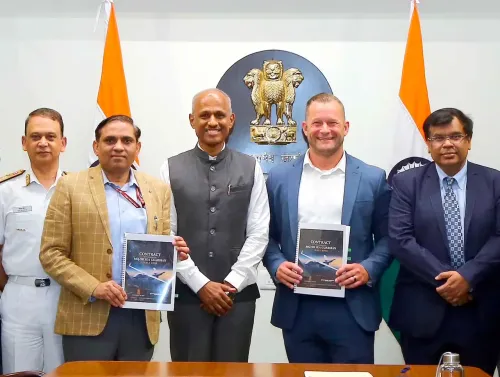
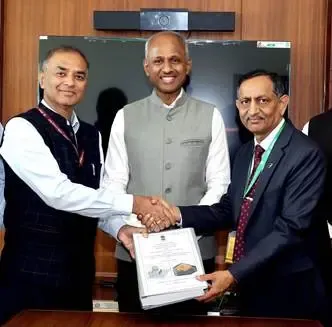
The Ministry of Defence on Thursday, 15 October 2026, signed contracts worth ₹4,106 crore for two major defence acquisitions — a dedicated communication satellite for the Indian Air Force (IAF) and Varunastra heavy-weight torpedoes for the Indian Navy. Both deals advance India's push for self-reliance in critical military technologies under the government's Aatmanirbhar Bharat and Make in India frameworks.
GSAT-7C: Securing the Skies for the IAF
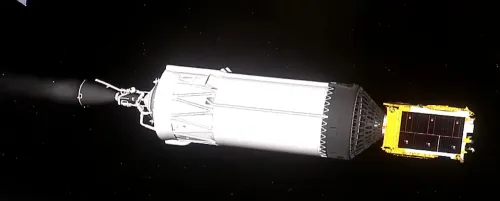
The contract for the GSAT-7C communication satellite, valued at ₹2,563 crore, was signed with New Space India Limited (NSIL), Bengaluru. According to the official Ministry statement, the indigenously designed, developed, and manufactured satellite will enhance secure, resilient, and seamless communication for IAF assets, directly strengthening the force's operational effectiveness.
GSAT-7C follows in the footsteps of GSAT-7 and GSAT-7A, which already serve the Indian Navy and IAF respectively, marking a continued deepening of India's dedicated military space architecture. The new satellite is expected to provide broader bandwidth and greater redundancy for the IAF's expanding fleet of platforms, including modern fighter jets and unmanned aerial systems.
Varunastra Torpedoes: Deepening Anti-Submarine Warfare
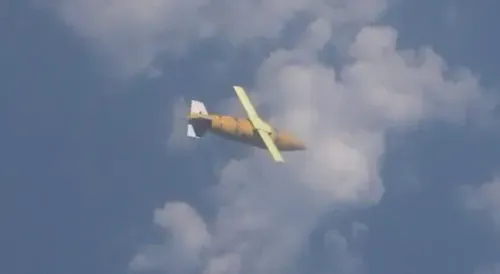
The second contract, worth ₹1,543 crore, was signed with Bharat Dynamics Limited (BDL), Hyderabad, for the procurement of Varunastra heavy-weight torpedoes. Varunastra is an indigenous ship-launched anti-submarine torpedo developed by the Naval Science and Technological Laboratory (NSTL).
'Equipped with advanced manoeuvring capabilities, it is capable of engaging enemy submarines at long ranges, thereby enhancing the anti-submarine warfare capability of the Indian Navy,' the Ministry statement said. The acquisition is particularly significant given growing maritime competition in the Indian Ocean Region (IOR), where underwater threats have increasingly shaped naval calculus.
Context: A Busy Month for Defence Procurement
The twin contracts come close on the heels of an earlier deal this month in which the Ministry signed a ₹661.50 crore agreement with BrahMos Aerospace Private Limited for the procurement of BrahMos fire control systems and launchers for Indian Navy ships under the Buy (Indian-IDDM) category. The BrahMos system is the Navy's primary Surface-to-Surface Missile (SSM) platform, capable of striking land and sea targets at supersonic speed with high precision.
The BrahMos deal carries a minimum of 68 per cent indigenous content, mandating active participation from Indian industries, including micro, small and medium enterprises (MSMEs) in the supply chain, and is projected to generate employment over a three-year period.
What This Means for India's Defence Ecosystem
Collectively, these contracts signal a systematic effort to plug critical capability gaps — satellite communications, underwater warfare, and maritime strike — using domestically manufactured systems rather than off-the-shelf imports. The NSIL and BDL deals keep the value chain within Indian public-sector enterprises, while the IDDM category requirement on BrahMos ensures private and MSME participation.
Notably, this is part of a broader pattern: the Ministry has been accelerating capital procurement signings in the latter half of the financial year, a trend analysts have flagged as reflecting both budgetary urgency and geopolitical pressure. With contracts for IAF communications, naval torpedoes, and ship-launched missiles all cleared within weeks, the pace of indigenous defence orders appears to be accelerating heading into 2027.
Point of View
Not just import substitution on paper. The real question is timeline and in-service performance: past DRDO-ecosystem projects have faced qualification delays that blunted operational value. If GSAT-7C and Varunastra are inducted on schedule and meet operational parameters, the Aatmanirbhar model gains credibility; if they slip, the IAF and Navy will quietly turn back to allied-nation alternatives — as they have before.
NationPress
15 Oct 2026
Frequently Asked Questions
What are the two defence contracts signed by India's Ministry of Defence on 15 October 2026?
The Ministry of Defence signed a ₹2,563 crore contract with New Space India Limited for the GSAT-7C communication satellite for the Indian Air Force, and a ₹1,543 crore contract with Bharat Dynamics Limited for Varunastra heavy-weight torpedoes for the Indian Navy. Together, the two deals are valued at ₹4,106 crore.
What is the GSAT-7C satellite and how will it help the Indian Air Force?
GSAT-7C is an indigenously designed, developed, and manufactured communication satellite contracted to New Space India Limited. It will provide secure, resilient, and seamless communications for IAF assets, enhancing operational effectiveness across the force's platforms.
What is the Varunastra torpedo and what threat does it address?
Varunastra is an indigenous ship-launched anti-submarine torpedo developed by the Naval Science and Technological Laboratory and manufactured by Bharat Dynamics Limited. It is designed to engage enemy submarines at long ranges, strengthening India's anti-submarine warfare capability in the Indian Ocean Region.
How does this fit into India's broader defence procurement push?
The contracts follow a ₹661.50 crore BrahMos fire control system deal signed earlier in October 2026 and are part of a broader Aatmanirbhar Bharat drive to source critical military technology domestically. The BrahMos deal alone mandates 68% indigenous content and will generate employment over three years.
Which companies are manufacturing these systems?
New Space India Limited (NSIL), Bengaluru, is responsible for the GSAT-7C satellite, while Bharat Dynamics Limited (BDL), Hyderabad, will supply the Varunastra torpedoes. Both are Indian public-sector enterprises, consistent with the government's preference for domestic industry in strategic procurement.