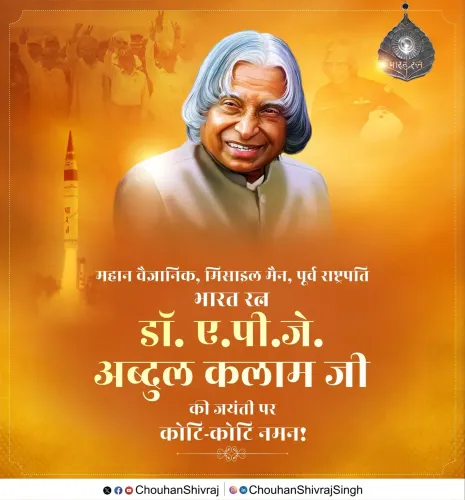
Goyal at SRCC on Kalam's birth anniversary: India's youth its brightest future

Synopsis
Union Commerce Minister Piyush Goyal addressed students at SRCC on Dr. APJ Abdul Kalam's birth anniversary, declaring India's youth its brightest future. The visit blended Kalam's enduring legacy of inspiring students with a senior minister's direct outreach to Delhi University's premier commerce college.
Key Takeaways
Union Minister Piyush Goyal visited Shri Ram College of Commerce (SRCC), University of Delhi on October 15, 2026 .
The visit coincided with the birth anniversary of former President Dr.
Goyal expressed confidence that India's youth represent the country's 'very bright future'.
Kalam served as India's 11th President (2002–2007) and is remembered for championing youth-led national development.
SRCC , founded in 1926 , is one of India's most prestigious undergraduate commerce institutions and a key feeder for careers in finance, policy, and management.
No specific policy announcement was made; the address was ceremonial and motivational in nature.
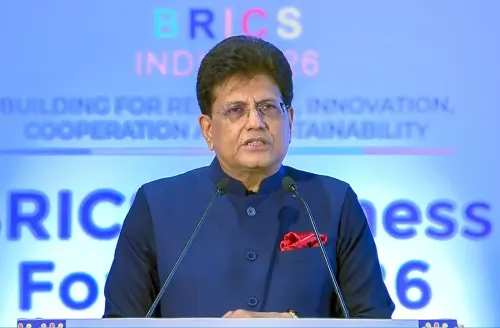
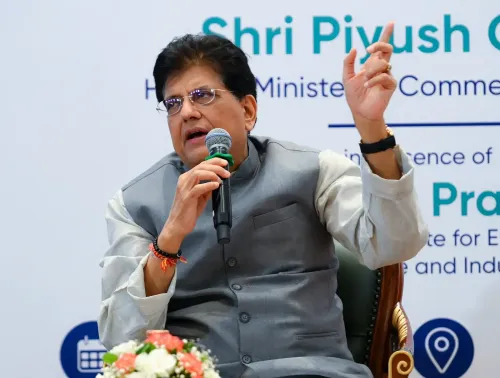
On the birth anniversary of former President Dr. APJ Abdul Kalam, Union Commerce and Industry Minister Piyush Goyal visited Shri Ram College of Commerce (SRCC), University of Delhi on Thursday, October 15, 2026 — and left with a message rooted in optimism: India's greatest asset is the generation filling its classrooms.
Addressing students at one of Delhi University's most prestigious commerce colleges, Goyal said, 'Standing here at SRCC on the birth anniversary of Dr. APJ Abdul Kalam Ji, I see a very bright future for India because of our youth.' The setting — a hall of ambitious undergraduates, gathered on a day dedicated to the man who spent a lifetime urging young Indians to dream big — gave the remark a weight that went beyond ceremony.
Why Kalam's legacy still electrifies a campus
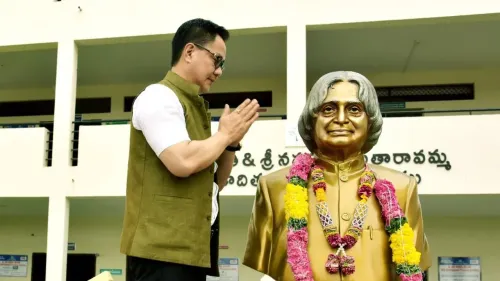
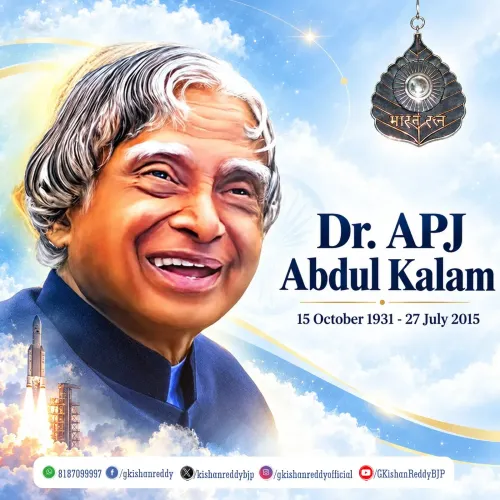
Dr. Kalam, who served as India's 11th President from 2002 to 2007, was an aerospace scientist before he became a symbol. His signature message — that India's destiny would be written by its students, not its politicians — made him an enduring figure on university campuses long after his passing in 2015. Invoking him at SRCC, a feeder institution for India's top management programmes and civil services, carries a precise resonance: these are exactly the students Kalam wrote for.
Indian ministers regularly address Delhi University colleges on commemorative days tied to national icons, but the combination of Goyal's portfolio — trade, industry, commerce — and an audience of commerce undergraduates sharpens the implicit ask. The message, readable between the lines, is that India's economic ambitions need the people sitting in these rows to carry them forward.
SRCC as a mirror for India's aspirations
Shri Ram College of Commerce, established in 1926, has long been considered a launching pad for careers in finance, economics, and public policy. Its student body is drawn from across the country, making it a genuine cross-section of India's aspirational middle class. A senior minister choosing this venue on Kalam's anniversary is a deliberate signal — the youth of India are not just a demographic; they are a policy priority being addressed directly.
Whether the visit yields formal announcements on education or skill-development initiatives in the weeks ahead remains an open question. But the choice of date, venue, and sentiment speaks for itself. Kalam once said the youth of a country are the architects of its future — Goyal, standing in that courtyard, seemed to agree.
Point of View
Non-partisan icons — Kalam's apolitical legacy makes him a safe and powerful rhetorical touchstone. For a Commerce Minister whose portfolio increasingly depends on a skilled, entrepreneurial workforce, addressing elite commerce undergraduates is less ceremonial than it looks. The visit builds soft capital among aspirational youth without committing to a specific policy line. Watch for whether it is followed by concrete announcements on skill or education initiatives, which would confirm this was a deliberate outreach play rather than a one-off occasion.
NationPress
15 Oct 2026
Frequently Asked Questions
Why did Piyush Goyal visit SRCC on October 15, 2026?
Piyush Goyal visited Shri Ram College of Commerce on October 15 to mark the birth anniversary of former President Dr. APJ Abdul Kalam and addressed students, expressing optimism about India's youth-driven future.
What is SRCC and why is it significant?
Shri Ram College of Commerce (SRCC) is one of India's most prestigious undergraduate institutions, affiliated with the University of Delhi and established in 1926. It is a leading college for commerce and economics education.
When is APJ Abdul Kalam's birth anniversary?
Dr. APJ Abdul Kalam was born on October 15, 1931. His birth anniversary is observed annually on October 15, often celebrated as 'World Students' Day' in India.
What did Piyush Goyal say at SRCC on Kalam's birth anniversary?
Goyal said he sees 'a very bright future for India because of our youth,' drawing inspiration from Dr. Kalam's legacy of encouraging students to drive national development.
Who was APJ Abdul Kalam?
Dr. APJ Abdul Kalam was an aerospace scientist who served as India's 11th President from 2002 to 2007. He is widely remembered for his inspirational writings and speeches urging India's youth to pursue education and innovation.