Goyal backs FM Sitharaman's push for Indian crafts on global stage
Synopsis
Commerce Minister Piyush Goyal on 19 July 2026 endorsed FM Nirmala Sitharaman's account of visiting a Vastrakala weaving workshop in Tiruvallur, highlighting how the ODOP scheme is positioning India's traditional crafts for global markets while preserving their cultural authenticity.
Key Takeaways
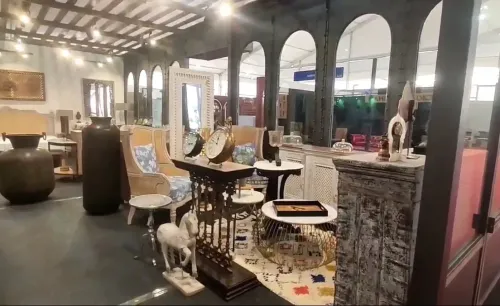
Commerce Minister Piyush Goyal shared FM Nirmala Sitharaman's article on 19 July 2026 , calling India's artistic heritage 'fully ready for global markets.' Sitharaman visited a Vastrakala textile workshop in Tiruvallur, Tamil Nadu , using it as a case study for craft-led export potential.
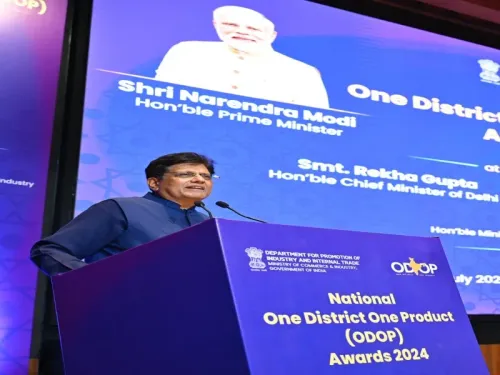
The One District One Product (ODOP) scheme, launched under PM Narendra Modi , identifies one signature product per district and provides market-linkage support to artisans.
ODOP was first piloted in Uttar Pradesh in 2018 before being scaled nationally under the Ministry of Commerce and Industry.
The Geographical Indications Act, 1999 provides the legal framework that ODOP leverages to protect and market traditional crafts internationally.
Future policy focus includes potential inclusion of ODOP products in PLI schemes for textiles and bilateral trade deals with the EU and ASEAN .
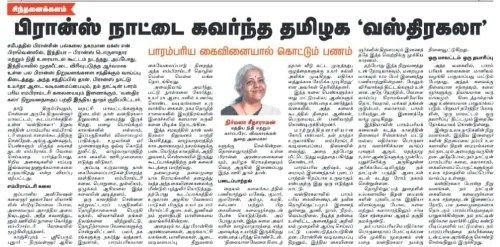
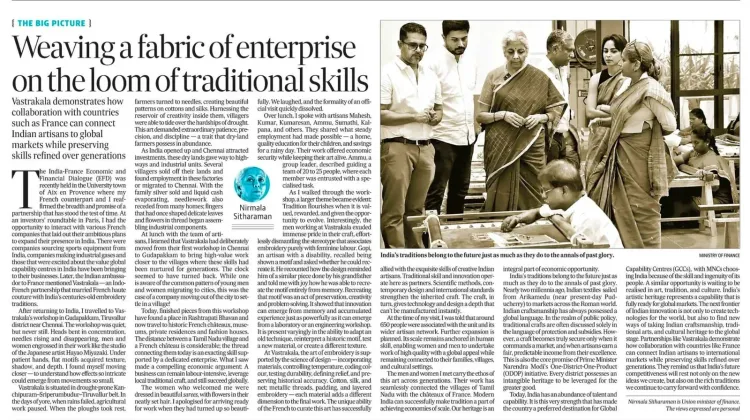
Union Commerce and Industry Minister Piyush Goyal on Sunday, 19 July 2026, shared an article by Finance Minister Nirmala Sitharaman describing her visit to a Vastrakala textile workshop in Tiruvallur, Tamil Nadu, calling it an 'insightful' account of India's artisanal potential in global markets.
Goyal quoted Sitharaman's central argument directly: 'India's artistic heritage represents a capability that is fully ready for global markets.' The post amplifies her account of how traditional crafts can blend heritage with modernity while retaining their 'timeless essence', and specifically highlights the role of the One District One Product (ODOP) scheme introduced by Prime Minister Narendra Modi in creating new opportunities for artisans across India.
Context
Sitharaman's article centres on her visit to a Vastrakala workshop in Tiruvallur, a district in Tamil Nadu known for its weaving traditions. The Finance Minister used the visit to argue that India's traditional crafts are not merely cultural artefacts but commercially viable products capable of competing in international markets. Goyal's decision to amplify the piece underscores a cross-ministerial consensus on leveraging artisanal heritage for export growth.
Policy Backdrop
The One District One Product programme was first piloted at the state level in Uttar Pradesh in 2018 before being adopted and scaled nationally under the Ministry of Commerce and Industry. It identifies one signature product per district — ranging from textiles to handicrafts to food items — and provides cluster development support, branding assistance, and e-commerce linkages to help artisans access organised markets. The scheme operates within a broader export-promotion architecture that includes the Remission of Duties and Taxes on Exported Products (RoDTEP) scheme and representation at international trade fairs.
The legal scaffolding for protecting traditional crafts dates to the Geographical Indications of Goods (Registration and Protection) Act, 1999, which ODOP later leveraged to ensure that heritage products carry verifiable origin credentials when marketed abroad. Together, these instruments aim to move artisans from informal local economies into organised global value chains without diluting design authenticity.
Stakeholders and Impact
The primary beneficiaries of ODOP and related craft-promotion initiatives are traditional artisans and micro, small and medium enterprises (MSMEs) engaged in handloom, handicraft, and allied sectors. For weavers in districts like Tiruvallur, access to global markets through structured government programmes can translate into higher and more stable incomes compared with dependence on local or seasonal demand. Exporters and craft aggregators also stand to benefit as GI-tagged, ODOP-certified products command premium pricing in European and ASEAN markets.
The convergence of views between the Finance Ministry and the Commerce Ministry signals that craft-led exports may receive reinforced budgetary and policy attention in upcoming trade negotiations and sector-specific schemes.
What's Next
Policy watchers will track whether ODOP products are brought under upcoming Production Linked Incentive (PLI) schemes for textiles, and whether India's bilateral trade agreement negotiations — particularly with the European Union and ASEAN partners — incorporate dedicated market-access provisions for GI-tagged artisanal goods. A coordinated push from both the Finance and Commerce ministries could accelerate the formalisation of India's vast craft economy into a measurable export vertical.
Point of View
Aligning the Finance and Commerce portfolios behind a shared narrative of heritage-as-export. It reinforces the BJP government's long-standing strategy of converting cultural identity into economic capital — a theme that runs from GI tagging through ODOP to 'vocal for local.' The timing, ahead of anticipated trade agreement milestones with the EU and ASEAN, suggests the government is building a public case for artisanal exports as a distinct and politically resonant trade category. Whether this translates into concrete budgetary allocations or PLI extensions will be the real test of the rhetoric.
NationPress
20 Jul 2026
Frequently Asked Questions
What is the One District One Product ODOP scheme in India?
ODOP is a central government programme that identifies one signature product per district — such as a textile, handicraft, or food item — and provides cluster development, branding, and e-commerce support to help artisans and MSMEs access national and global markets. It was first implemented in Uttar Pradesh in 2018 and later scaled nationally under the Ministry of Commerce and Industry.
What is Vastrakala and where is it located?
Vastrakala refers to a traditional textile weaving workshop tradition, with a notable presence in Tiruvallur district in Tamil Nadu. Finance Minister Nirmala Sitharaman visited such a workshop and wrote about it as an example of India's craft heritage being ready for global markets.
What did Piyush Goyal say about Indian crafts on 19 July 2026?
Goyal shared an article by FM Sitharaman and quoted her assertion that 'India's artistic heritage represents a capability that is fully ready for global markets,' endorsing the view that ODOP and similar initiatives can bridge traditional crafts with international commerce.
How does ODOP help Indian artisans reach global markets?
ODOP provides artisans and MSMEs with cluster-level support, GI-tag linkages, participation in international trade fairs, and e-commerce integration, enabling them to move from informal local sales to organised global value chains while retaining the authenticity of their products.
What is the Geographical Indications Act and how does it relate to Indian crafts?
The Geographical Indications of Goods (Registration and Protection) Act, 1999, allows traditional products to carry verified origin credentials, which ODOP leverages to command premium pricing in export markets and protect Indian craft identities from imitation abroad.