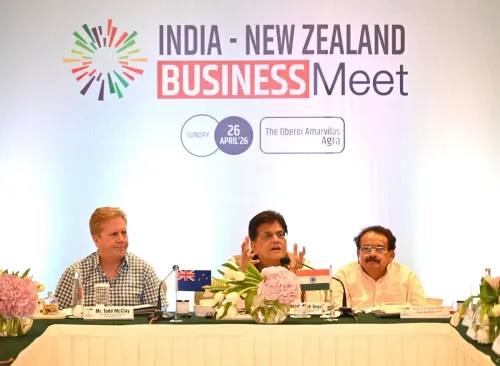
Goyal Backs Makrana Marble Push to Global Markets
Synopsis
Union Commerce Minister Piyush Goyal has championed GI-tagged Makrana Marble from Rajasthan — used in the Taj Mahal and Victoria Memorial — as a flagship heritage export, spotlighting Centre-state coordination with CM Bhajan Lal Sharma and both Deputy CMs.
Key Takeaways
Makrana Marble from Rajasthan holds a GI tag under India's 1999 GI Act, legally protecting its origin and premium status.
The stone was used in two of India's most iconic structures: the Taj Mahal in Agra and the Victoria Memorial in Kolkata.
Union Commerce Minister Piyush Goyal publicly committed to taking Rajasthan's heritage crafts to global markets.
CM Bhajan Lal Sharma , Dy CM Diya Kumari , and Dy CM Prem Chand Bairwa were credited for state-level efforts in promoting the craft.
India's broader GI strategy links cultural heritage to export growth, creating premium market positioning for regional products.
International trade fair participation and new GI-linked export schemes are the next milestones to watch.
A centuries-old stone that built the Taj Mahal and the Victoria Memorial is now at the centre of India's heritage-export ambition. Union Commerce and Industry Minister Piyush Goyal on Sunday, October 25, 2026, spotlighted GI-tagged Makrana Marble from Rajasthan, framing it as both a living symbol of India's artisanal mastery and a trade opportunity ripe for the global stage.
The stone behind India's most iconic monuments
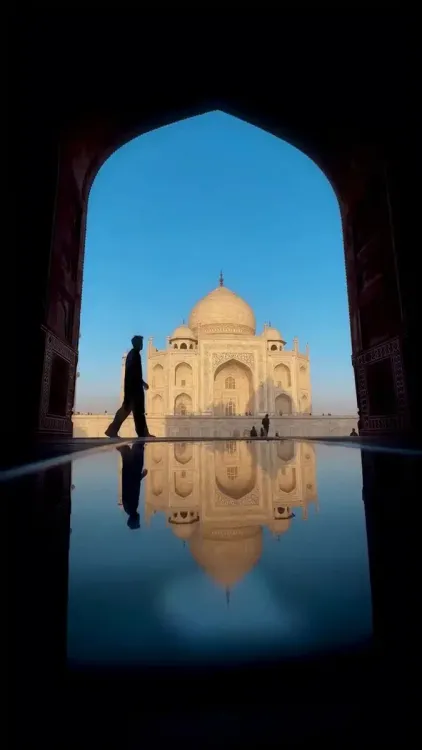
Makrana, a small quarry town in Nagaur district, Rajasthan, has supplied its distinctive white marble to some of the world's most celebrated structures for over five centuries. The Taj Mahal in Agra — a UNESCO World Heritage Site — remains the most famous testament to its quality, while Kolkata's Victoria Memorial confirmed the stone's reach well into the colonial era. That lineage is precisely what makes the Geographical Indication (GI) tag — secured under the Geographical Indications of Goods (Registration and Protection) Act, 1999 — so commercially potent: it legally ties the marble's name to its origin, protecting artisans and exporters from imitation products.
Centre and Rajasthan government align on heritage trade
Goyal's post explicitly credits the Rajasthan state government's leadership — Chief Minister Bhajan Lal Sharma and Deputy Chief Ministers Diya Kumari and Prem Chand Bairwa — for their 'dedicated efforts' in pushing the craft toward global markets. The shout-out signals a coordinated Centre-state approach, a model India has increasingly deployed to convert GI registrations from legal certificates into genuine export drivers. The Commerce Ministry under Goyal has been expanding GI promotion across stone, textile, and food categories, linking iconic monuments and cultural narratives to the underlying regional materials that made them possible.
Why the GI tag is a trade weapon, not just a heritage badge
India's GI framework does more than protect a name — it creates a premium positioning story for export markets. Buyers in Europe, the Gulf, and North America, where luxury construction and high-end décor drive marble demand, respond to provenance. A slab certified as Makrana Marble carries a narrative no generic 'Indian white marble' can replicate. The broader pattern is deliberate: integrating cultural preservation with trade outreach in bilateral negotiations and international craft fairs, turning heritage into hard currency for the artisans and quarry communities of Rajasthan.
Watch for Rajasthan's participation in upcoming international trade fairs and any fresh GI-linked export incentives from the Commerce Ministry — the political alignment is in place; the next move is a market-facing one.
Point of View
The post signals institutional alignment ahead of what could be a formal trade-fair or export-incentive announcement. The move also reflects a wider BJP electoral-economic strategy in Rajasthan — fusing cultural pride with livelihood economics for quarry communities. If Centre and state follow through with market-facing action, Makrana could become a template for monetising India's heritage materials globally.
NationPress
25 Oct 2026
Frequently Asked Questions
What is Makrana Marble and why is it famous?
Makrana Marble is a high-quality white marble quarried in Makrana town, Nagaur district, Rajasthan. It is world-famous for being the primary material used in the construction of the Taj Mahal in Agra and was also used in the Victoria Memorial in Kolkata.
Does Makrana Marble have a GI tag?
Yes, Makrana Marble holds a Geographical Indication (GI) tag under the Geographical Indications of Goods (Registration and Protection) Act, 1999. This legally protects the name and ties the product to its Rajasthan origin.
What did Commerce Minister Piyush Goyal say about Makrana Marble?
Minister Goyal stated that Makrana Marble 'stands as a symbol of India's enduring heritage and artisanal mastery' and reaffirmed the government's commitment to taking Rajasthan's rich heritage and historic crafts to global markets.
What role are the Rajasthan CM and Deputy CMs playing in promoting Makrana Marble?
Chief Minister Bhajan Lal Sharma and Deputy Chief Ministers Diya Kumari and Prem Chand Bairwa have been credited by Minister Goyal for their dedicated efforts in promoting the marble and supporting the push toward international markets.
How does India's GI tag help marble exporters?
A GI tag creates legal protection against imitation products and establishes a premium provenance story for international buyers, particularly in luxury construction and décor markets in Europe, the Gulf, and North America, potentially commanding higher prices for certified Makrana Marble.