Piyush Goyal Wraps Ottawa Visit, Meets Canada Trade Minister
Synopsis
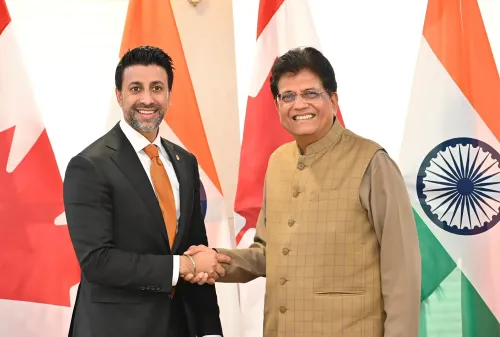
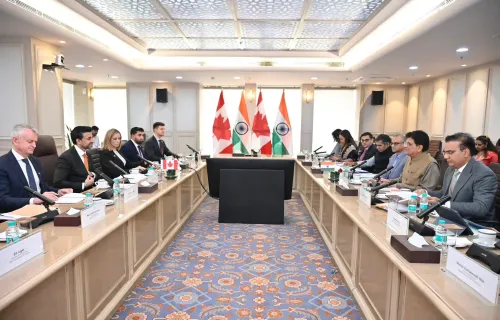
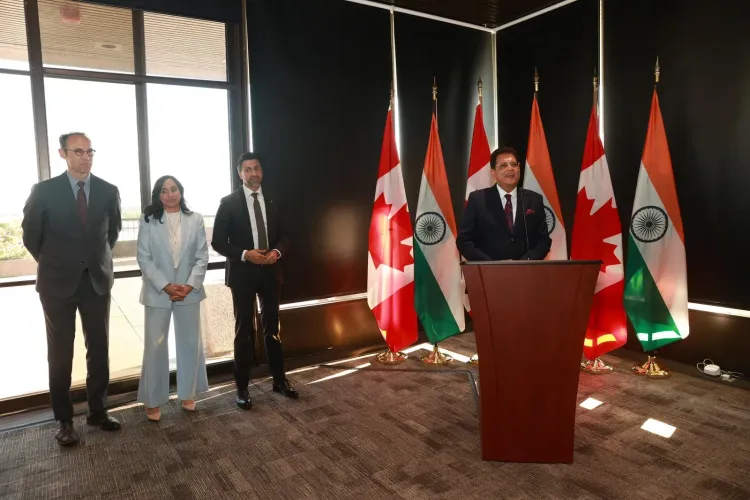
Commerce Minister Piyush Goyal wrapped up his Ottawa visit on May 26, 2026, at a reception hosted by Canada's Trade Minister Maninder Sidhu. He highlighted India's growth story, entrepreneurial spirit, and the Indian diaspora's role in strengthening India-Canada economic and people-to-people ties.
Key Takeaways
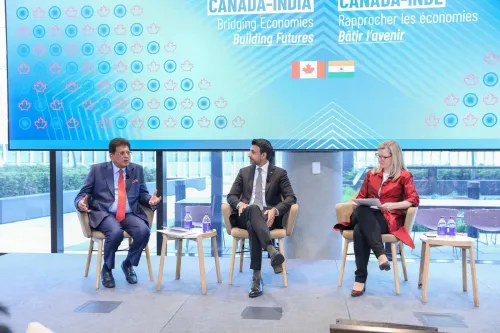
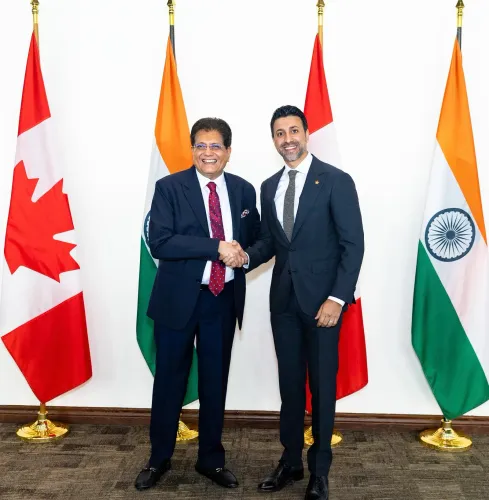
Minister Piyush Goyal concluded engagements in Ottawa on May 26, 2026 , at a reception hosted by Canada's Trade Minister Maninder Sidhu .
Goyal highlighted India's growth driven by entrepreneurial spirit, a vast talent pool, and expanding market opportunities.
The Indian diaspora in Canada was recognised for its contribution to economic, cultural, and people-to-people relations.
Canadian MPs Anita Anand and Randeep Sarai , both of Indian descent, were part of the engagement.
India and Canada have been negotiating a Comprehensive Economic Partnership Agreement (CEPA) since 2010 .
The visit is part of India's broader economic diplomacy with G7 partners to expand market access and global value-chain integration.
Union Commerce and Industry Minister Piyush Goyal on Tuesday, May 26, 2026, concluded his engagements in Ottawa, attending a reception hosted by Canada's Minister of International Trade, Maninder Sidhu, where discussions centred on India's economic growth, entrepreneurial strength, and the role of the Indian diaspora in strengthening bilateral ties.
Context
At the reception, Minister Goyal spoke about India's growth trajectory, describing it as driven by the aspirations of its people, a thriving entrepreneurial spirit, a vast talent pool, and expanding market opportunities. He also highlighted the significant contribution of the Indian diaspora in Canada in deepening economic, cultural, and people-to-people relations between the two nations. Canadian MPs Anita Anand and Randeep Sarai, both of Indian descent, were also present and tagged in Goyal's post.
Policy Backdrop
India and Canada have been engaged in negotiations for a Comprehensive Economic Partnership Agreement (CEPA) since 2010, with multiple rounds of talks held over the years. The agreement, if concluded, is expected to significantly expand bilateral trade in goods, services, and investment across complementary sectors including technology, resources, and pharmaceuticals. High-level visits of this nature have historically served to reinject political momentum into stalled trade negotiations.
India's broader economic diplomacy with G7 partners has intensified in recent years, with New Delhi seeking greater market access and deeper integration into global value chains. Canada occupies a notable position in this outreach owing to its large Indian-origin population — one of the largest in any Western country — and its resource-rich, technology-driven economy that offers complementary opportunities for Indian businesses.
Stakeholders and Impact
The Indian diaspora in Canada, estimated to number in the hundreds of thousands, stands at the centre of the bilateral relationship as both an economic bridge and a cultural connector. Indian-origin professionals, entrepreneurs, and students have built deep roots in sectors ranging from information technology to healthcare and finance, making diaspora engagement a recurring and substantive element of India's diplomatic messaging with Ottawa.
For bilateral traders and investors on both sides, ministerial-level engagement signals continued political will to advance the trade agenda. Canadian industries with stakes in India's growing consumer and infrastructure markets, as well as Indian firms seeking access to Canadian resources and talent pipelines, are among those closely watching the outcome of such exchanges.
What's Next
Attention will now turn to whether the Ottawa meeting translates into fresh momentum on the long-pending CEPA talks or leads to a scheduled follow-up at the summit level. Any joint statement or announcement of resumed negotiating rounds would be a concrete marker of progress. The involvement of diaspora-connected Canadian parliamentarians like Anita Anand and Randeep Sarai also underscores the people-to-people dimension that both governments have consistently identified as a foundation for deeper economic cooperation.
Point of View
Not merely a sentimental one. With CEPA talks having moved fitfully since 2010, the political optics of a ministerial meeting matter as much as the substance, keeping the negotiating track alive at the highest level. Whether this visit produces a concrete negotiating timeline will be the real test of its diplomatic weight.
NationPress
10 Oct 2026
Frequently Asked Questions
Why did Piyush Goyal visit Ottawa in May 2026?
Piyush Goyal visited Ottawa to engage with Canada's Minister of International Trade Maninder Sidhu, attending a reception to discuss India's economic growth, trade opportunities, and the role of the Indian diaspora in strengthening bilateral ties.
What is the India-Canada CEPA and where do negotiations stand?
The India-Canada Comprehensive Economic Partnership Agreement (CEPA) is a proposed free trade deal covering goods, services, and investment. Negotiations began in 2010 but have progressed slowly, with high-level visits periodically used to revive momentum.
Who are Anita Anand and Randeep Sarai?
Anita Anand and Randeep Sarai are Canadian Members of Parliament of Indian descent. Both were tagged by Minister Goyal in his post about the Ottawa reception, reflecting the diaspora dimension of the bilateral engagement.
What role does the Indian diaspora play in India-Canada relations?
The Indian diaspora in Canada is a significant bridge between the two countries, contributing to economic sectors such as technology, healthcare, and finance, while also strengthening cultural and people-to-people connections that underpin the bilateral relationship.
What could come next after Goyal's Ottawa visit?
Observers will watch for any announcement of resumed CEPA negotiating rounds, a joint ministerial statement, or a follow-up summit-level meeting between Indian and Canadian leaders as indicators of tangible progress from the Ottawa engagement.