Goyal flags AI deepfake of his Parliament remarks, files FIR
Synopsis
Union Commerce Minister Piyush Goyal has warned that an AI-generated deepfake video misrepresenting his remarks outside Parliament is being circulated. He has filed a police complaint and an FIR has been registered at Chanakyapuri Police Station. He urged citizens, especially youth, to rely only on verified sources.
Key Takeaways
Piyush Goyal , Union Minister of Commerce and Industry, confirmed that his media remarks outside Parliament were 'maliciously doctored using AI' to create a deepfake video.
An FIR numbered 123/26 was registered at Chanakyapuri Police Station at 4:35 AM on 25 July 2026 .
The minister warned of strict legal action against anyone involved in creating, circulating, or amplifying the fake video.
MeitY had already issued advisories in 2023–2024 requiring platforms to remove deepfake content violating IT Rules, but no standalone deepfake law exists yet.
Goyal specifically appealed to India's youth to not fall prey to AI-driven misinformation and to rely on verified sources.
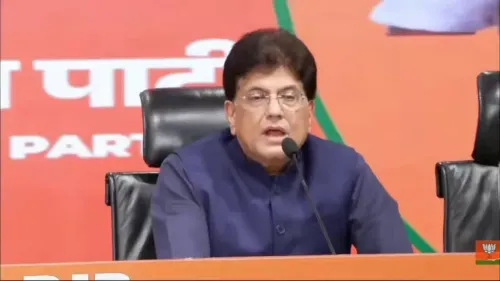
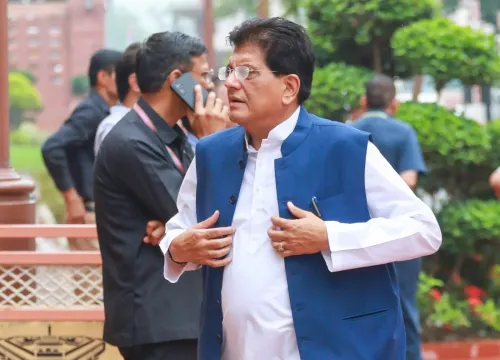
Union Commerce and Industry Minister Piyush Goyal on Saturday, 25 July 2026 warned the public that a deepfake video fabricated using artificial intelligence had been created and circulated to misrepresent remarks he made to the media outside Parliament, and confirmed that a formal police complaint had been filed.
What happened
Goyal stated that his media interaction outside Parliament had been 'maliciously doctored using AI' to produce and spread a deepfake video aimed at misleading the public. He announced that an FIR bearing number 123/26 was registered at Chanakyapuri Police Station at 4:35 AM on 25 July 2026 — hours before his post went public. The minister warned that 'strict legal action will be taken against everyone involved in creating, circulating, or amplifying this fake video.'
Goyal urged citizens to rely only on 'verified and authentic sources for information' and expressed confidence that India's youth and tech-savvy population would not be misled by such content.
Context
The incident follows a pattern of AI-generated deepfake videos targeting prominent Indian political figures, a trend that has accelerated alongside the wider availability of generative AI tools. Chanakyapuri Police Station in New Delhi handles complaints involving central government figures and VIP cases, making it the appropriate jurisdiction for a sitting Union Minister's complaint.
Goyal, who also serves as Leader of the House in the Rajya Sabha, is among the more publicly active senior BJP leaders, making his media statements outside Parliament a frequent subject of public attention — and, as this case illustrates, a potential target for manipulation.
Policy backdrop
The Ministry of Electronics and Information Technology (MeitY) issued advisories in 2023 and 2024 directing social media platforms to swiftly remove deepfake content that violates the Information Technology Rules. Platforms that fail to act on flagged content risk losing their safe-harbour protections under Indian law.
Despite these measures, enforcement has remained reactive, with authorities filing cases under existing IT Act and Indian Penal Code provisions rather than dedicated deepfake-specific legislation. Calls for a standalone AI or deepfake law have grown louder in parliamentary debates, though no such bill has been tabled yet.
Stakeholders and impact
The immediate stakeholders are social media users who may have encountered the doctored video, particularly younger, digitally active Indians whom Goyal specifically addressed in his post. Misinformation tied to a sitting minister's purported remarks can distort public understanding of government policy positions.
Platforms that hosted or algorithmically amplified the deepfake video could face scrutiny under MeitY's existing advisories. Individuals found to have created or shared the video with intent to mislead could face charges under relevant sections of the IT Act and the newly enacted Bharatiya Nyaya Sanhita.
What's next
The Chanakyapuri Police Station investigation is now the focal point, with the FIR setting the legal process in motion. Investigators are likely to seek data from social media platforms to trace the origin and distribution chain of the deepfake video.
The episode is expected to intensify pressure on the government to fast-track dedicated AI and deepfake legislation, a conversation that has been building in policy circles. Any fresh statement from Goyal or MeitY on proposed regulatory steps will be closely watched.
Point of View
He shifts the frame from 'what did the minister say?' to 'who fabricated this and why?' The episode underscores a structural vulnerability in Indian political communication: media bytes outside Parliament, unscripted and widely clipped, are low-hanging fruit for AI manipulation. The FIR also signals that the government intends to use existing legal architecture aggressively while the legislative gap on deepfakes remains unfilled. If the investigation yields arrests, it could become a landmark test case shaping how India prosecutes AI-driven political misinformation.
NationPress
23 Oct 2026
Frequently Asked Questions
What deepfake video is Piyush Goyal talking about?
Goyal says a video of his remarks to the media outside Parliament has been artificially manipulated using AI to misrepresent what he said and spread misinformation. He has not released the deepfake video publicly.
What FIR has been filed in Piyush Goyal deepfake case?
FIR number 123/26 was registered at Chanakyapuri Police Station in New Delhi at 4:35 AM on 25 July 2026, following a complaint filed by or on behalf of Minister Piyush Goyal.
Is making a deepfake of a politician illegal in India?
Yes. While India does not yet have a dedicated deepfake law, creating and circulating a doctored video to mislead the public can attract charges under the Information Technology Act and the Bharatiya Nyaya Sanhita. MeitY has also directed platforms to remove such content promptly.
What action can be taken against those who share a deepfake video in India?
Anyone who creates, circulates, or amplifies a deepfake video with intent to mislead can face legal action under the IT Act and criminal law. Platforms that fail to remove flagged content risk losing safe-harbour protections under Indian law.
How can I verify if a video of a politician is real or a deepfake?
Goyal himself advised relying only on verified and authentic sources. Cross-checking with the official social media handles of the minister, government press releases, and established fact-checking resources is the recommended approach.