Goyal Files FIR Over AI Deepfake Video Targeting Him
Synopsis
Union Commerce Minister Piyush Goyal has filed FIR No. 123/26 at Chanakyapuri Police Station after an AI-generated deepfake of his Parliament media interaction was circulated online. He warned of strict legal action against creators and distributors, urging citizens to trust only official sources.
Key Takeaways
Union Commerce and Industry Minister Piyush Goyal alerted the public on 25 July 2026 about a deepfake video of him circulating on social media.
The video was fabricated by AI manipulation of his genuine media interaction outside Parliament.
123/26 was registered at Chanakyapuri Police Station , New Delhi, at 4:35 AM on 25 July 2026 .
Goyal warned that legal action will be taken against anyone who creates, circulates, or knowingly promotes the fake video.
He urged citizens to rely only on official and authentic sources for information.
The case highlights growing concerns over AI-generated misinformation targeting senior political figures in India.
Union Commerce and Industry Minister Piyush Goyal on Saturday, 25 July 2026 warned the public about a deepfake video of him — fabricated using artificial intelligence — that is being circulated on social media to spread misinformation. He confirmed that an FIR (No. 123/26) was registered at Chanakyapuri Police Station in New Delhi at 4:35 AM on the same date.
What Happened
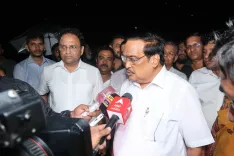
Goyal stated that a video of his media interaction outside Parliament was maliciously manipulated using AI to create a deepfake, which was then shared on social media platforms with the intent of misleading the public. In his post, he wrote: 'AI ki madad se durbhavnapurn chhedchhad kar ek Deepfake Video taiyar karke use Misinformation failane ke uddeshya se social media par prasarit kiya ja raha hai' — ('a deepfake video has been prepared through malicious AI manipulation and is being circulated on social media with the intent of spreading misinformation').
The minister made clear that strict legal action will be taken against every person involved in creating, circulating, or knowingly promoting the fake video. He urged citizens to rely only on official and authentic sources for any information.
Context
Deepfake videos targeting prominent political figures have become an increasingly common tool of disinformation in India, exploiting the rapid advancement and accessibility of AI-based video synthesis tools. Such incidents place senior public officials in a position where they must proactively address fabricated content to prevent reputational damage and public confusion.
Goyal, as Leader of the House in the Rajya Sabha and a senior BJP leader, is a high-profile target for such manipulation. His media interactions outside Parliament are widely covered, making them a plausible source for footage that bad actors might attempt to weaponise.
Policy Backdrop
India's primary legal recourse for such offences lies in the Information Technology Act, 2000 and its amendments, which criminalise the publication of obscene or false digital content and provide for penalties in cases of cyber fraud and impersonation. Law enforcement agencies have invoked these provisions in earlier deepfake cases involving public figures.
The government has repeatedly stressed the need for digital literacy and caution around AI-generated content, even as formal regulations specifically targeting deepfakes remain under deliberation. Goyal's appeal to India's 'aware and tech-savvy citizens, especially the youth' reflects this broader official communication strategy.
Stakeholders and Impact
The immediate stakeholders are social media users who may have encountered the fabricated video, as well as the law enforcement machinery now tasked with tracing its origin and distribution chain. The Chanakyapuri Police Station, which falls under the Delhi Police jurisdiction, is handling the investigation following the registered FIR.
For the broader public, the incident underscores the risk of consuming unverified political content online. Officials across parties have faced similar deepfake attacks, and each such case tests the capacity of existing cyber laws to deliver timely accountability.
What's Next
The investigation into FIR No. 123/26 will determine whether the perpetrators can be identified and prosecuted under applicable cyber law provisions. The case may also add momentum to ongoing discussions in Parliament and regulatory circles around dedicated legislation governing AI-generated content and deepfakes in India. Goyal's public warning serves as a signal that senior ministers intend to pursue such cases through the full force of the law rather than issue a quiet denial.
Point of View
He lends the complaint institutional weight and deters casual sharing. The incident fits a broader pattern of AI-generated disinformation being deployed against senior politicians ahead of or during politically sensitive periods, raising the stakes for India's still-evolving regulatory response to synthetic media. How quickly the Delhi Police investigation proceeds will be a test case for whether existing cyber law infrastructure is adequate to handle AI-driven political misinformation at speed.
NationPress
25 Jul 2026
Frequently Asked Questions
What is the deepfake video involving Piyush Goyal?
An AI-manipulated video of Union Minister Piyush Goyal's media interaction outside Parliament was fabricated and circulated on social media to spread misinformation, according to a post by Goyal himself on 25 July 2026.
Has an FIR been filed in the Piyush Goyal deepfake case?
Yes. FIR No. 123/26 was registered at Chanakyapuri Police Station in New Delhi at 4:35 AM on 25 July 2026 on Goyal's complaint.
What legal action can be taken for sharing a deepfake video in India?
Sharing or promoting deepfake content with intent to mislead can attract penalties under the Information Technology Act, 2000, and its amendments. Goyal has warned that strict legal action will be taken against creators, distributors, and those who knowingly promote the video.
How can I verify whether a video of a minister is real or a deepfake?
Goyal has urged citizens to rely only on official and authentic sources — such as verified government social media handles and official press releases — when seeking information about public figures.
Is deepfake targeting of politicians common in India?
Yes. India has seen multiple instances of deepfake videos targeting political figures in recent years, prompting complaints under cyber laws and public advisories by officials urging digital vigilance.