Piyush Goyal Flags Zero Tariff Gains in India-UK FTA
Synopsis
Commerce Minister Piyush Goyal on 15 July 2026 flagged 'zero tariff benefits' for India under the India-UK Free Trade Agreement, marking a key milestone in negotiations formally relaunched in January 2022 after more than a dozen rounds of talks covering textiles, pharmaceuticals, and professional services.
Key Takeaways
Union Commerce Minister Piyush Goyal posted on 15 July 2026 highlighting 'zero tariff benefits' for India under the India-UK FTA .
Formal India-UK trade negotiations were relaunched in January 2022 and have covered 13 to 14 rounds of talks.
Key sectors covered include textiles, gems and jewellery, pharmaceuticals , and professional services .
Indian exporters and MSME manufacturers in labour-intensive sectors stand to gain most from zero-tariff access to the UK market.
The deal is part of India's broader FTA push, alongside agreements with Australia (2022) and ongoing talks with the EU and EFTA .
The formal signing of the agreement and conclusion of remaining chapters on services and investment are still awaited.
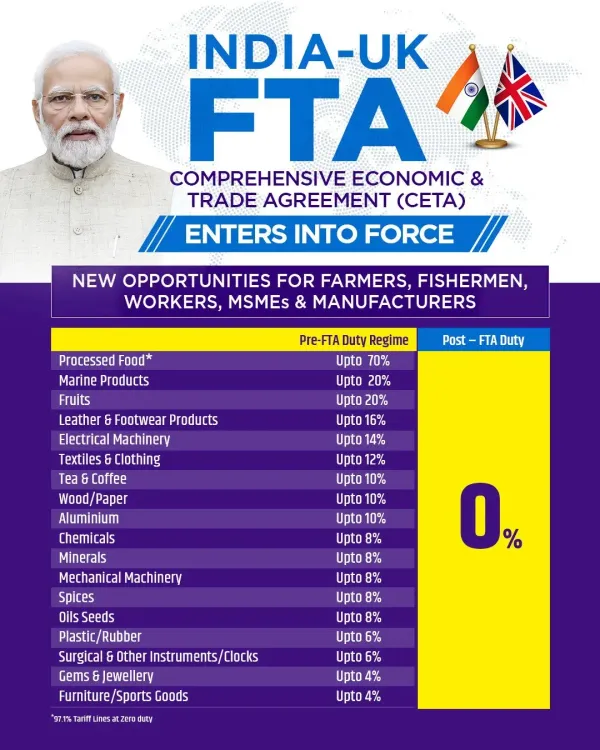
Union Commerce and Industry Minister Piyush Goyal on Wednesday, 15 July 2026 highlighted what he described as 'zero tariff benefits' for India under the India-UK Free Trade Agreement, posting the announcement on X alongside an image and the hashtag #IndiaUKFTA.
Context
Goyal's post — 'The ZERO tariff benefits for India!' — signals a significant development in the long-running trade negotiations between New Delhi and London. The minister, who also serves as Leader of the House in the Rajya Sabha, has been the principal Indian interlocutor in these talks. The accompanying image, shared without additional caption, is understood to illustrate tariff-line details from the agreement.
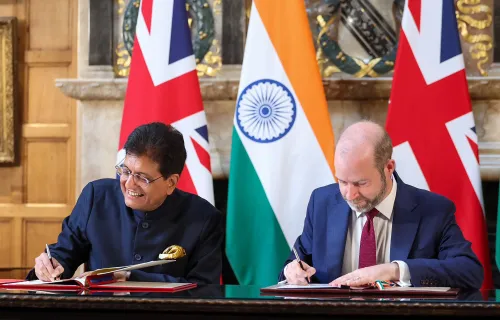
The India-UK FTA has been one of the most closely watched bilateral trade deals in recent years, covering goods, services, and investment liberalisation between the two economies.
Policy Backdrop
Formal negotiations between India and the United Kingdom were relaunched in January 2022, following earlier rounds of discussions that predated Brexit. The two sides have since worked through 13 to 14 rounds of talks, with tariff elimination in sectors such as textiles, gems and jewellery, pharmaceuticals, and professional services forming the core of the agenda.
The UK, seeking to expand its post-Brexit trading relationships, has identified India as a priority partner. For India, the deal fits into a broader strategic push to diversify export destinations and secure reciprocal market access with major Western economies — a pattern visible in the India-Australia Economic Cooperation and Trade Agreement concluded in 2022, and in parallel talks with the European Union and the EFTA bloc.
Stakeholders and Impact
Zero-tariff access to the United Kingdom market would be a material gain for Indian exporters, particularly in labour-intensive sectors such as textiles and garments, where British import duties have historically added to cost disadvantages. MSME manufacturers, who account for a large share of India's export basket in these categories, stand to benefit directly from reduced price barriers.
On the UK side, the agreement is expected to open Indian markets to British goods and services, including Scotch whisky, automobiles, and financial services — sectors where New Delhi has maintained high protective tariffs. The final balance of concessions will determine the net trade impact for both economies.
What's Next
The minister's post suggests that a substantive milestone has been reached on the tariff chapter, though the full text of the agreement and its official signing remain awaited. Observers will watch for the conclusion of remaining negotiation chapters — particularly on services and investment — and a possible formal signing ceremony at a future bilateral summit between the two governments.
If ratified, the India-UK FTA would mark one of India's most significant trade agreements with a major Western economy, potentially reshaping bilateral trade flows that currently stand in the range of tens of billions of dollars annually.
Point of View
' the minister frames the agreement as an unambiguous Indian win — a framing that serves both diplomatic and political purposes ahead of any formal signing. The announcement fits a consistent pattern in which the Commerce Ministry has used social media to manage the narrative around FTA milestones, keeping export-dependent constituencies engaged. The real test will come when the full tariff schedules and services chapters are made public, allowing industry to assess the depth and pace of liberalisation on both sides.
NationPress
13 Oct 2026
Frequently Asked Questions
What is the India-UK Free Trade Agreement?
The India-UK Free Trade Agreement is a bilateral trade deal under negotiation between India and the United Kingdom aimed at reducing or eliminating tariffs on goods and liberalising trade in services and investment. Formal talks were relaunched in January 2022.
What does 'zero tariff' mean for Indian exporters under the India-UK FTA?
Zero tariff means Indian goods exported to the UK would face no import duties, making them more price-competitive in the British market. Sectors such as textiles, garments, and pharmaceuticals are expected to benefit most.
How many rounds of India-UK FTA negotiations have taken place?
By 2024, India and the UK had completed between 13 and 14 rounds of negotiations covering tariffs, services, investment, and related chapters.
What did Commerce Minister Piyush Goyal say about the India-UK FTA?
On 15 July 2026, Piyush Goyal posted on X highlighting 'The ZERO tariff benefits for India!' under the hashtag #IndiaUKFTA, signalling a significant development in the trade deal's tariff chapter.
How does the India-UK FTA fit into India's broader trade strategy?
The India-UK FTA is part of India's accelerated push to sign bilateral free trade agreements with major Western economies to diversify export markets. India concluded a similar deal with Australia in 2022 and is in parallel talks with the EU and the EFTA bloc.