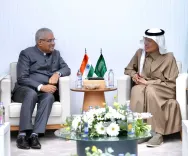
Piyush Goyal: India-US ties a force and engine for global growth
Synopsis
Commerce Minister Piyush Goyal framed the India-US partnership as both a moral force and a global growth engine, reinforcing a bilateral relationship anchored by the 2008 Civil Nuclear Agreement and the 2023 iCET initiative on semiconductors and AI.
Key Takeaways
Union Commerce Minister Piyush Goyal on November 19, 2026 called the India-US partnership 'a force for global good' and 'an engine for global growth'.
The United States is India's largest trading partner in goods and services, with linkages spanning technology, defence, and energy.
The 2023 iCET framework established joint India-US work on semiconductors, AI, and supply-chain resilience .
The bilateral relationship traces its strategic depth to the landmark 2008 India-US Civil Nuclear Agreement .
The India-US Trade Policy Forum remains the key institutional channel for follow-up on market-access and technology-cooperation commitments.
India , as the world's fifth-largest economy , is positioning itself as a co-driver of global growth alongside the US.
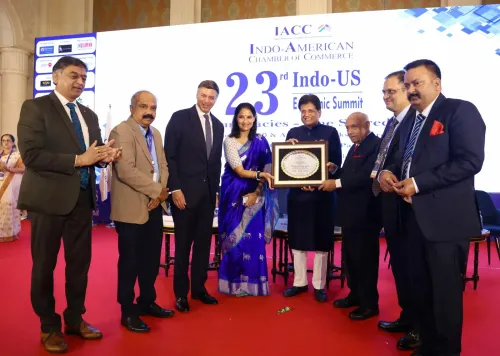
A partnership that spans nuclear energy, semiconductors, and trillion-dollar trade corridors got a pointed endorsement on Thursday, November 19, 2026, when Union Commerce and Industry Minister Piyush Goyal framed the India-US relationship as both a moral and economic imperative for the world.
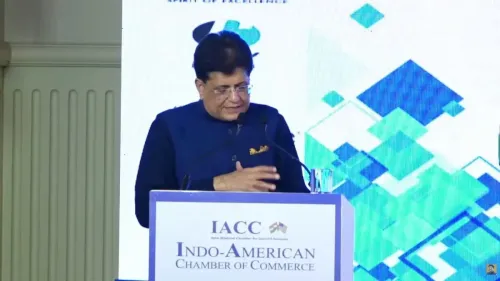
Posting on X, the minister declared: 'The India-US partnership is not only a force for global good but also an engine for global growth.' The twin framing — values and velocity — is deliberate, and it carries the weight of a bilateral relationship that has been building institutional muscle for more than two decades.
From nuclear handshake to semiconductor roadmap
The arc is worth tracing quickly. The 2008 India-US Civil Nuclear Agreement was the inflection point that signalled the two democracies were ready for strategic depth, not just diplomatic pleasantries. That foundation held, and in 2023 both governments launched the India-US Initiative on Critical and Emerging Technologies (iCET) — a structured framework for joint work on semiconductors, artificial intelligence, and supply-chain resilience. What began as a geopolitical thaw had become an industrial blueprint.
Today the United States stands as India's largest trading partner in both goods and services, with deep interlocks across technology, defence, and energy. That position was not handed over — it was constructed through successive rounds of the India-US Trade Policy Forum and ministerial-level dialogues that kept channels open even during friction.
Why 'engine for global growth' is the sharper claim
Calling the partnership a 'force for global good' is familiar diplomatic language. The more consequential half of Goyal's formulation is 'engine for global growth.' It repositions India — the world's fifth-largest economy — not as a recipient of Western economic goodwill, but as a co-driver of global output. That is a claim with real stakes: it asks markets, multinationals, and multilateral institutions to treat the India-US axis as a growth engine comparable to other major bilateral pairings.
For Indian exporters eyeing expanded market access and US technology companies seeking trusted manufacturing and talent partnerships, the signal is clear — the minister is publicly reinforcing the architecture that makes those deals possible.
The next concrete test will come at the next sitting of the India-US Trade Policy Forum, where any movement on market-access commitments or technology-cooperation pacts will reveal how much of this stated ambition converts into signed agreements. Words set the tone; terms on paper set the trajectory.
Point of View
The statement serves as a marker ahead of any Trade Policy Forum meeting, nudging both sides toward deliverables. It also reflects the broader BJP government posture of framing India's global rise not as dependence on any single partner, but as mutual indispensability. The real measure will be whether the iCET's semiconductor and AI ambitions translate into binding market-access or investment commitments.
NationPress
20 Nov 2026
Frequently Asked Questions
What did Piyush Goyal say about India-US relations?
On November 19, 2026, Union Commerce Minister Piyush Goyal stated that 'the India-US partnership is not only a force for global good but also an engine for global growth,' underscoring both the strategic and economic dimensions of the bilateral relationship.
What is the India-US Initiative on Critical and Emerging Technologies (iCET)?
Launched in 2023, iCET is a bilateral framework under which India and the United States collaborate on semiconductors, artificial intelligence, and supply-chain resilience, aiming to deepen technology ties between the two countries.
Is the United States India's largest trading partner?
Yes, the United States is India's largest trading partner in both goods and services, with strong linkages across technology, defence, and energy sectors.
What is the India-US Trade Policy Forum?
The India-US Trade Policy Forum is a bilateral institutional mechanism through which the two governments hold ministerial and technical dialogues on trade, market access, and economic cooperation.
What was the significance of the 2008 India-US Civil Nuclear Agreement?
The 2008 Civil Nuclear Agreement was a landmark deal that opened the door to deeper strategic and economic engagement between India and the United States, establishing the foundation for the broad partnership that has since expanded into technology, defence, and trade.