Goyal at Indo-US Summit: Turn Supply Chains into Trust Chains
Synopsis
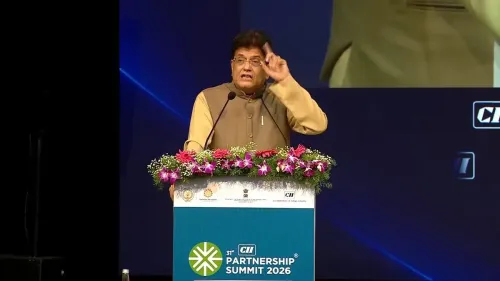
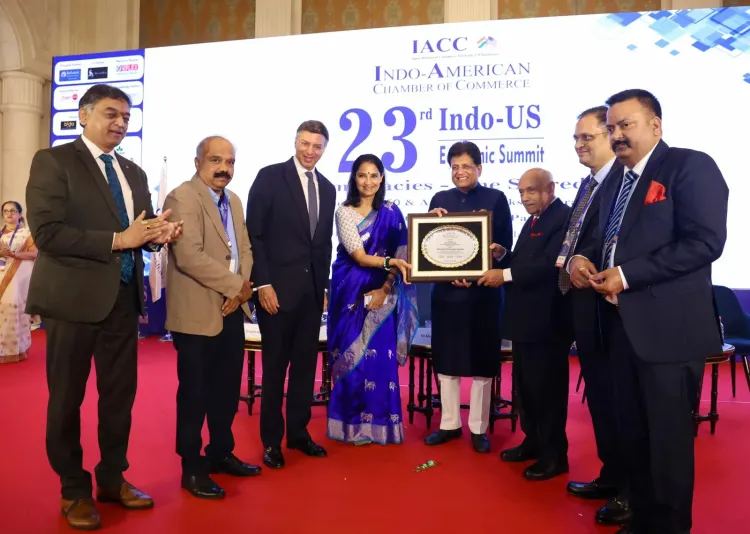
Commerce Minister Piyush Goyal addressed the 23rd Indo-US Economic Summit organised by the Indo-American Chamber of Commerce, urging industry leaders to convert supply chains into 'trust chains', deepen AI partnerships, and extend the benefits of India-US economic cooperation to weavers in Bhadohi and manufacturers in Kanpur.
Key Takeaways
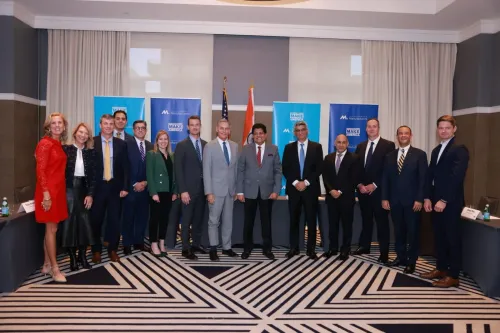
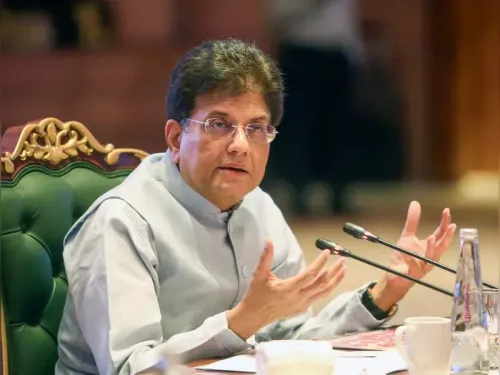
Union Commerce Minister Piyush Goyal addressed the 23rd Indo-US Economic Summit organised by the Indo-American Chamber of Commerce on November 19, 2026 .
Goyal coined a central pitch: the world needs 'trust chains', not just supply chains, with India and the US as natural partners.
He called on US capital and innovation to combine with India's scale, talent, and manufacturing strength as 'an engine for global good'.
He specifically named Bhadohi (carpet weavers) and Kanpur (parts manufacturers) as targets for technology and investment beyond metro cities.
Goyal invoked the iCET framework (launched January 2023) as the architecture for India-US cooperation on AI and emerging technology.
He asked industry to candidly report hurdles and to jointly track outcomes, signalling a demand for measurable results over aspirational declarations.
When Union Commerce and Industry Minister Piyush Goyal stepped before industry leaders at the 23rd Indo-US Economic Summit on Thursday, November 19, 2026, he arrived with a reframe — not of trade flows, but of the very grammar of partnership. The world, he argued, no longer just needs supply chains. It needs trust chains. And India and the United States, he said, are the most natural links in that chain.
The 'Trust Chains' Argument — and Why It Lands Now
The summit, organised by the Indo-American Chamber of Commerce — the bilateral business body that has been facilitating India-US economic dialogue since 1968 — gave Goyal a room full of industry leaders and a moment to press a larger case. His framing was precise: 'The US brings capital and innovation. India brings scale, talent, and manufacturing strength.' Put them together, he said, and you have 'an engine for global good' — running on a single fuel: trust.
The 'trust chains' language is not incidental. It slots directly into a broader strategic shift in India-US economic ties that has accelerated since global supply chains buckled under the weight of a pandemic, a European war, and intensifying great-power competition. The emphasis has moved from tariff haggling to building secure, values-aligned economic linkages — where the nationality of a chip or the origin of a component matters as much as its price.
From Metros to Bhadohi and Kanpur
What gave Goyal's address texture was the specificity of the ask. He did not stop at high-level rhetoric about AI and investment. He named names: the weaver in Bhadohi — Uttar Pradesh's famed carpet-weaving district — and the parts-maker in Kanpur, the industrial city whose leather and auto-component clusters form the backbone of tier-2 manufacturing. His message to US partners: technology and capital must travel beyond the glass towers of Mumbai and Bengaluru.
That geography-first instinct aligns with India's ongoing push under the Make in India programme to activate manufacturing clusters in smaller cities. It also signals where Goyal believes the next wave of India-US industrial convergence should land — not just in boardrooms, but on the looms and factory floors of heartland India.
The iCET Thread and the AI Partnership Pitch
Goyal's call to 'partner on AI and talent' is rooted in an existing architecture. The Initiative on Critical and Emerging Technology (iCET), launched in January 2023, established a formal India-US framework for cooperation on artificial intelligence, semiconductors, and advanced manufacturing. The Commerce Minister's ask to industry leaders — to bring technology to tier-2 and tier-3 clusters, and to report back candidly on the hurdles — is, in effect, an invitation to stress-test that framework at the ground level and generate real feedback for the next round of the India-US Trade Policy Forum.
Industry stakeholders — from Indian MSMEs and artisan clusters to US investors scouting manufacturing alternatives to China — have the most to gain if the 'trust chain' vision translates into actionable deals. Goyal's explicit request to 'track outcomes together' is a signal that he wants metrics, not just momentum.
What Industry Heard — and What Comes Next
The Commerce Minister's ask to the room was laid out in four clear points: convert supply chains into trust chains; deepen partnerships on AI and human talent; take technology beyond the metros to India's artisans and small manufacturers; and be candid about where the system still jams. The candour-request is telling — it acknowledges frictions exist, even as the headline message is one of shared ambition.
The next concrete checkpoint will be the India-US Trade Policy Forum, where government-to-government follow-up on these themes will be tested. For now, Goyal has put the frame on the wall. The question is whether industry fills it in.
Trust chains are only as strong as the deals they produce — and the minister has asked to see the receipts.
Point of View
Security-conscious partnership argument that mirrors the language US policymakers have used since the supply-chain crises of the early 2020s. By anchoring the vision in Bhadohi and Kanpur rather than Bengaluru and Mumbai, the minister is signalling that the next phase of Make in India must demonstrate geographic depth, not just sectoral breadth. The ask for candid industry feedback and tracked outcomes is politically significant: it insulates the government from accusations of summit-without-substance while generating real data for the Trade Policy Forum. If US capital actually flows to tier-2 clusters, Goyal's framing will have worked; if it stays in the metros, the gap between the speech and the shop floor will become a vulnerability.
NationPress
20 Nov 2026
Frequently Asked Questions
What is the Indo-US Economic Summit and who organises it?
The Indo-US Economic Summit is an annual bilateral business dialogue organised by the Indo-American Chamber of Commerce, a body founded in 1968 that promotes trade and investment between India and the United States. The 23rd edition was addressed by Commerce Minister Piyush Goyal on November 19, 2026.
What did Piyush Goyal mean by 'trust chains'?
Goyal used 'trust chains' to describe supply chains built on shared values, security, and reliability rather than pure cost efficiency — arguing that India and the US are natural partners in building such linkages amid global supply-chain vulnerabilities.
Why did Goyal mention Bhadohi and Kanpur specifically?
Bhadohi is a major hand-knotted carpet and handloom weaving hub in Uttar Pradesh, while Kanpur is an industrial city with leather and auto-component clusters. Goyal cited both to argue that US technology and investment must reach India's tier-2 manufacturing centres, not just its metros.
What is iCET and how does it relate to Goyal's speech?
The Initiative on Critical and Emerging Technology (iCET), launched in January 2023, is a formal India-US framework for cooperation in AI, semiconductors, and advanced manufacturing. Goyal's call to 'partner on AI and talent' builds directly on this existing architecture.
What is the next step after the Indo-US Economic Summit?
The India-US Trade Policy Forum is the next government-to-government forum where themes raised at the summit — supply-chain trust, AI collaboration, and tier-2 manufacturing investment — are expected to be translated into policy-level follow-up.