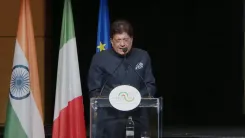
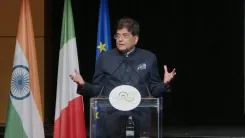
Goyal Invokes Bose-Marconi Legacy to Frame India-Italy Ties
Synopsis
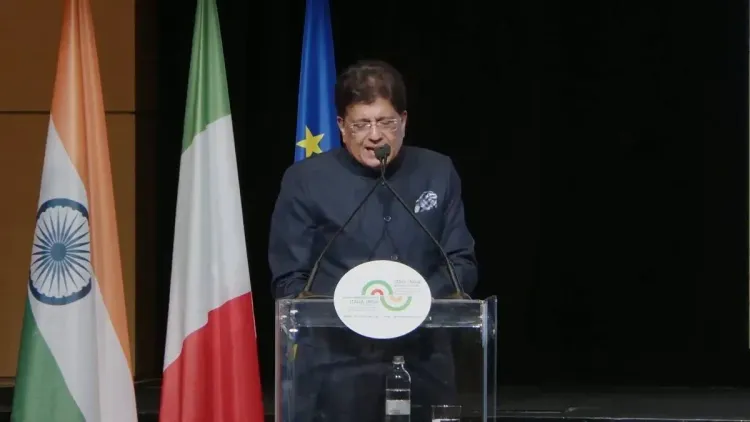
Commerce Minister Piyush Goyal invoked the 19th-century scientific parallel of Jagadish Chandra Bose and Guglielmo Marconi to argue that Indian genius and Italian enterprise are natural complements — framing India-Italy bilateral ties through a shared heritage of innovation.
Key Takeaways
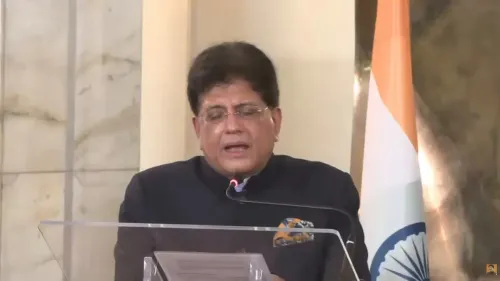
Union Commerce and Industry Minister Piyush Goyal posted on X invoking the legacy of Jagadish Chandra Bose and Guglielmo Marconi to frame India-Italy relations.
Bose publicly demonstrated wireless telegraphy in Kolkata in 1895 , establishing principles later commercialised by Marconi.
Marconi won the Nobel Prize in Physics in 1909 for his development of practical radio communication systems.
Goyal framed the bilateral relationship as a complementarity between 'Indian genius' and 'Italian enterprise.' The reference aligns with a broader Indian diplomatic pattern of grounding trade and technology pitches in shared historical narratives with European partners.
A century-old story of Indian scientific genius meeting Italian entrepreneurial drive is being summoned to make a case for the present — and Union Commerce and Industry Minister Piyush Goyal is the one telling it.
In a post on X, Minister Goyal drew a direct line between Jagadish Chandra Bose, the pioneering Indian physicist, and Guglielmo Marconi, the Italian inventor who turned wireless theory into a global industry, writing: 'The story of Jagadish Chandra Bose and Guglielmo Marconi reminds us of how Indian genius and Italian enterprise can complement each other.'
The 1895 Demonstration That Changed Communication
The reference is rooted in one of science history's most debated chapters. In 1895, Bose staged a public demonstration of wireless telegraphy in Kolkata, establishing foundational principles of radio transmission — principles that Marconi would go on to commercialise, eventually winning the Nobel Prize in Physics in 1909. The pairing has since become a shorthand for the idea that Indian scientific imagination and European industrial muscle have always had more in common than history books acknowledge.Why a Commerce Minister Is Reaching for a Physics Story
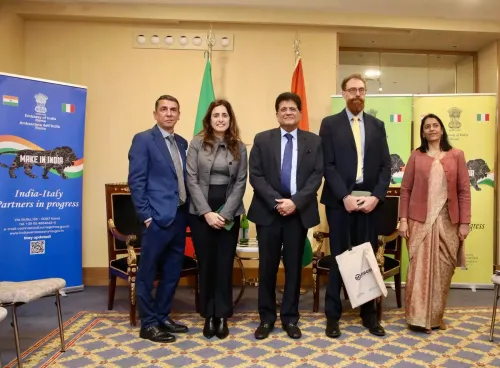
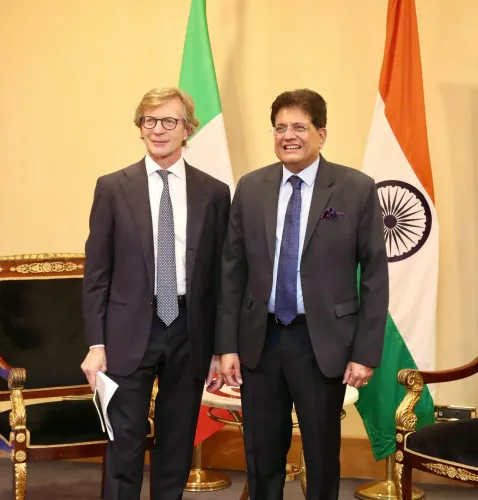
Goyal's choice of this particular metaphor is deliberate. As the minister responsible for trade and industrial partnerships, framing India-Italy cooperation through the lens of Bose and Marconi repositions a bilateral relationship — typically discussed in terms of trade deficits, automotive supply chains, or luxury goods — as something with deeper intellectual roots. It is a move successive Indian governments have made with European partners: ground the economic pitch in a shared heritage of innovation, then build forward. India and Italy have maintained steady bilateral exchanges across science, technology, and manufacturing, and both sides have periodically sought to deepen ties in high-technology sectors. A commerce minister invoking this narrative signals an intent to elevate the conversation beyond transactional trade. The kicker writes itself in Goyal's own framing: if Bose's insight and Marconi's execution could together lay the wire for the modern world, the question India and Italy are now being invited to answer is — what could they build next?Point of View
Not merely a market. For Italy, the framing is equally flattering, positioning Marconi's commercial genius as the indispensable engine that turned Indian insight into global impact. Watch for whether this rhetoric is followed by concrete announcements at any upcoming India-Italy bilateral summit or ministerial-level meeting.
NationPress
19 Nov 2026
Frequently Asked Questions
What is the connection between Jagadish Chandra Bose and Guglielmo Marconi?
Jagadish Chandra Bose publicly demonstrated wireless telegraphy in Kolkata in 1895, establishing foundational principles of radio transmission. Guglielmo Marconi subsequently commercialised these principles and won the Nobel Prize in Physics in 1909, making the two figures central to debates about the origins of radio communication.
Why did Piyush Goyal mention Bose and Marconi?
Commerce Minister Piyush Goyal invoked the Bose-Marconi parallel to argue that Indian scientific innovation and Italian entrepreneurial execution are natural complements, framing the India-Italy bilateral relationship in terms of shared heritage rather than purely transactional trade.
What did Jagadish Chandra Bose invent?
Jagadish Chandra Bose was an Indian physicist who conducted pioneering experiments on radio waves and wireless transmission in the 1890s, predating or paralleling Marconi's more widely credited work. He also made significant contributions to plant biology and microwave optics.
What is the current state of India-Italy bilateral relations?
India and Italy maintain steady ties spanning trade, science, technology, and manufacturing. Both governments have periodically sought to deepen cooperation in high-technology sectors, and senior ministers on both sides have used historical narratives of shared innovation to build momentum for stronger economic partnerships.
What does Piyush Goyal's ministry oversee?
Piyush Goyal serves as Union Minister of Commerce and Industry, overseeing India's trade policy, industrial promotion, and bilateral trade negotiations. He is also a senior BJP leader and the Leader of the House in the Rajya Sabha.