Goyal: 496 mn lifted from poverty, India opens trade doors
Synopsis
Commerce Minister Piyush Goyal highlights 496 million Indians lifted from extreme poverty in 12 years, framing the milestone as evidence that India's growing middle class and rising incomes make it a prime destination for international trade and global partnerships.
Key Takeaways
496 million people cited by Minister Goyal as lifted out of extreme poverty over 12 years , framed as the centrepiece of India's global trade pitch.
Rising middle-class incomes and youth aspirations are presented as structural drivers of import demand, strengthening India's negotiating hand in trade talks.
India is engaged in active Free Trade Agreement negotiations with the European Union and the United Kingdom , both pending conclusion.
The NITI Aayog Multidimensional Poverty Index report update will be the key data moment that validates or scrutinises the 496-million figure.
India's poverty-reduction messaging mirrors a long-standing pattern of pairing domestic welfare data with outward-looking trade liberalisation signals.
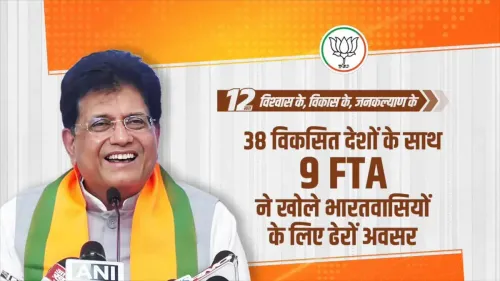
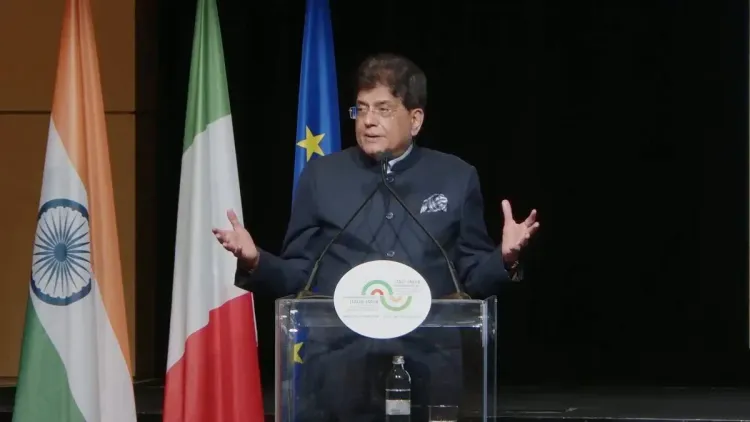
Nearly half a billion people pulled out of extreme poverty in just over a decade — that is the headline number Union Commerce and Industry Minister Piyush Goyal put at the centre of India's trade pitch on Thursday, 19 November 2026, framing it not merely as a welfare milestone but as an open invitation to the world's trading partners.
The number that reframes India's market story
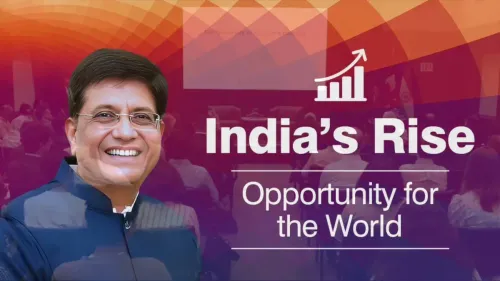
Goyal's post cites 496 million people lifted out of extreme poverty in 12 years — a figure that, if borne out by updated multidimensional poverty index data, would represent the largest single-country poverty reduction in modern economic history. The minister pairs it with two other signals: a growing middle class and rising youth aspirations, packaging them together as the core argument for why global businesses and trading governments should deepen ties with India right now.
The framing is deliberate. When a country shifts from aid-recipient optics to consumer-market optics, the entire negotiating posture in trade talks changes. Rising incomes mean rising import demand — and that is precisely the offer on the table.
From 1991 liberalisation to today's FTA sprint
India's integration with global markets has a long runway, stretching back to the 1991 economic liberalisation that first cracked open tariff walls. But the pace has visibly accelerated in the current era, with the government running simultaneous free-trade agreement negotiations on multiple fronts. The two most closely watched — deals with the European Union and the United Kingdom — remain in active negotiation, with both sides watching India's domestic demand story as much as its export credentials.
Successive administrations have learned that welfare data and trade strategy feed each other: a credible poverty-reduction narrative strengthens the pitch that India is an economy with structural momentum, not a fragile emerging market in need of concessions.
What signals to watch next
The release of updated NITI Aayog Multidimensional Poverty Index reports will be the moment analysts stress-test the 496-million claim. Any new MPI data will either cement the statistic as a headline benchmark or invite scrutiny over methodology and baseline years. Meanwhile, progress — or stalemate — in the EU and UK FTA rounds will signal whether India's market-opening rhetoric is translating into actual negotiating movement.
India is signalling, loudly, that its domestic transformation is now a foreign-trade asset. The world's negotiating teams will be doing the arithmetic.
Point of View
Pending independent verification, is designed to shift the conversation from India-as-emerging-market to India-as-established-consumer-giant. This framing also insulates the government against protectionist criticism at home: opening trade doors is easier to defend politically when you can show that hundreds of millions of newly prosperous citizens stand to benefit as buyers. Watch whether this messaging intensifies ahead of any scheduled ministerial-level FTA round.
NationPress
19 Nov 2026
Frequently Asked Questions
How many people has India lifted out of poverty according to Piyush Goyal?
Commerce and Industry Minister Piyush Goyal cited a figure of 496 million people lifted out of extreme poverty in 12 years , presenting it as evidence of India's economic transformation and readiness for expanded global trade partnerships.
What free trade agreements is India currently negotiating?
India is in active negotiations for Free Trade Agreements with the European Union and the United Kingdom , both of which remain pending conclusion and are closely watched by trade policy analysts.
What is the NITI Aayog Multidimensional Poverty Index?
The NITI Aayog Multidimensional Poverty Index (MPI) is India's official measure of poverty that goes beyond income, tracking health, education, and living standards. Updated MPI reports are the key data source against which large poverty-reduction claims are benchmarked.
What is Piyush Goyal's role in India's trade policy?
Piyush Goyal is the Union Minister of Commerce and Industry , responsible for India's trade policy, free trade agreement negotiations, and global economic outreach. He is also a senior BJP leader and Leader of the House in the Rajya Sabha.
Why is India emphasising poverty reduction in its trade messaging?
By linking poverty reduction to a rising middle class and growing incomes, India repositions itself as a high-demand consumer market rather than a low-income economy seeking concessions, which strengthens its hand in bilateral and multilateral trade negotiations.