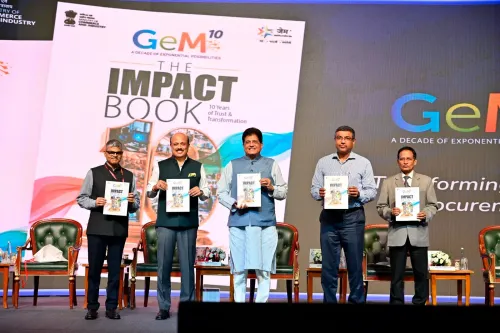
Goyal marks 10 years of GeM, India's public procurement overhaul

Synopsis
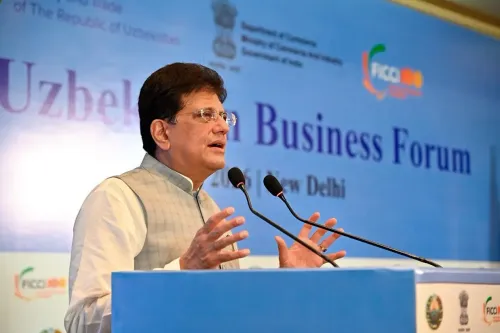
Union Commerce Minister Piyush Goyal marked the 10th anniversary of the Government e-Marketplace on 9 August 2026, crediting the portal with replacing opacity and discretion in public procurement with transparency and equal opportunity for vendors across India.
Key Takeaways
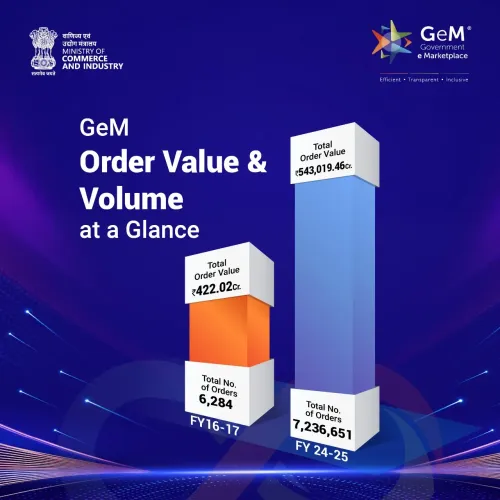
The Government e-Marketplace (GeM) was launched on 9 August 2016 to digitise and reform central government procurement.
Minister Piyush Goyal marked the platform's 10th anniversary on 9 August 2026 with a post on X under the hashtag #10YearsOfGeM .
GeM is a central pillar of the Digital India programme, aimed at reducing leakages and discretionary decision-making in public spending.
MSME vendors and central government departments are the platform's primary stakeholders, with the portal opening procurement to sellers beyond traditional incumbents.
Integration with state-level procurement portals remains the key unresolved frontier for expanding GeM's reach.
Ten years ago, a quiet digital portal went live and began dismantling one of the most entrenched inefficiencies in Indian governance — the opacity of government procurement. On 9 August 2026, Union Commerce and Industry Minister Piyush Goyal marked a decade of the Government e-Marketplace (GeM), calling it a platform that replaced 'opacity with transparency, delay with efficiency, and discretion with fairness.'
What GeM set out to fix — and why it mattered
When the Government e-Marketplace launched on 9 August 2016, public procurement in India was a labyrinth. Government departments bought goods and services through processes that were slow, paper-heavy, and vulnerable to discretionary decisions that favoured entrenched suppliers. Small vendors — particularly MSMEs — rarely got a look-in. GeM was designed to blow that system open.
Built as a core pillar of the Digital India programme, the portal created a single, unified marketplace where government buyers at the central level could procure directly from registered vendors. The logic was simple: put the catalogue online, make the prices visible, and let competition do the rest. Discretion, the traditional source of leakage, would have nowhere to hide.
Equal opportunity as a procurement principle
Minister Goyal's framing zeroed in on something beyond efficiency — fairness. 'Bringing equal opportunity for everyone across the country to participate in public procurement' is not a routine bureaucratic achievement. For decades, geography, connections, and incumbency determined who won government contracts. A digitised, transparent marketplace theoretically levels that field, allowing a small manufacturer in a Tier-3 town to compete alongside a large Delhi-based supplier.
Successive Union Budgets have reinforced this direction, with procurement policies mandating increasing use of GeM across central government departments. Parliamentary committee reviews of the platform's annual procurement volumes have become a regular accountability mechanism, signalling that GeM is now embedded in the governance architecture — not a pilot, but a permanent fixture.
A decade in, the road GeM still has to travel
The platform's integration with state-level procurement portals remains the next frontier. Central government adoption has grown, but state departments — which account for a significant share of total public spending — operate largely outside GeM's umbrella. Closing that gap would multiply the platform's impact on vendor participation and fiscal transparency many times over.
Ten years of GeM is a milestone worth marking. Whether the next decade delivers on the promise of truly nationwide, seamless public procurement is the question that will define its legacy.
Point of View
Positioning the platform not just as an efficiency tool but as an equity instrument — relevant at a time when MSME welfare is a contested electoral theme. The unfinished business of state-level integration is where the platform's true scale will be won or lost, and that battle is as much political as it is administrative. For the opposition, the counter-argument will inevitably centre on whether the vendor diversity GeM promises has translated into measurable ground-level change for small suppliers.
NationPress
11 Aug 2026
Frequently Asked Questions
What is GeM and when was it launched?
GeM, or the Government e-Marketplace, is India's official online portal for public procurement by government departments. It was launched on 9 August 2016 as part of the Digital India programme to digitise and bring transparency to government buying.
Why is Piyush Goyal talking about GeM in 2026?
9 August 2026 marks the 10th anniversary of the GeM portal's launch. Union Commerce and Industry Minister Piyush Goyal posted on X to mark the milestone, highlighting the platform's role in replacing opacity and discretion with transparency and fairness in procurement.
How does GeM help MSMEs?
GeM gives MSME vendors direct access to government buyers on a single digital platform, reducing the dependence on connections and incumbency that historically favoured large, established suppliers. Any registered vendor can list products and bid for government contracts.
Is GeM only for central government departments?
GeM was primarily built for central government departments , though there have been efforts to extend its use. Full integration with state-level procurement portals remains an ongoing challenge and is considered the next major frontier for the platform.
What is the significance of the hashtag #10YearsOfGeM?
The hashtag #10YearsOfGeM marks the platform's decade-long run since its 2016 launch . It has been used by government officials and stakeholders to reflect on the portal's impact on public procurement transparency and vendor participation across India.