Piyush Goyal Meets Egypt FM to Deepen Strategic Ties
Synopsis
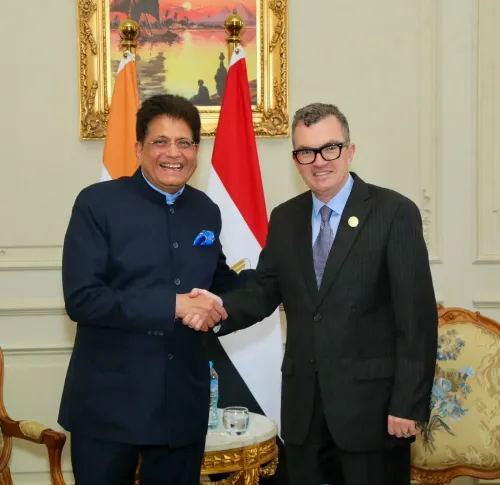
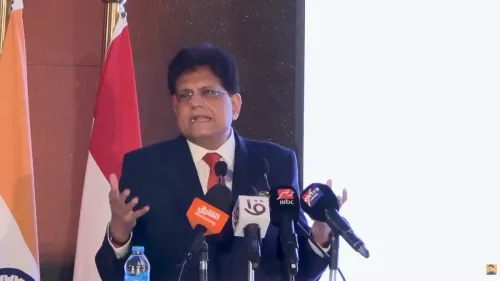
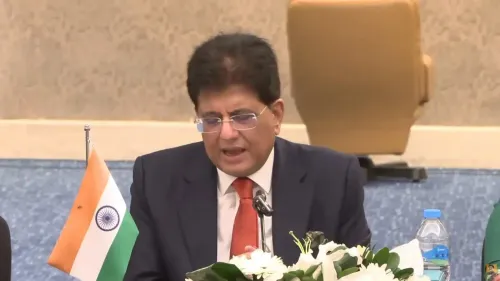
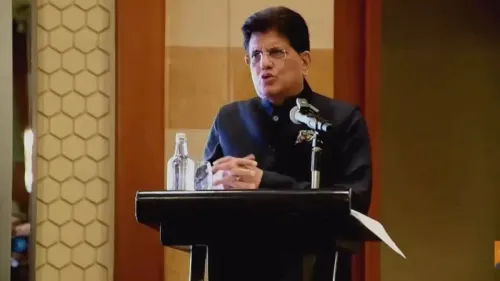
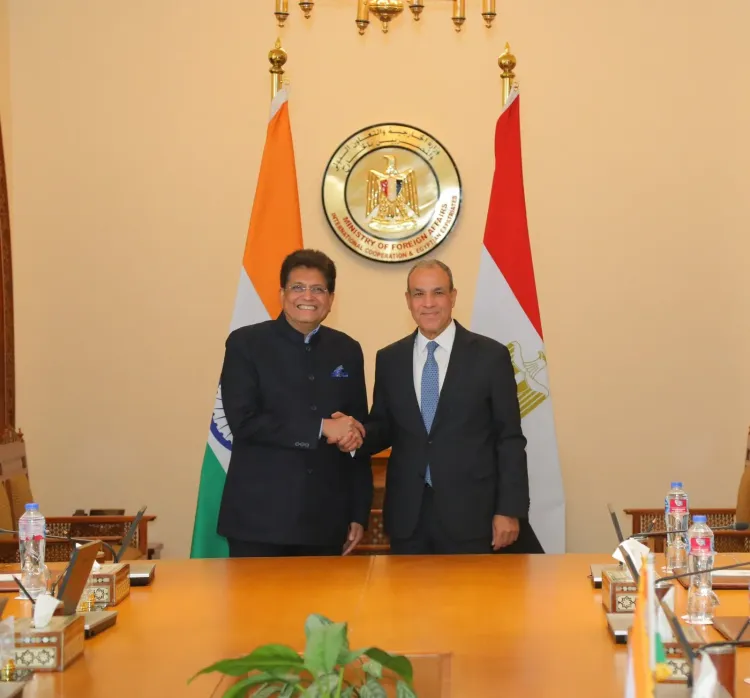
Union Commerce Minister Piyush Goyal met Egyptian Foreign Minister Badr Abdelatty on 16 November 2026, discussing ways to deepen the India-Egypt Comprehensive Strategic Partnership and expand trade, investment, and sectoral cooperation.
Key Takeaways
Piyush Goyal , Union Minister of Commerce and Industry, held bilateral talks with Egypt's Foreign Minister Badr Abdelatty on 16 November 2026 .
Discussions centred on strengthening the India-Egypt Comprehensive Strategic Partnership , elevated in 2023 .
Both sides explored 'stronger economic ties, greater trade and investment cooperation, and expanded collaboration across key sectors.' India and Egypt have maintained diplomatic relations since 1948 , with roots in the Non-Aligned Movement.
Egypt's strategic position makes it a key gateway for Indian trade and investment into North and East Africa.
Follow-up activity expected through the India-Egypt Joint Trade Committee and new investment facilitation mechanisms.
India's economic diplomacy with the Arab world got a fresh push on Monday, 16 November 2026, when Union Commerce and Industry Minister Piyush Goyal sat down with Badr Abdelatty, Egypt's Minister of Foreign Affairs, for wide-ranging talks that covered trade, investment, and the full breadth of a bilateral relationship stretching back more than seven decades.
From 1948 to a Comprehensive Strategic Partnership
India and Egypt established diplomatic relations in 1948 — one of the earliest such bonds in the post-colonial world — and built on shared solidarity through the Non-Aligned Movement. That historical depth was upgraded to a Comprehensive Strategic Partnership during high-level engagements in 2023, creating a formal architecture for defence dialogue, strategic cooperation, and economic collaboration. Monday's meeting was squarely about filling that architecture with tangible commercial content.
Goyal described the interaction as 'fruitful', saying both sides 'exchanged views on building on our longstanding friendship and discussed ways to further strengthen our Comprehensive Strategic Partnership.' Beyond the diplomatic framework, the two ministers 'explored avenues for stronger economic ties, greater trade and investment cooperation, and expanded collaboration across key sectors.'
Egypt as India's Gateway into Africa
Egypt is not simply a bilateral partner — it is a strategic hinge. Sitting at the crossroads of North Africa, the Eastern Mediterranean, and the Red Sea corridor, Cairo gives Indian exporters and investors a natural entry point into a continental market of over a billion consumers. As India deepens its Global South outreach, that geography matters enormously.
Indian exporters in sectors from pharmaceuticals to engineering goods have long eyed Egypt's growing middle class and its role as a re-export hub. For Egyptian investors, India's manufacturing scale and digital infrastructure present a compelling proposition. The 'key sectors' Goyal referenced — left deliberately broad in the public readout — are expected to include energy, infrastructure, and technology, areas where both governments have signalled appetite for joint ventures.
What Commerce Minister Goyal Brings to the Table
The choice of Goyal — Leader of the House in the Rajya Sabha and the minister who controls India's trade policy levers — to hold this conversation with a foreign minister signals that New Delhi is treating the economic dimension of the India-Egypt partnership as a priority, not an afterthought. Commerce ministers, not just foreign ministers, are increasingly India's first movers in bilateral economic diplomacy.
The next concrete marker will be any announcement from the India-Egypt Joint Trade Committee, the institutional body that translates ministerial intent into actual trade facilitation mechanisms. Watch also for investment facilitation frameworks that could channel Egyptian sovereign wealth or private capital toward Indian infrastructure projects.
Seven decades of friendship are well documented. The real question now is whether this renewed push produces the trade and investment numbers to match the rhetoric — and Monday's meeting suggests both sides are finally ready to find out.
Point of View
Controlling the Suez Canal corridor and sitting at the edge of a rapidly growing African consumer market, fits neatly into India's Global South pivot, which accelerated after the 2023 G20 presidency. The upgrade to a Comprehensive Strategic Partnership now needs to be tested against hard trade and investment data; without measurable commercial outcomes, the framework risks remaining a diplomatic decoration.
NationPress
16 Nov 2026
Frequently Asked Questions
What is the India-Egypt Comprehensive Strategic Partnership?
It is a bilateral framework elevated during high-level meetings in 2023 that covers strategic dialogue, defence cooperation, and economic collaboration between India and Egypt, building on diplomatic ties dating back to 1948.
Why did Commerce Minister Piyush Goyal meet Egypt's Foreign Minister?
Goyal met Badr Abdelatty on 16 November 2026 to explore ways to strengthen India-Egypt trade, investment, and sectoral cooperation under the Comprehensive Strategic Partnership.
What sectors are India and Egypt looking to collaborate on?
While the official readout referred to 'key sectors' broadly, both countries have signalled interest in energy, infrastructure, pharmaceuticals, and technology based on their existing trade and investment profiles.
Why is Egypt important for India's trade strategy?
Egypt sits at the crossroads of North Africa, the Eastern Mediterranean, and the Red Sea, making it a strategic entry point for Indian exporters and investors seeking access to African and Middle Eastern markets.
What is the India-Egypt Joint Trade Committee?
It is the institutional body responsible for translating ministerial-level trade agreements into practical facilitation mechanisms; it is expected to be a key forum for follow-up after Goyal's meeting with Abdelatty.