Goyal Meets Ex-UK PM Sunak, Pushes India-UK Economic Ties
Synopsis
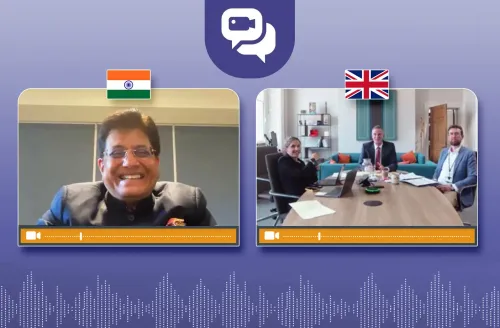
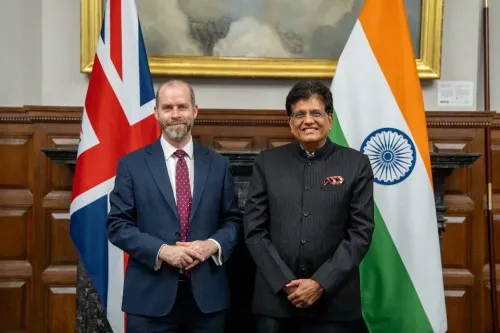
Commerce Minister Piyush Goyal met former UK Prime Minister Rishi Sunak on October 13, 2026, for discussions on trade, investment, and technology partnerships — a signal of sustained momentum on the long-running India-UK FTA agenda.
Key Takeaways
Commerce Minister Piyush Goyal met former UK PM Rishi Sunak on Tuesday, October 13, 2026 .
Discussions covered trade, investment, innovation, and technology partnerships between India and the UK.
The India-UK Free Trade Agreement was launched in January 2022 and saw multiple negotiating rounds under Sunak's premiership through 2023.
Priority areas for both sides include digital trade, fintech, and innovation ecosystems .
India has pursued bilateral FTAs with Western partners to diversify export markets and attract technology investment; the UK has done likewise post-Brexit.
Goyal has led India's trade policy as Union Commerce and Industry Minister since 2019 .
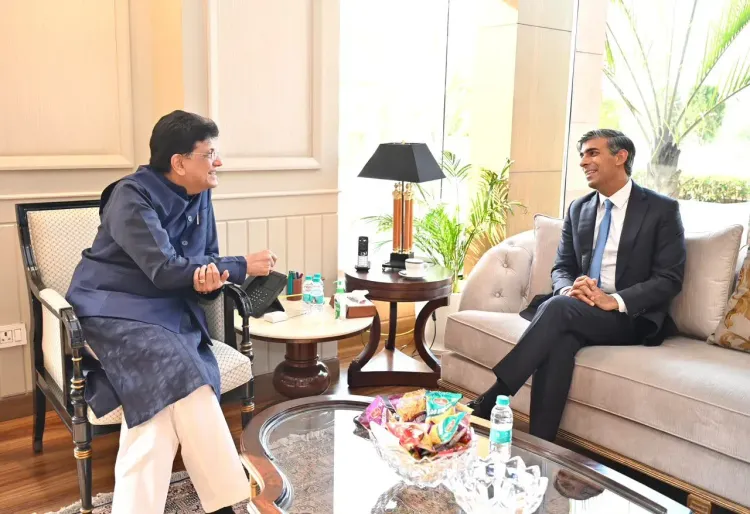
A conversation between two architects of the India-UK economic relationship resumed on Tuesday, October 13, 2026, when Union Commerce and Industry Minister Piyush Goyal met former United Kingdom Prime Minister Rishi Sunak — the man who stewarded some of the most consequential rounds of bilateral trade negotiations between the two countries.
Goyal described it as 'a great exchange on strengthening India-UK economic cooperation to drive growth,' with discussions spanning trade, investment, innovation, and technology partnerships. The meeting, warm in tone and specific in ambition, signals that the India-UK economic agenda has a momentum of its own — independent of which government holds office in London.
The FTA Backstory That Frames This Meeting
The India-UK Free Trade Agreement (FTA) — formally a Comprehensive Economic and Trade Agreement — was launched in January 2022 during then-Prime Minister Boris Johnson's visit to India. Sunak inherited those negotiations when he took office in 2022, and through 2023, multiple rounds of talks were held under his watch, zeroing in on the hardest chapters: services, technology transfer, and professional mobility.
Both sides have long flagged digital trade, fintech, and innovation ecosystems as the real prizes in any eventual deal. India, as it diversifies beyond traditional export markets in a post-pandemic, multipolar trade landscape, has pursued bilateral FTAs with Western partners to lock in technology and investment inflows. For the UK, post-Brexit trade deals are not just economics — they are strategic proof of a 'Global Britain' that can hold its own outside the EU single market.
Why a Meeting With a Former PM Still Moves the Needle
Sunak is no longer in government, but his institutional knowledge of where India-UK talks stalled — and what would get them moving again — is considerable. Goyal, who has led India's trade negotiating posture since 2019, choosing to hold this conversation publicly suggests a deliberate signal: that New Delhi values continuity in bilateral economic engagement regardless of the political cycle in Westminster.
The meeting also keeps the spotlight on a relationship that has faced periodic pressure from both sides over market access, immigration, and tariff asymmetries. India's exporters — particularly in textiles, pharmaceuticals, and IT services — have watched these negotiations closely, hoping a concluded deal would open a major English-speaking, high-income market. UK investors, meanwhile, have eyed India's manufacturing push and its growing consumer base.
One meeting does not conclude a trade deal. But when the minister who signs them sits down with the former prime minister who nearly got one done, the room is doing more work than the calendar entry lets on.
Point of View
New Delhi signals that its commitment to the bilateral economic agenda transcends any single government in Westminster. This fits a broader pattern in India's FTA diplomacy: maintain high-visibility engagement across political cycles to prevent negotiations from going cold. The emphasis on innovation and technology — rather than just goods tariffs — also points to where India sees the real strategic value in a UK deal.
NationPress
13 Oct 2026
Frequently Asked Questions
What did Piyush Goyal and Rishi Sunak discuss?
They discussed strengthening India-UK economic cooperation, covering trade, investment, innovation, and technology partnerships between the two countries.
What is the status of the India-UK Free Trade Agreement?
The India-UK FTA was launched in January 2022. Multiple rounds of negotiations were held through 2023 focusing on services, technology, and mobility chapters, but a final agreement had not been concluded as of the available record.
Why did Piyush Goyal meet Rishi Sunak if Sunak is no longer UK Prime Minister?
Sunak was UK PM from 2022 to 2024 and oversaw key rounds of India-UK FTA talks. His institutional knowledge of the negotiations makes him a valuable interlocutor for India's commerce minister even after he left office.
What are the priority areas in India-UK trade talks?
Both sides have identified digital trade, fintech, innovation ecosystems, services, and technology transfer as priority areas, alongside traditional goods and investment chapters.
Why does India want a free trade deal with the UK?
India is diversifying beyond traditional export markets and seeks to secure technology and investment inflows from Western partners. The UK, post-Brexit, is also pursuing bilateral deals to offset the loss of EU single-market access.