Piyush Goyal Meets Ontario Premier Doug Ford, Eyes Deeper Trade Ties
Synopsis
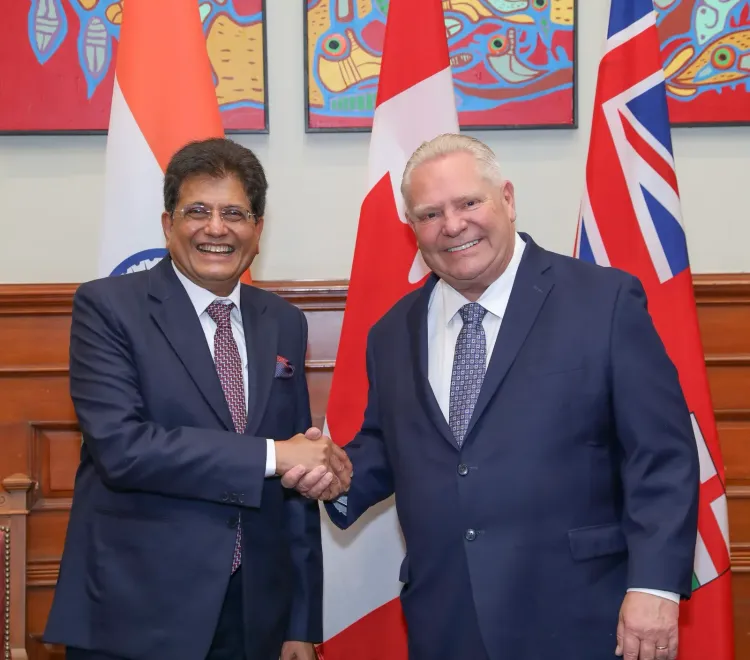
Commerce Minister Piyush Goyal met Ontario Premier Doug Ford on 28 May 2026, discussing India-Ontario cooperation in manufacturing, technology, clean energy, food processing, and critical minerals, as India advances sub-national economic diplomacy with Canadian provinces amid stalled federal CEPA talks.
Key Takeaways
Piyush Goyal met Ontario Premier Doug Ford on 28 May 2026 to deepen India-Ontario economic ties.
Sectors discussed include manufacturing, technology, infrastructure, clean energy, food processing, and critical minerals .
Ontario is Canada's most populous province and a key hub for automotive, technology, and mining industries.
India-Canada investment ties are anchored by a Foreign Investment Promotion and Protection Agreement signed in 2007 ; federal CEPA talks began in 2010 but have faced periodic pauses.
The meeting reflects India's broader strategy of sub-national economic diplomacy with Canadian provinces to diversify supply chains.
Follow-up action on working groups and investment facilitation mechanisms is expected from the Ministry of Commerce.
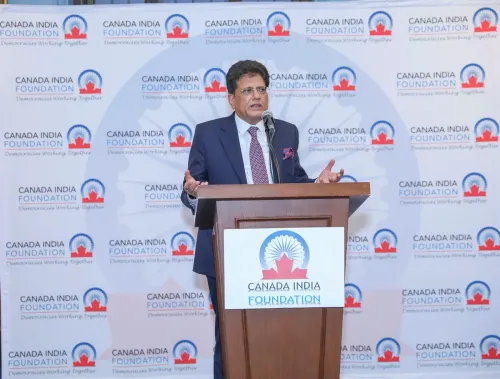
Union Commerce and Industry Minister Piyush Goyal met Ontario Premier Doug Ford on Thursday, 28 May 2026, to explore avenues for deepening India-Ontario collaboration across key economic sectors. The meeting, confirmed by Goyal on X, covered manufacturing, technology, infrastructure, clean energy, food processing, and critical minerals, alongside broader bilateral trade and investment partnerships.
Context
In his post, Goyal said he 'called on Hon'ble Doug Ford, Premier of Ontario, and discussed opportunities to deepen India-Ontario collaboration.' The two sides also 'explored cooperation across manufacturing, technology, infrastructure, clean energy, food processing, and critical minerals, while strengthening bilateral trade and investment partnerships.' The meeting signals a deliberate push by New Delhi to engage Canadian provinces directly, bypassing the slower pace of federal-level negotiations.
Ontario is Canada's most populous province and a major hub for automotive manufacturing, technology, and mining — sectors that align closely with India's supply-chain diversification and clean-energy transition goals. Premier Doug Ford has led a Progressive Conservative government focused on economic growth since 2018, making Ontario a natural interlocutor for investment-oriented dialogue.
Policy Backdrop
India and Canada have maintained a formal investment protection framework since the Foreign Investment Promotion and Protection Agreement signed in 2007. Negotiations for a Comprehensive Economic Partnership Agreement (CEPA) were launched in 2010 but have seen periodic pauses at the federal level. Prime Minister Narendra Modi's 2015 visit to Canada produced multiple memoranda of understanding on trade, energy, and education, laying groundwork that subsequent engagements have sought to build on.
The sub-national diplomacy approach — engaging provinces such as Ontario directly — mirrors India's outreach to states in other federations, including Australia and the United States, to diversify supply chains and attract investment outside traditional bilateral routes. Critical minerals, in particular, have emerged as a strategic priority for India as it seeks to reduce dependence on single-source supply chains for sectors including electric vehicles and semiconductors.
Stakeholders and Impact
Indian exporters in sectors such as engineering goods, pharmaceuticals, and processed foods stand to benefit from improved market access and investment facilitation mechanisms with Ontario. Ontario-based manufacturers and technology firms, for their part, could gain a foothold in one of the world's fastest-growing consumer and industrial markets.
Critical minerals investors are among the most closely watched stakeholders: Ontario holds significant reserves of nickel, cobalt, and lithium — materials central to India's clean-energy and electric-vehicle ambitions. Clean energy cooperation, including potential collaboration on nuclear technology given Canada's CANDU reactor expertise, also featured in the broader agenda discussed.
What's Next
Observers will watch for follow-up statements from the Ministry of Commerce and Industry on any proposed working groups, investment facilitation mechanisms, or sector-specific task forces that may emerge from the Goyal-Ford meeting. Progress is also expected to be reviewed at the next India-Canada ministerial dialogue. The engagement underscores that even as federal CEPA negotiations navigate diplomatic headwinds, India is intent on keeping economic channels with Canada active through province-level partnerships.
Point of View
Direct outreach to Ontario, the country's industrial heartland, lets New Delhi advance concrete sectoral agendas on critical minerals and clean energy without waiting for a federal breakthrough. The focus on critical minerals is particularly telling: it fits squarely into India's broader push to secure supply chains for its electric-vehicle and semiconductor ambitions. Whether this meeting produces formal working groups or remains a goodwill signal will determine its place in the longer arc of India-Canada economic relations.
NationPress
11 Oct 2026
Frequently Asked Questions
Why did Piyush Goyal meet Ontario Premier Doug Ford?
Goyal met Doug Ford to explore opportunities for deepening India-Ontario collaboration across manufacturing, technology, clean energy, food processing, infrastructure, and critical minerals, and to strengthen bilateral trade and investment ties.
What is the current state of India-Canada trade negotiations?
India and Canada have a Foreign Investment Promotion and Protection Agreement in place since 2007, and CEPA negotiations were launched in 2010 but have seen periodic pauses at the federal level. India has responded by deepening sub-national engagement with provinces like Ontario.
Why is Ontario important for India's economic interests?
Ontario is Canada's most populous province and a major hub for automotive manufacturing, technology, and mining, including critical minerals such as nickel, cobalt, and lithium that are central to India's clean-energy and electric-vehicle goals.
What are critical minerals and why does India need them from Canada?
Critical minerals — including lithium, cobalt, and nickel — are essential inputs for electric vehicles, batteries, and semiconductors. Canada, particularly Ontario, holds significant reserves, making it a strategic partner for India as it seeks to diversify away from single-source supply chains.
What could follow from the Goyal-Ford meeting?
Possible next steps include the formation of India-Ontario working groups, investment facilitation mechanisms, and sector-specific task forces, with progress likely to be reviewed at the next India-Canada ministerial dialogue.