Piyush Goyal Addresses Munk School on India-Canada Ties
Synopsis
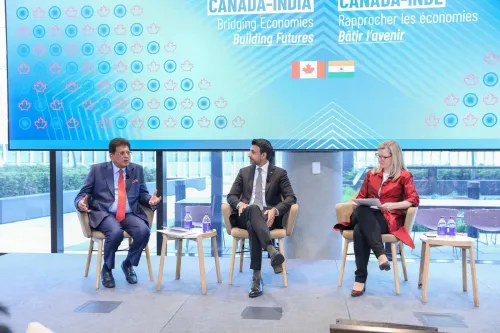
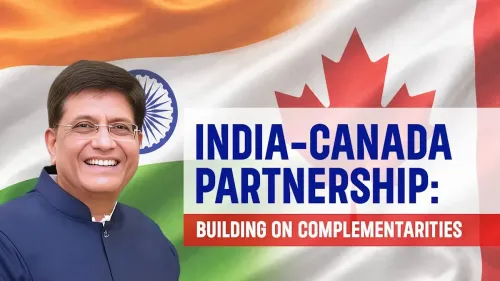
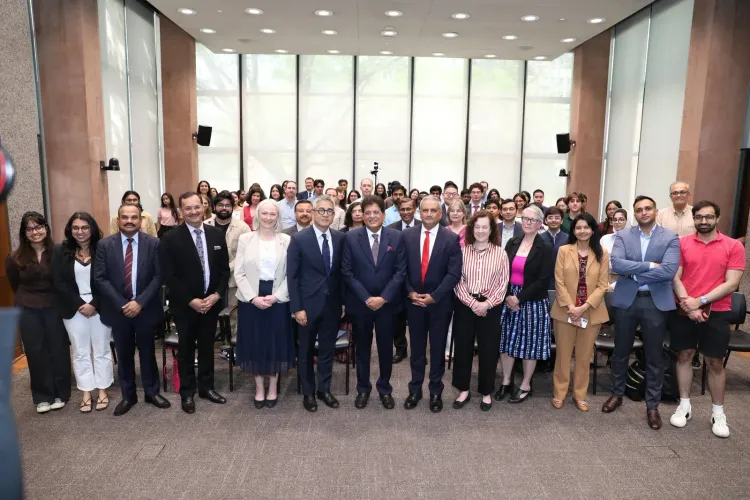
Union Commerce Minister Piyush Goyal addressed the Munk School of Global Affairs at the University of Toronto on 28 May 2026, speaking on India's economic reforms, PM Modi's global leadership, and the expanding potential of India-Canada trade, investment, and people-to-people ties.
Key Takeaways
Commerce Minister Piyush Goyal addressed the Munk School of Global Affairs and Public Policy , University of Toronto , on 28 May 2026 .
The address focused on expanding the India-Canada economic relationship across trade, investment, and people-to-people ties.
Goyal highlighted India's economic progress and transformative reforms under Prime Minister Narendra Modi .
Formal India-Canada CEPA negotiations were launched in 2010 ; PM Modi 's 2015 Canada visit produced agreements on trade, nuclear energy, and education.
Canada hosts a large Indian diaspora and student population, central to bilateral people-to-people engagement.
The address called for sustained collaboration among academia, industry, and policymakers of both nations.
Union Commerce and Industry Minister Piyush Goyal addressed faculty, researchers, and students at the Munk School of Global Affairs and Public Policy, University of Toronto, on Thursday, 28 May 2026, speaking on the expanding horizons of the India-Canada economic relationship and shared opportunities ahead. The address covered India's economic progress, transformative reforms, and its growing global leadership under Prime Minister Narendra Modi, as well as the potential for deeper engagement across academia, industry, and policymakers.
Context
Minister Goyal's visit to the Munk School — one of Canada's foremost institutions for international policy research — placed India's trade and investment narrative before an influential academic and policy audience. He highlighted what he described as 'immense potential for sustained engagement' among the two nations' academic, industrial, and policy communities. The address also underscored the importance of strengthening bilateral trade, investment, and people-to-people ties between India and Canada.
Canada hosts one of the world's largest Indian diaspora communities and a substantial Indian student population, making people-to-people connectivity a natural pillar of any bilateral framework. The Munk School forum provided a platform to engage directly with future policymakers and researchers who will shape Canada's international economic outlook.
Policy Backdrop
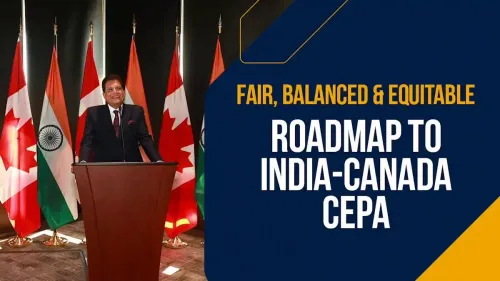
Formal negotiations for an India-Canada Comprehensive Economic Partnership Agreement (CEPA) were launched in 2010, with both sides periodically signalling intent to advance the talks. Prime Minister Modi's April 2015 visit to Canada produced multiple agreements spanning trade, nuclear energy, and education, reinforcing the bilateral framework. India has simultaneously pursued broader economic engagement with G7 partners to expand market access and attract foreign investment alongside its multilateral trade agenda.
Periodic diplomatic frictions have intermittently affected the pace of trade negotiations between the two countries, but both governments have repeatedly expressed interest in resuming and deepening discussions. Minister Goyal's Toronto engagement signals continued ministerial-level commitment to keeping those channels active.
Stakeholders and Impact
Indian exporters stand to benefit from any progress on market access under a future trade agreement, while Canadian investors have shown consistent interest in India's infrastructure, clean energy, and technology sectors. Academic researchers and students at institutions such as the Munk School represent a long-term constituency for bilateral engagement, shaping policy thinking on both sides.
The address also carries symbolic weight for the large Indian-Canadian community, which serves as a living bridge for commerce, culture, and diplomacy. Strengthening people-to-people ties — a theme Minister Goyal specifically highlighted — is widely seen as a foundation for durable economic partnerships.
What's Next
Attention will now turn to whether the Toronto address translates into concrete follow-up steps, including renewed momentum on India-Canada CEPA negotiations or fresh academic and business delegation exchanges. Both governments' willingness to move from dialogue to formal trade-talk timelines will be the key indicator to watch. Minister Goyal's engagement at a leading policy school suggests New Delhi is investing in the long-term narrative architecture needed to build durable bilateral consensus.
Point of View
Taking India's economic reform story directly to an institution that trains future Canadian and international policymakers. Coming against the backdrop of intermittent friction in India-Canada diplomatic relations, a ministerial address at this level signals New Delhi's intent to keep bilateral economic channels warm regardless of political headwinds. The emphasis on academia and people-to-people ties — not just trade figures — suggests India is playing a long game, building consensus at the elite opinion-forming level before any formal CEPA breakthrough. It fits a broader pattern of the Modi government deploying senior ministers as economic brand ambassadors in Western capitals.
NationPress
11 Oct 2026
Frequently Asked Questions
What did Piyush Goyal say at the Munk School Toronto?
Minister Piyush Goyal spoke about India's rapid economic progress, transformative reforms, and growing global leadership under PM Modi, and called for deeper engagement between Indian and Canadian academia, industry, and policymakers to strengthen bilateral trade and investment.
What is the India-Canada CEPA?
The India-Canada Comprehensive Economic Partnership Agreement is a proposed free trade deal whose negotiations were formally launched in 2010. Both sides have periodically signalled interest in advancing the talks, though progress has been intermittent.
Why is the Munk School significant for India-Canada relations?
The Munk School of Global Affairs and Public Policy at the University of Toronto is one of Canada's leading institutions for international policy research and education, making it an influential platform for shaping bilateral policy narratives.
What is the current state of India-Canada trade relations?
India and Canada share trade, investment, and education links, with Canada hosting a large Indian diaspora and student population. Formal trade negotiations have faced periodic delays, but both governments have repeatedly expressed interest in resuming discussions.
What was PM Modi's role in India-Canada ties?
PM Modi's April 2015 visit to Canada produced multiple bilateral agreements on trade, nuclear energy, and education, and his government has continued to pursue engagement with G7 partners including Canada as part of India's broader trade diversification strategy.