Goyal Backs Tougher Law on Women's Safety, Hits Congress

Synopsis
Union Minister Piyush Goyal has credited PM Modi's government with strengthening a decade-old Congress-era bill on women's safety, adding fast-track courts and stricter punishments, while accusing the opposition of blocking its passage in Parliament.
Key Takeaways
Union Minister Piyush Goyal credited the Modi government with passing a significantly strengthened bill on women's safety on 2 August 2026 .
Goyal said the Congress-led UPA introduced a version of the bill in 2010-11 but lacked the 'courage and enthusiasm' to push it through effectively.
The BJP first introduced its version of the bill in 2024 , later amending it to add fast-track courts and harsher punishments.
Goyal accused the opposition of opposing the bill even in its latest, stricter form.
Fast-track courts are a key new element, aimed at delivering time-bound verdicts in cases involving crimes against women.
A bill that sat dormant for over a decade has now been sharpened into a stricter law — and Union Commerce and Industry Minister Piyush Goyal wants the country to know exactly who deserves the credit, and who tried to block it.
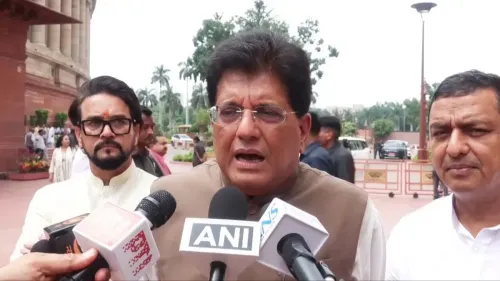
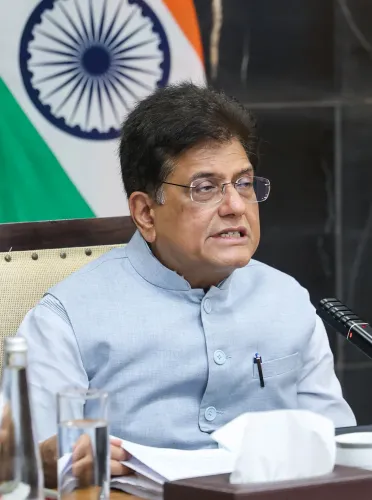
Speaking on Sunday, 2 August 2026, Goyal drew a pointed contrast between the Congress-led UPA government's 2010-11 attempt at the legislation and what the BJP government under Prime Minister Narendra Modi has now delivered. 'Congress brought this bill in 2010-11 but had neither the courage nor the enthusiasm,' he said. 'We first brought this bill in 2024, but looking at today's circumstances, we added stricter provisions, introduced fast-track courts through amendments, and made punishments more severe — all under the leadership of Prime Minister Modi. Today, there is satisfaction and happiness across the entire country.'
He did not let the moment pass without a parting shot at the opposition: 'It is unfortunate that the opposition opposed us even in passing this bill.'
A Bill's Long Road — From UPA Hesitation to NDA Overhaul
The legislative history here matters. The UPA government tabled a bill related to women's safety as far back as 2010-11, but the legislation took years to move and, in Goyal's framing, lacked the political will to be truly transformative. The BJP government, which has governed since 2014, has consistently positioned fast-track courts and harsher sentencing as the twin pillars of its approach to crimes against women — a posture that has shaped successive criminal law reforms through the decade. The current iteration, first introduced in 2024, has now been amended to include what the minister describes as significantly tougher provisions. Fast-track courts — dedicated benches designed to deliver time-bound verdicts — are central to the revised framework, addressing a long-standing criticism that delayed justice compounds the trauma of victims.Opposition's Vote and the Politics of Women's Safety
Goyal's remarks carry a sharp political edge. By highlighting that the opposition voted against the bill, he frames the BJP as the sole champion of women's protection in Parliament — a framing the Congress is likely to contest. Parliamentary debates on criminal law reforms targeting offences against women have historically been contentious, with disagreements over provisions, definitions, and implementation mechanisms rather than the stated objective of protecting women. The charge of obstruction, levelled on a high-visibility platform, signals that the BJP intends to make this law a political asset — one that draws a direct line from Congress's alleged inaction to Modi's decisive reform. Whether the fast-track courts are operationalised swiftly and whether the amended provisions withstand judicial scrutiny will determine if the political promise translates into justice on the ground.Point of View
Cast Congress as the party that had power but lacked will, and frame the opposition's parliamentary resistance as indifference to women's safety. The move fits a broader pattern in which the Modi government has used criminal law reform — from the Bharatiya Nyaya Sanhita to fast-track court expansions — as both policy and political identity. The real test, however, will come in implementation: fast-track courts have been announced before, and their actual rollout and case-disposal rates will determine whether this law changes lives or remains a legislative talking point.
NationPress
17 Sept 2026
Frequently Asked Questions
What bill is Piyush Goyal referring to in his post?
Goyal is referring to a bill related to women's safety that the Congress-led UPA government first introduced in 2010-11. The BJP government brought its own version in 2024 and has since amended it to include fast-track courts and stricter punishments, though the exact title of the bill has not been specified in his statement.
What are fast-track courts and why do they matter for women's safety?
Fast-track courts are dedicated judicial benches set up to deliver time-bound verdicts in specific categories of cases. In the context of crimes against women, they are intended to reduce the years-long delays that often deny victims timely justice.
Did Congress oppose this bill in Parliament?
Minister Piyush Goyal has stated that the opposition opposed the bill's passage. The Congress party has not publicly responded to this specific charge as of the time of his post.
What did the Congress government do on women's safety legislation in 2010-11?
The UPA government introduced a bill related to women's safety in 2010-11. The Sexual Harassment of Women at Workplace Bill introduced during that period was eventually enacted in 2013. Goyal has argued the UPA lacked the political will to make the legislation truly stringent.
What has the Modi government done differently on women's safety laws since 2014?
Since 2014, the BJP government has prioritised fast-track courts and stricter sentencing in its criminal law reforms. The 2024 bill, as described by Goyal, adds harsher punishments and dedicated fast-track courts — elements the minister says were absent from the earlier Congress-era version.