Goyal: Fast-Track Courts to Punish Guilty, Don't Politicise
Synopsis
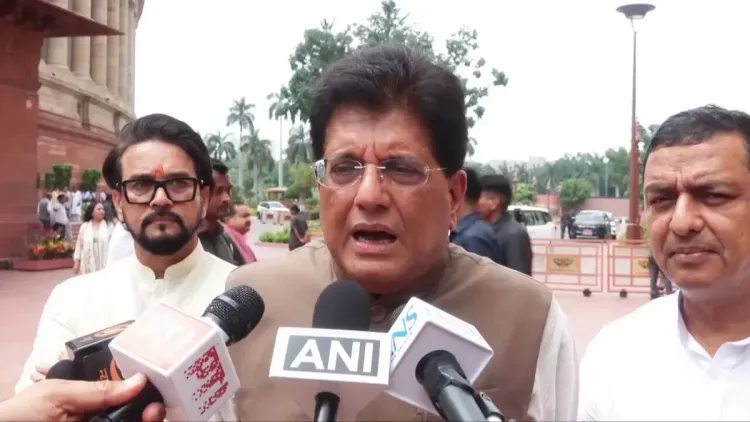
Union Minister Piyush Goyal on 23 July 2026 stated that PM Modi has directed fast-track courts to deliver the harshest punishment to the guilty, and called on Congress and the opposition to engage in discussion rather than politicise the issue.
Key Takeaways
PM Modi has directed that fast-track courts be set up to ensure the strictest punishment for those found guilty, according to Minister Piyush Goyal .
Goyal posted on X on 23 July 2026 , accompanied by a video, urging the opposition to refrain from politicising the matter.
Fast-track courts in India were significantly expanded after the 2012 Nirbhaya case under the Criminal Law (Amendment) Act, 2013 .
Goyal, as Leader of the House in the Rajya Sabha , issued a direct challenge to the Congress and opposition: 'Do not run away — have a discussion.' A formal government notification and any scheduled parliamentary debate will be key developments to watch.
Union Commerce and Industry Minister Piyush Goyal on Thursday, 23 July 2026, stated that Prime Minister Narendra Modi has made it clear that fast-track courts will be constituted to deliver the strictest possible punishment to those found guilty, while urging the Congress and the broader opposition to refrain from politicising the matter and instead engage in open discussion.
Context
Posting on X, Minister Goyal wrote in Hindi: 'प्रधानमंत्री @NarendraModi जी ने ये स्पष्ट कर दिया है कि जो दोषी हैं उन पर फ़ास्ट ट्रैक कोर्ट बनाकर कठोर से कठोर कार्रवाई करते हुए कड़ी सजा दी जाएगी।' — translated: 'Prime Minister Modi has made it clear that fast-track courts will be set up for those who are guilty, and the strictest possible action and punishment will be meted out to them.' He added a direct appeal to the opposition: 'Do not run away — have a discussion.'
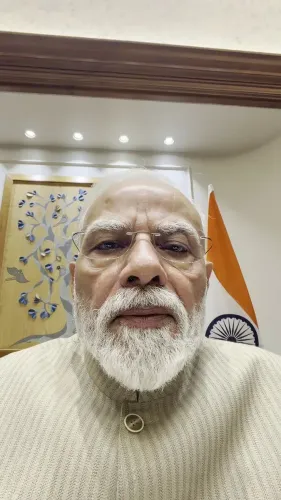
The post accompanied a video, the contents of which were not independently available at the time of publication. Goyal, who serves as Leader of the House in the Rajya Sabha, is among the ruling Bharatiya Janata Party's most prominent spokespersons on governance and parliamentary affairs.
Policy Backdrop
Fast-track courts have a defined legislative history in India. Following the 2012 Nirbhaya case in New Delhi, Parliament enacted the Criminal Law (Amendment) Act, 2013, which substantially expanded the fast-track court framework to expedite trials in sexual-offence cases. Subsequent governments have periodically invoked the mechanism for high-profile criminal matters, citing the need to deliver swift justice and restore public confidence in the legal system.
The announcement of fast-track courts, paired with calls to avoid politicisation, is a recurring governance posture when serious crimes or law-and-order failures attract national attention. The ruling BJP has consistently framed such episodes as requiring judicial resolution rather than parliamentary point-scoring.
Stakeholders and Impact
The primary stakeholders in any fast-track court process are the victims of the underlying crime and the accused, who are entitled to due process under Indian constitutional guarantees. Civil-society groups and legal experts have long argued that fast-track courts, when adequately resourced, can meaningfully reduce the backlog that delays justice in ordinary sessions courts.
The Indian National Congress and other opposition parties are the direct addressees of Goyal's appeal. Opposition leaders have in the past accused the government of using fast-track announcements as a political shield while deflecting accountability for systemic failures. Goyal's call to 'have a discussion rather than flee' signals that the government is prepared to defend its position in parliamentary or public debate.
What's Next
Attention will now turn to whether a formal government notification constituting new fast-track courts is issued, and whether the matter is taken up for structured debate in either House of Parliament. Any such notification would require coordination between the Ministry of Law and Justice and the relevant state government, since criminal courts fall under concurrent jurisdiction. The opposition's response — whether it accepts the invitation to debate or escalates its criticism — will shape the political contours of the issue in the days ahead.
Point of View
Maximum punishment — with a pre-emptive accusation that the opposition is politicising a sensitive matter. By invoking PM Modi's personal directive, the minister signals that the government is elevating this to the highest level of political ownership, making it harder for the opposition to demand accountability without being painted as obstructionist. The 'come and discuss' framing is strategically double-edged: it projects confidence while shifting the burden of engagement onto the Congress. Whether this translates into actual judicial infrastructure or remains a rhetorical posture will depend on the formal notifications that follow.
NationPress
21 Oct 2026
Frequently Asked Questions
What did Piyush Goyal say about fast-track courts on 23 July 2026?
Minister Piyush Goyal stated that PM Modi has made it clear that fast-track courts will be set up to deliver the strictest possible punishment to those found guilty, and he urged the Congress and opposition not to politicise the matter.
What are fast-track courts in India?
Fast-track courts are special judicial bodies set up to expedite trials in serious criminal cases. They were significantly expanded in India after the 2012 Nirbhaya case under the Criminal Law (Amendment) Act, 2013, to speed up sexual-offence trials.
Why is Piyush Goyal asking the opposition not to politicise the issue?
Goyal accused the Congress and broader opposition of attempting to derive political benefit from a serious criminal matter, urging them instead to participate in open discussion rather than use the issue for political point-scoring.
What is Piyush Goyal's role in Parliament?
Piyush Goyal serves as Union Minister of Commerce and Industry and is the Leader of the House in the Rajya Sabha, making him the government's principal manager of legislative business in the upper house.
What happens next after the fast-track court announcement?
A formal government notification constituting the courts would be required, coordinated between the Ministry of Law and Justice and the relevant state government. A parliamentary debate on the underlying issue is also being anticipated.