Goyal Touts 9 FTAs and $60 Trillion Market Access Under Modi
Synopsis
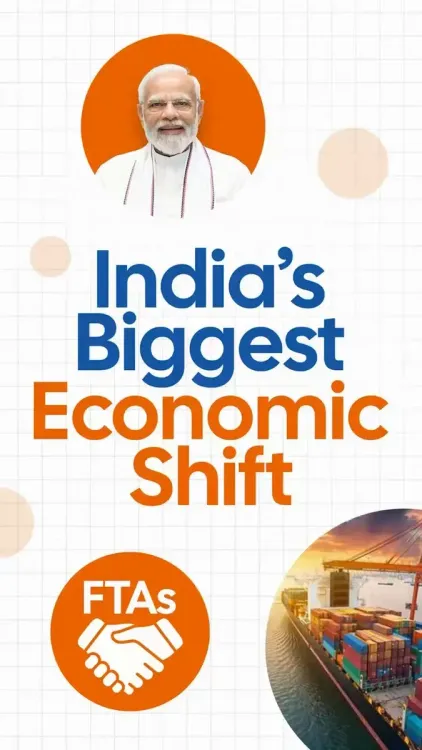
Commerce Minister Piyush Goyal credited PM Modi's leadership for nine landmark FTAs, a claimed $60 trillion in market access, and a 73% export surge over five years — framing India's bilateral trade push as a strategic transformation of the country's global economic footprint.
Key Takeaways
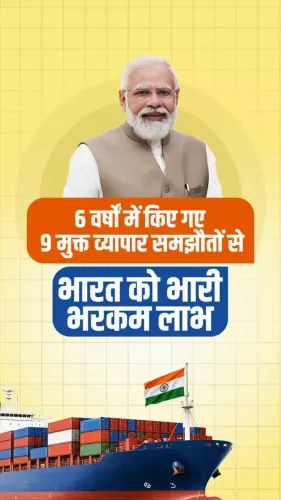
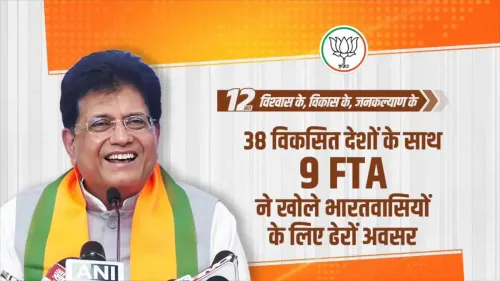
Minister Goyal cited 9 landmark FTAs , $60 trillion in market access , and a 73% export surge over five years as achievements under PM Modi.
The India-UAE CEPA (signed February 2022 ) and India-Australia ECTA (in force December 2022 ) are two confirmed pillars of the recent FTA push.
The strategy is designed to benefit Indian exporters, MSMEs, and manufacturers by securing preferential market access abroad.
The bilateral FTA model complements the Make in India initiative launched in September 2014 .
Ongoing FTA negotiations with the European Union and United Kingdom remain the next critical milestones to watch.
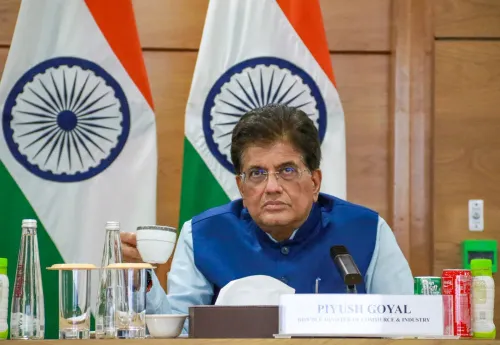
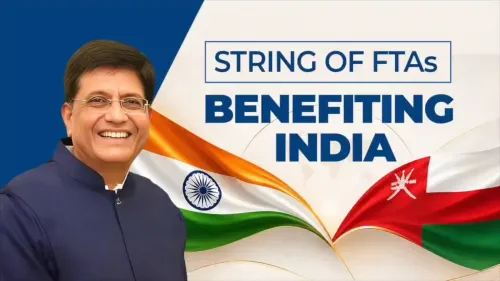
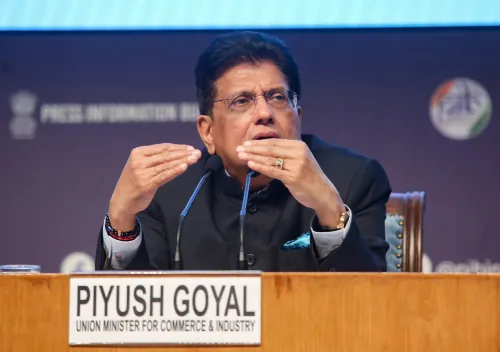
Nine landmark trade agreements. A claimed $60 trillion in market access. A 73 percent surge in exports over five years. Union Commerce and Industry Minister Piyush Goyal on Friday, July 31, 2026, laid out what he called the defining scorecard of India's trade transformation under Prime Minister Narendra Modi — and the numbers he put on the board are striking.
From Two Agreements to a Global Footprint
The acceleration of India's free trade agenda under the current government marks a sharp break from the near-decade-long FTA drought that preceded it. Two agreements anchor the recent push: the India-UAE Comprehensive Economic Partnership Agreement (CEPA), signed in February 2022, and the India-Australia Economic Cooperation and Trade Agreement (ECTA), which entered into force in December 2022. Both were designed to give Indian exporters — particularly in textiles, gems and jewellery, pharmaceuticals, and engineering goods — preferential access to high-value markets that had previously been largely shut off by tariffs.
The UAE CEPA was significant not just for its speed — negotiated in under 90 days — but as a template. It signalled that India was willing to move fast and bilaterally rather than wait for sprawling multilateral deals to mature. Australia followed, and the model began to replicate.
What the Export Surge Claim Means for MSMEs and Manufacturers
The minister's post attributes a 73 percent export surge over five years to this period of 'decisive leadership.' If the trajectory holds, the beneficiaries are concrete: Indian exporters, small and medium manufacturers, and MSMEs who gain preferential duty treatment in partner markets — lowering the price of Indian goods abroad and widening the competitive window against rivals from China, Vietnam, and Bangladesh.
The broader strategic logic is equally clear. India has sought to diversify its export base away from a handful of legacy partners, while simultaneously using trade diplomacy to embed itself deeper into global value chains — a goal that runs parallel to the Make in India initiative launched in September 2014.
EU and UK Deals: The Next Test of the Momentum
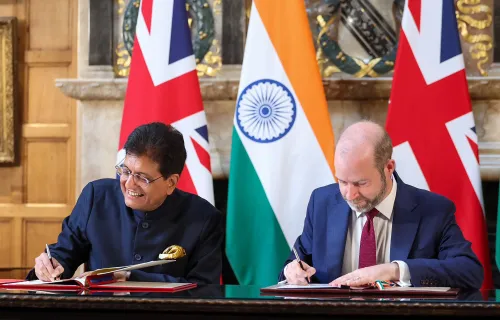
The real measure of whether this trade diplomacy era has legs will come from the two deals still on the table: negotiations with the European Union and the United Kingdom. Both have been in motion for years and carry far higher economic stakes than any bilateral agreement signed so far. A concluded FTA with the EU alone would unlock access to one of the world's largest single markets. Progress — or the lack of it — on these fronts will tell whether the nine-FTA sprint is a foundation or a ceiling.
Goyal's post frames the numbers as a 'powerful testament' to Prime Minister Modi's leadership. The Commerce Ministry's quarterly trade data, when published, will be the independent audit of that claim.
Point of View
While unverified independently, signals that the government is now comfortable making macro-scale claims on trade — a posture that raises the political stakes if export momentum slows.
NationPress
31 Jul 2026
Frequently Asked Questions
How many FTAs has India signed under PM Modi?
Commerce Minister Piyush Goyal has claimed 9 landmark FTAs under PM Modi's government, though the exact list of all nine has not been officially enumerated in this post. Confirmed examples include the India-UAE CEPA and the India-Australia ECTA, both signed in 2022.
What is India's $60 trillion market access claim about?
Minister Goyal stated that India's FTAs have unlocked access to markets worth $60 trillion in economic size, meaning Indian exporters can now sell goods at preferential or zero tariffs into economies that collectively represent that GDP figure. This figure has not been independently verified.
By how much have India's exports grown under Modi?
Goyal's post claims a 73% surge in exports over the past five years . Official quarterly trade data from the Commerce Ministry is the authoritative source for tracking this trajectory.
What is the India-UAE CEPA and why does it matter?
The India-UAE Comprehensive Economic Partnership Agreement , signed in February 2022 , gives Indian exporters — especially in textiles, gems, pharmaceuticals, and engineering goods — duty-free or reduced-tariff access to the UAE market. It was notable for being negotiated in under 90 days.
Is India negotiating an FTA with the EU or UK?
Yes. India is in active negotiations for free trade agreements with both the European Union and the United Kingdom . These are considered the highest-stakes deals on India's current trade agenda and their conclusion would significantly expand India's export footprint.