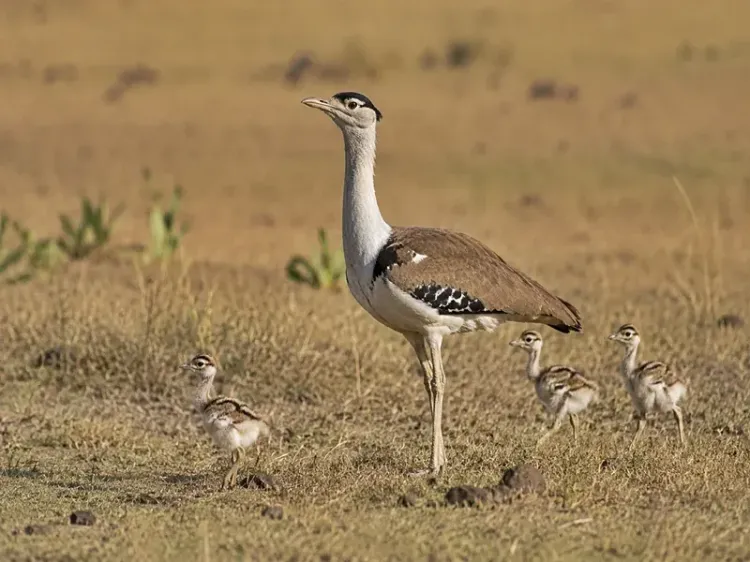
Great Indian Bustard population hits 94 as 3 new chicks hatch in Jaisalmer
Synopsis
Rajasthan's six-year captive breeding effort for the Great Indian Bustard has pushed the species' population at Jaisalmer centres to 94 — with two of the three latest chicks born through artificial insemination. With the breeding season still active and a ₹6.25 crore underground passage under construction, this is the most sustained recovery push the critically endangered bird has seen.
Key Takeaways
The Great Indian Bustard captive population at Jaisalmer breeding centres has reached 94 following three new hatchings.
Two of the three chicks were born through artificial insemination ; one hatched from a wild-collected egg.
The programme has been operational since 2018 across two facilities — Sudasari near Sam and Ramdevra .
A 64-metre underground passage is being built near Ramdevra at a cost of ₹6.25 crore to improve habitat connectivity.
The breeding season is ongoing, with more eggs under observation and further population growth expected.
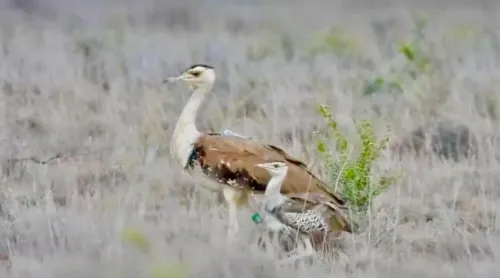
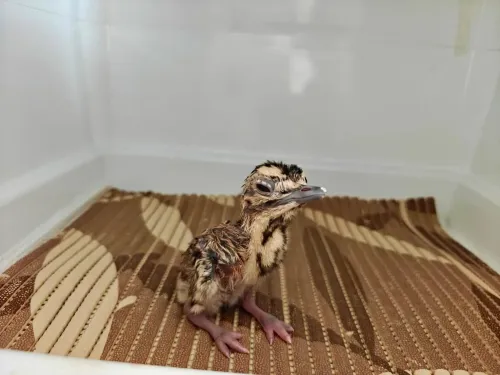
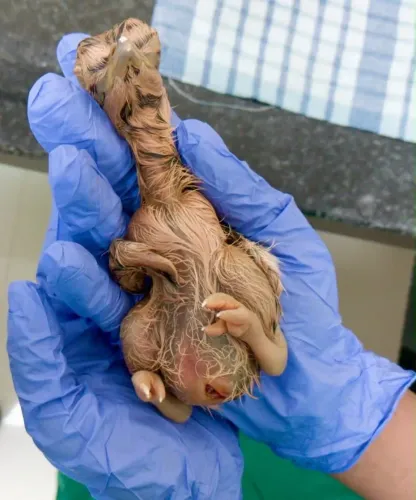
Rajasthan's captive breeding programme for the critically endangered Great Indian Bustard (GIB) has crossed a new threshold, with the species' population at Jaisalmer breeding centres rising to 94 after three chicks successfully hatched — including two born through artificial insemination. The milestone was recorded on 17 June at facilities operating under the GIB Recovery Programme, which has been running since 2018.
How the New Chicks Were Born
According to Desert National Park Divisional Forest Officer (DFO) Brijmohan Gupta, one chick hatched from an egg carefully collected from the wild, while the remaining two emerged from eggs fertilised through artificial insemination at the breeding centre. Forest officials confirmed that the breeding season is still underway, with more eggs currently under observation.
Where the Programme Operates
The conservation effort is run across two dedicated facilities in Jaisalmer district — Sudasari near Sam and Ramdevra — both functioning under the state Forest Department. Experts at these centres monitor birds round the clock, incubating eggs and rearing chicks using scientific breeding techniques. The strategic collection of eggs from wild breeding pairs has been central to the programme's approach, helping reduce genetic bottlenecks and improve the long-term resilience of the captive population.
'The biggest advantage is that it enhances genetic diversity and increases the chances of building a healthier and more resilient population,' DFO Gupta said.
Infrastructure Push Near Ramdevra
Alongside the breeding effort, a 64-metre underground passage is being constructed near Ramdevra at an estimated cost of ₹6.25 crore. The structure is designed to improve habitat connectivity and reduce collision and predation risks for the birds — threats that have historically contributed to the species' decline in the wild.
Political Acknowledgement and Conservation Significance
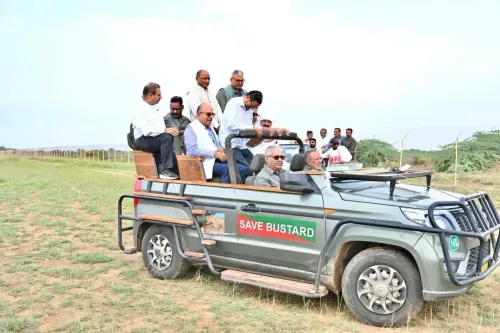
Union Environment, Forest and Climate Change Minister Bhupender Yadav welcomed the development, describing it as a significant achievement in the global effort to save one of the world's most endangered bird species. The Great Indian Bustard, Rajasthan's state bird, has seen its wild numbers decline sharply over decades due to habitat loss, power line collisions, and hunting. The captive programme represents one of the last structured interventions to prevent extinction.
What Comes Next
'The breeding season is still in progress, and more eggs are under observation. We are optimistic that the population will increase further,' DFO Gupta said. Officials described the steady rise in captive numbers as proof that scientific conservation measures are delivering results, while cautioning that long-term recovery will require parallel efforts to restore and protect wild habitat across the Thar desert landscape.
Point of View
But it also underscores how precarious the Great Indian Bustard's situation remains — a species whose survival now depends significantly on human-managed breeding rather than wild recovery. The use of artificial insemination is a necessary innovation, yet the genetic pool feeding the programme is still drawn from a critically small wild base. The ₹6.25 crore underground passage addresses one threat — collision risk — but habitat loss across the Thar remains largely unresolved. Captive numbers climbing while wild habitat shrinks is a holding pattern, not a recovery. The harder question — when and how these birds return to a safe wild environment — has yet to be answered.
NationPress
16 Sept 2026
Frequently Asked Questions
What is the current Great Indian Bustard population at Jaisalmer breeding centres?
The Great Indian Bustard population at the two Jaisalmer captive breeding centres has reached 94 as of 17 June, following the successful hatching of three new chicks. The breeding season is still ongoing, with more eggs under observation.
How were the new Great Indian Bustard chicks born?
Of the three new chicks, two were born through artificial insemination at the breeding centre, while one hatched from an egg collected from a wild breeding pair. Both methods are part of the programme's strategy to maximise hatchings and maintain genetic diversity.
Where is the Great Indian Bustard captive breeding programme located?
The programme operates across two dedicated facilities in Jaisalmer district — Sudasari near Sam and Ramdevra — both managed by the Rajasthan Forest Department under the GIB Recovery Programme, which has been active since 2018.
Why is genetic diversity important for the Great Indian Bustard conservation effort?
Genetic diversity reduces the risk of inbreeding and improves the long-term health and adaptability of the captive population. By sourcing eggs from different wild breeding pairs, conservationists can avoid genetic bottlenecks that would otherwise weaken future generations.
What infrastructure is being built to protect the Great Indian Bustard?
A 64-metre underground passage is under construction near Ramdevra at a cost of approximately ₹6.25 crore. The structure is intended to improve habitat connectivity and reduce threats such as power line collisions and predation that have historically endangered the species in the wild.