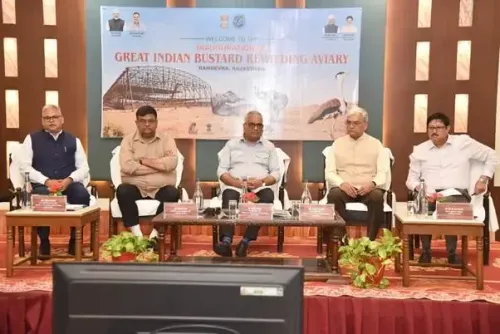
Great Indian Bustard rewilding begins in Jaisalmer; Bhupender Yadav visits Ramdevra facility
Synopsis
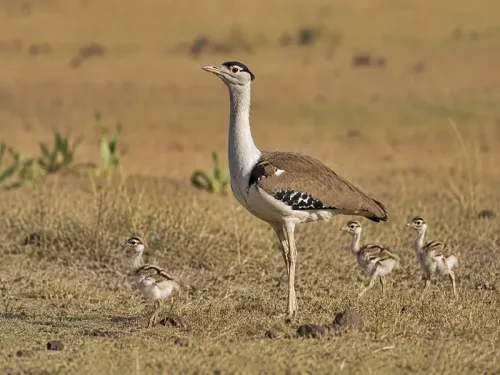
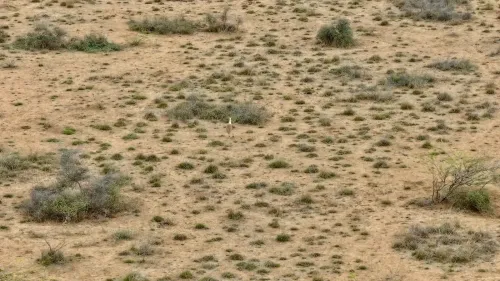
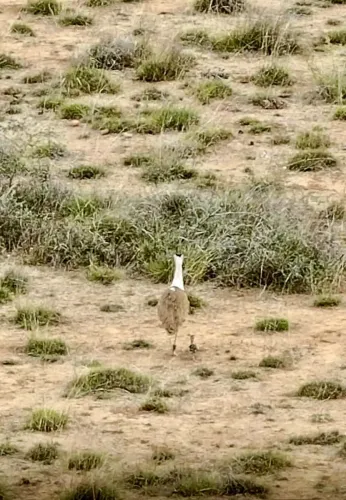
India is attempting one of its most ambitious wildlife recoveries: the Great Indian Bustard, critically endangered and once written off, is being rewilded at Sam in Jaisalmer's Desert National Park. After years of captive breeding, the first birds are set to return to the wild — a milestone that Environment Minister Bhupender Yadav called a global example of conservation perseverance.
Key Takeaways
The rewilding of the Great Indian Bustard (GIB) is set to begin at Sam, Desert National Park, Jaisalmer on 5 October 2026 .
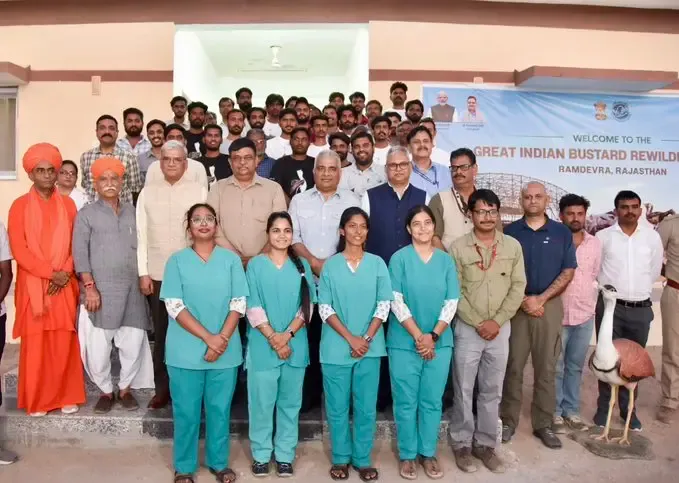
Environment Minister Bhupender Yadav visited the captive breeding facility at Ramdevra on 4 October , praising young researchers and scientists.
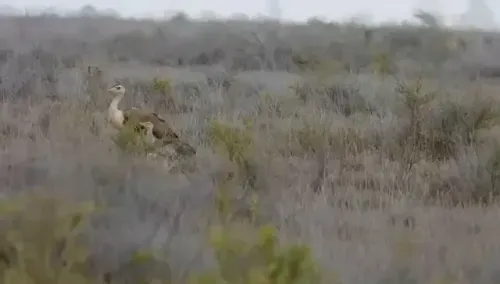
The GIB is critically endangered; its population has sharply declined due to habitat loss, power line collisions, and encroachment.
Scientists from the Wildlife Institute of India (WII) , forest officials, and local communities have driven the conservation programme over the past decade.
School children in Jaisalmer participated in creative competitions under @NMNHIndia to mark the rewilding milestone.
Minister Yadav credited Prime Minister Narendra Modi's vision for the programme's decade-long progress, calling it 'a global example.'
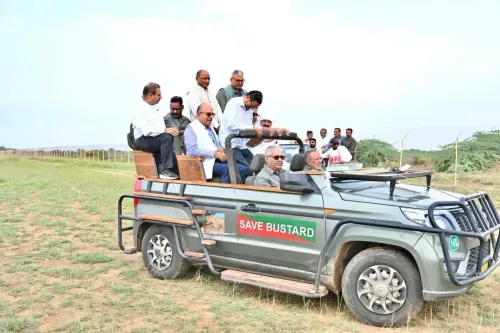
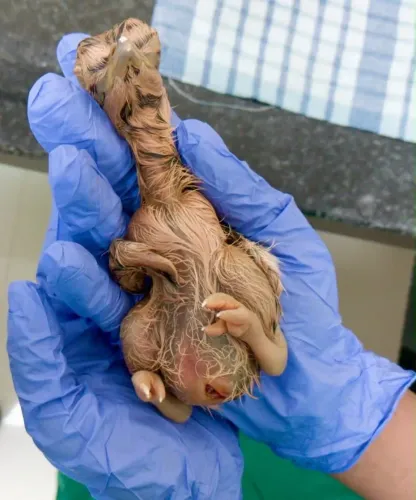
Union Minister for Environment, Forest and Climate Change Bhupender Yadav on 4 October 2026 visited the captive breeding facility at Ramdevra in Rajasthan, a day before the historic rewilding of the Great Indian Bustard (GIB) was set to commence at Sam in the Desert National Park, Jaisalmer. The minister praised the dedication of young researchers and scientists who have sustained the conservation programme for years.
What the Minister Said
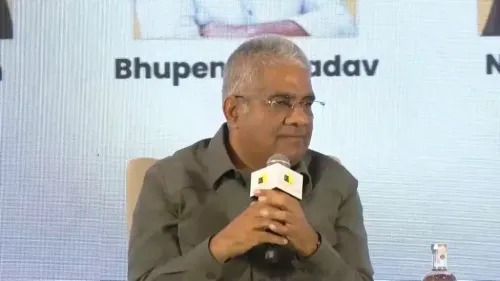
Yadav shared his impressions directly, posting on X: 'A day before we begin the rewilding of the Great Indian Bustard in Sam, Desert National Park, Jaisalmer, visited the breeding facility at Ramdevra. I was immensely impressed by the perseverance of our young researchers and scientists, who have pursued this project with passion for years, demonstrating exceptional dedication to the conservation of this iconic species.'
The minister also acknowledged the broader institutional effort, commending officials of the Union Environment Ministry, forest department personnel, scientists of the Wildlife Institute of India (WII), and local communities for driving the programme to the rewilding stage.
Why This Milestone Matters
The Great Indian Bustard is classified as critically endangered, with wild population estimates placing the bird among the most threatened avian species on the planet. The species, once widespread across the Indian subcontinent, has seen its numbers plummet primarily due to habitat loss, power line collisions, and human encroachment into its arid grassland territory.
The rewilding initiative represents the transition from captive breeding to reintroduction into natural habitat — a step that conservationists regard as the most consequential phase of any endangered species recovery programme. It also positions India alongside a small group of nations that have successfully advanced bird rewilding at scale.
Community and Youth Engagement
In a separate post, Yadav highlighted a parallel outreach effort: school-going children in Jaisalmer took part in creative competitions organised under the aegis of @NMNHIndia to mark the rewilding event. 'Through their artwork, the children conveyed their best wishes for the success of this important conservation initiative. Appreciated their creative endeavours, including a beautiful rangoli depicting the Great Indian Bustard. Their message was simple and heartfelt: may the GIB thrive once again in the landscape it calls home,' Yadav wrote.
Conservationists have long emphasised that sustained wildlife recovery depends as much on local community buy-in as on scientific intervention, particularly in regions that overlap with the GIB's natural range in Rajasthan's arid belt.
Political and Institutional Credit
Yadav on Saturday attributed the programme's decade-long progress to Prime Minister Narendra Modi's vision for wildlife conservation, describing the GIB effort as having become 'a global example' over the past ten years. The remark underscores the Centre's intent to project the rewilding as a flagship environmental achievement ahead of international climate and biodiversity forums.
What Comes Next
The rewilding at Sam, Desert National Park will be closely monitored by WII scientists and forest officials. The success of initial reintroductions — measured by survival rates, territorial establishment, and eventual breeding in the wild — will determine the pace of any subsequent releases. The GIB conservation programme now stands at its most consequential inflection point in decades.
Point of View
An unresolved structural threat in the Thar landscape that the Supreme Court has engaged with at length. Crediting political vision for a decade of scientific toil is understandable optics ahead of global biodiversity forums, but the programme's durability will depend on whether high-voltage line undergrounding commitments — still only partially fulfilled — are completed before rewilded birds pay the price. Community engagement and children's rangoli are encouraging; they are not a substitute for infrastructure policy.
NationPress
4 Oct 2026
Frequently Asked Questions
What is the Great Indian Bustard rewilding programme?
It is a government-led initiative to reintroduce captive-bred Great Indian Bustards into their natural habitat at Sam in the Desert National Park, Jaisalmer. The programme, driven by WII scientists, forest officials, and local communities, represents the most advanced stage of GIB conservation in India.
When does the GIB rewilding begin and where?
The rewilding is set to begin on 5 October 2026 at Sam in the Desert National Park in Jaisalmer, Rajasthan. It follows years of captive breeding at the Ramdevra facility.
Why is the Great Indian Bustard critically endangered?
The Great Indian Bustard has seen its wild population collapse primarily due to habitat loss, power line collisions in its arid grassland range, and human encroachment. It is one of the most threatened bird species in the world.
Who has been involved in the GIB conservation programme?
The programme has involved scientists and researchers from the Wildlife Institute of India (WII), Union Environment Ministry officials, state forest department personnel, and local communities in Rajasthan's arid belt.
What role did Environment Minister Bhupender Yadav play?
Yadav visited the Ramdevra captive breeding facility on 4 October 2026, a day before rewilding was to begin, and commended researchers and scientists for their sustained efforts. He also highlighted community outreach activities for school children in Jaisalmer organised to mark the milestone.