Great Indian Bustard release: Bhupender Yadav frees two GIBs in Jaisalmer
Synopsis
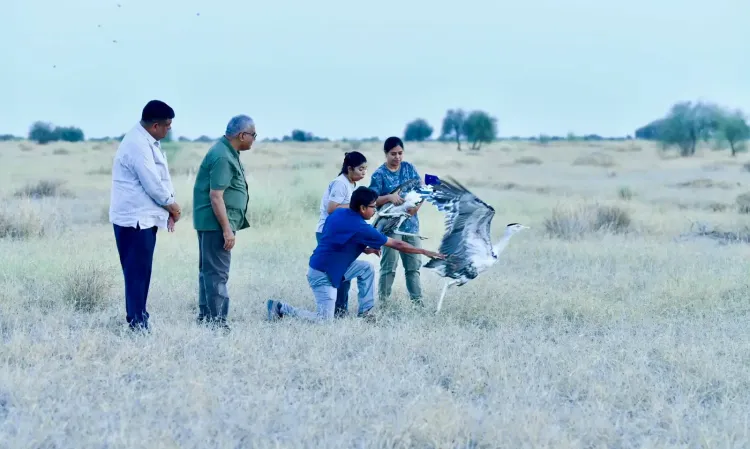
After nearly a decade of captive breeding and scientific effort, two male Great Indian Bustards — one of India's most critically endangered species — were released into the wild at Sam Desert National Park in Jaisalmer on 4 October 2026. The reintroduction is the first of its kind at this site and could set the template for future rewilding of a species with fewer than 150 individuals left in the wild.
Key Takeaways
Union Minister Bhupender Yadav released two captive-bred male Great Indian Bustards at Sam Desert National Park, Jaisalmer on 4 October 2026 .
The release is the culmination of nearly a decade-long captive breeding and conservation programme based at the Ramdevra facility in Rajasthan.
The Great Indian Bustard is classified as Critically Endangered by the IUCN, with an estimated wild population of fewer than 150 individuals .
The Ministry of Environment said the reintroduction will provide 'important scientific learnings' for refining future rewilding protocols.
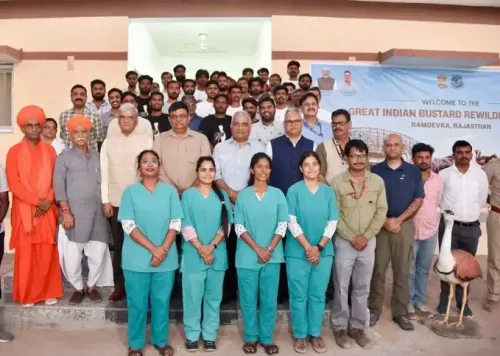
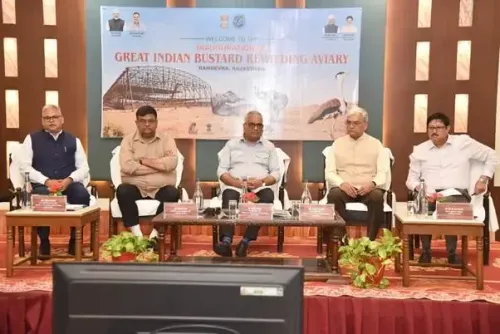
Minister Yadav visited the Ramdevra breeding facility on 3 October , a day before the release, lauding the dedication of young researchers and scientists.
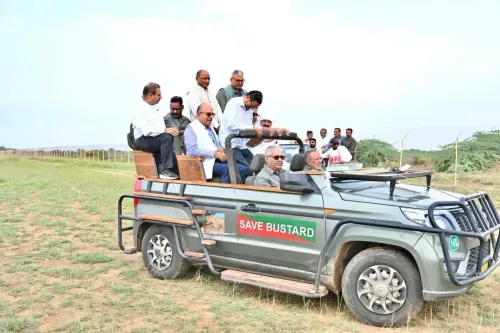
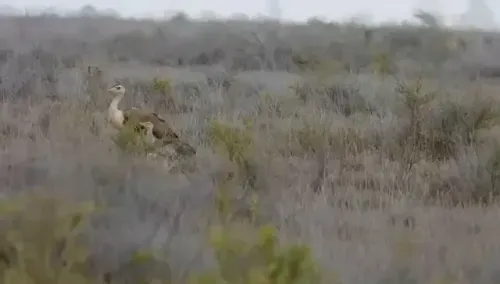
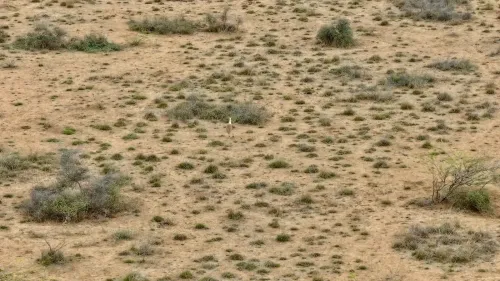
Union Minister for Environment, Forest and Climate Change Bhupender Yadav on Sunday, 4 October 2026, released two captive-bred male Great Indian Bustards (GIBs) into Sam Desert National Park in Jaisalmer, Rajasthan — a landmark step in India's decade-long effort to pull the critically endangered species back from the brink of extinction.
The Release and What It Means
The rewilding of the two male GIBs marks the first such reintroduction at Sam Desert National Park and is the product of nearly a decade of captive breeding, scientific research, and on-ground conservation work. The Ministry of Environment, Forest and Climate Change described the release as 'the next critical step in the species recovery programme,' adding that it would yield 'important scientific learnings for progressively developing and refining protocols for reintroduction of captive-bred birds into their natural habitat.'
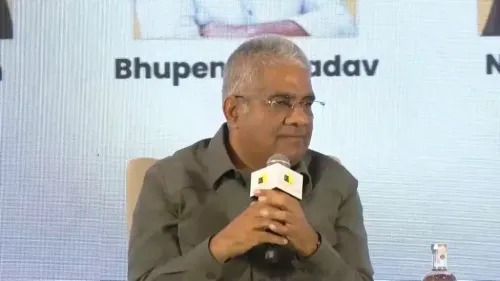
In a post on X, Minister Yadav called the development a 'milestone move' and credited 'the nearly decade-long unwavering dedication of our scientists, researchers and ground staff who have spent years to ensure GIB reclaims the deserts of Rajasthan.' He also thanked Prime Minister Narendra Modi for what he described as 'continued guidance, encouragement and constant support' for India's wildlife conservation community.
A Day Before: Visit to the Ramdevra Breeding Facility
On Saturday, 3 October, Minister Yadav visited the captive breeding facility at Ramdevra, where he met the young researchers and scientists driving the conservation programme. In a post shared on X, he said he was 'immensely impressed by the perseverance of our young researchers and scientists, who have pursued this project with passion for years, demonstrating exceptional dedication to the conservation of this iconic species.'
The Great Indian Bustard: India's Most Endangered Bird
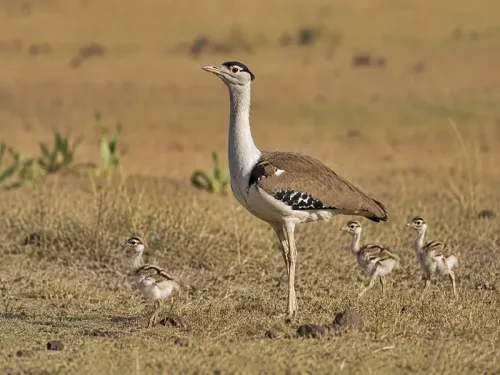
The Great Indian Bustard is one of the world's heaviest flying birds and is classified as Critically Endangered by the International Union for Conservation of Nature (IUCN). Once spread across the Indian subcontinent, its wild population has dwindled to an estimated fewer than 150 individuals, concentrated largely in Rajasthan's Thar Desert. Habitat loss, power-line collisions, and poaching have been cited as the primary threats.
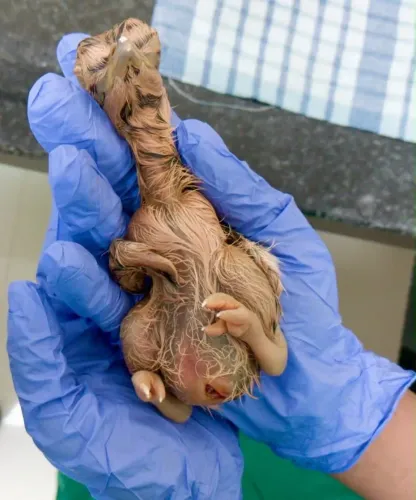
India's GIB conservation programme involves captive breeding, habitat management, community engagement, and scientific monitoring — a collaborative effort between government agencies, forest officials, researchers, and local communities. The programme at Ramdevra has been central to building a viable captive population from which birds can eventually be returned to the wild.
What Happens Next
The release is expected to generate critical data on how captive-bred GIBs adapt to wild conditions — including foraging behaviour, territory establishment, and survival rates — that will inform future reintroduction efforts. Conservationists and wildlife researchers will closely monitor the two birds in the months ahead. The success of this phase could determine the pace and scale of subsequent releases, potentially setting a template for rewilding programmes for other critically endangered Indian species.
Point of View
Rewilding two individuals is a scientific first step, not a recovery. The harder, unresolved question is structural: overhead power lines across the Thar Desert continue to kill GIBs at a rate that captive breeding alone cannot offset. The Supreme Court has weighed in on underground cabling, but implementation has been slow. A successful reintroduction programme will mean little unless habitat threats are simultaneously addressed — and that requires political will beyond a single symbolic release.
NationPress
4 Oct 2026
Frequently Asked Questions
What is the Great Indian Bustard and why is it endangered?
The Great Indian Bustard is one of the world's heaviest flying birds, native to the Indian subcontinent, and is classified as Critically Endangered by the IUCN. Its wild population has fallen to an estimated fewer than 150 individuals due to habitat loss, collisions with power lines, and poaching.
Where were the two Great Indian Bustards released?
The two captive-bred male Great Indian Bustards were released at Sam Desert National Park in Jaisalmer, Rajasthan, on 4 October 2026 by Union Minister Bhupender Yadav.
What is the Ramdevra captive breeding facility?
The Ramdevra facility in Rajasthan is the base of India's Great Indian Bustard captive breeding programme, where scientists and researchers have worked for nearly a decade to breed GIBs in controlled conditions before eventual reintroduction into the wild.
Why does this GIB release matter for conservation?
It is the first rewilding of captive-bred Great Indian Bustards at Sam Desert National Park and will generate scientific data on how captive-bred birds adapt to wild conditions. This data will be used to refine protocols for future, larger-scale reintroductions of the critically endangered species.
What will happen to the two released birds now?
Conservationists and wildlife researchers will monitor the two male GIBs closely to study their foraging, territory establishment, and survival in the wild. The findings will inform the pace and scale of subsequent releases under India's GIB recovery programme.