Why is the Grey Hypocolius Captivating Birdwatchers Worldwide at Chhari-Dhandh?
Synopsis
Explore the enchanting allure of the Grey Hypocolius at Chhari-Dhandh Conservation Reserve in Gujarat, a haven for birdwatchers. This wetland, now a Ramsar site, showcases the beauty of avian diversity and attracts global ornithologists each winter.
Key Takeaways
Chhari-Dhandh is a premier destination for birdwatchers.
Grey Hypocolius is a rare bird attracting global attention.
Over 283 bird species can be found in this wetland.
The site has received Ramsar site recognition.
Conservation efforts are crucial for protecting its biodiversity.
Gandhinagar, Feb 10 (NationPress) The seasonal arrival of the rare Grey Hypocolius has transformed the Chhari-Dhandh Conservation Reserve in Gujarat’s Kutch district into a premier global hotspot for birdwatchers, attracting an increasing number of international tourists and ornithologists to this wetland every winter.
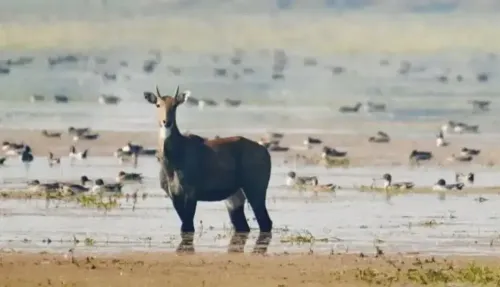
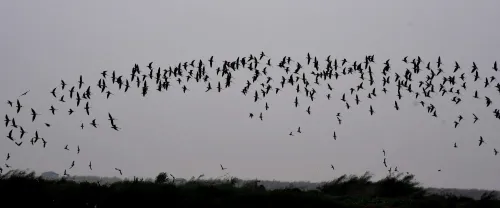
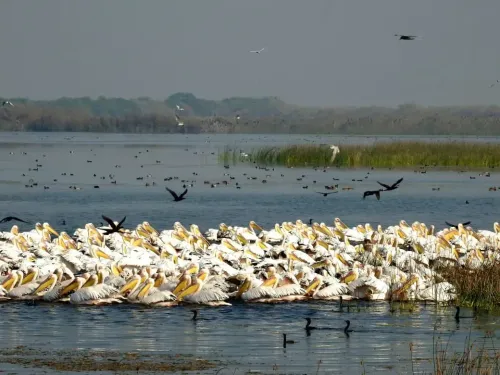
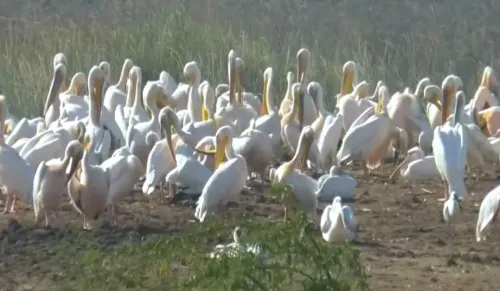
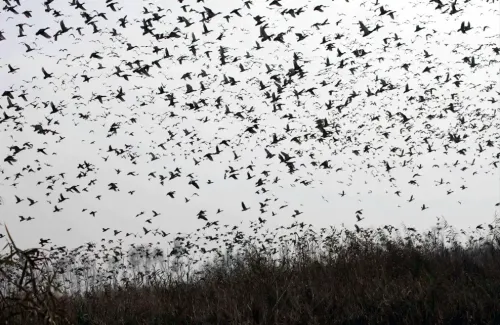
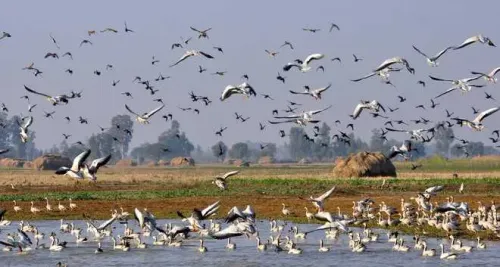
The Chhari-Dhandh, which has recently been designated as a Ramsar site, is home to an impressive variety of avian species, with over 283 bird species documented in and around the wetland.
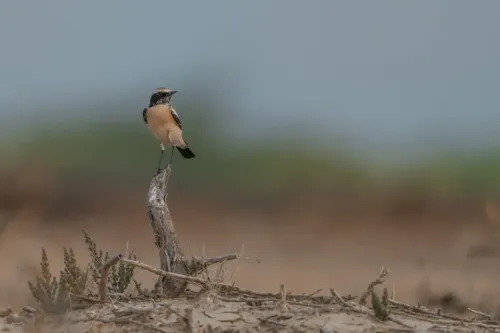
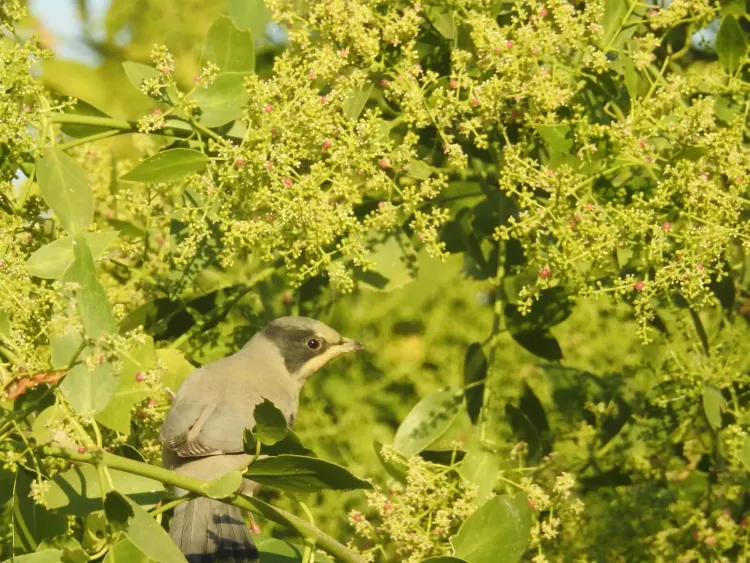
Among these, the Grey Hypocolius (Hypocolius ampelinus), known locally as Maskati Latoro, garners special attention due to its limited distribution in India and its elusive behavior.
This small, pale-grey passerine breeds in the arid regions of Iraq, Iran, Afghanistan, and Pakistan before migrating south during the winter months. In India, its presence is primarily noted in parts of Kutch, where it has been recognized as a regular winter visitor since 1990.
Ornithologists have observed that this species prefers arid scrub forests, desert landscapes, and adjacent farmland.
Birdwatchers report that the Grey Hypocolius typically arrives at the Fulay scrub forest from October to November and stays until March or April.
It is generally seen in small flocks, primarily feeding on the ripe berries of Salvadora persica, known locally as Piloodi or Khari Jar, along with flower petals and berries from the native Tankara plant.
The bird is identifiable by its unique squeaky calls. Historical records indicate that two specimens of the Grey Hypocolius were collected from the Great Rann of Kutch at Kuar Bet in March 1960.
The species was subsequently rediscovered in the area in January 1990, when ornithologist S. N. Varu spotted a female near Fulay village in the Banni grasslands.
“Chhari-Dhandh is regarded as the most dependable site in India to observe the Grey Hypocolius, which explains why birdwatchers and wildlife photographers from around the globe visit this area during the winter months,” stated local wildlife photographers, noting that the Ramsar designation is expected to heighten international interest.
In addition to the Grey Hypocolius, the wetland is also recognized for sightings of the White-naped Tit (Machlolophus nuchalis), a species endemic to India.
Established as Gujarat’s first Conservation Reserve in 2008 under the Wildlife (Protection) Act, 1972, Chhari-Dhandh continues to benefit from ongoing conservation efforts by the state government, which have bolstered the protection of this wetland. It supports 11 globally threatened and nine near-threatened bird species, underscoring its significant conservation value.
Point of View
The presence of the Grey Hypocolius in Chhari-Dhandh not only highlights the importance of biodiversity but also positions India on the global birdwatching map. The designation of this wetland as a Ramsar site reflects the growing recognition of its ecological significance. Conservation efforts play a crucial role in preserving such habitats, ensuring that both local and international communities can appreciate the beauty of our natural heritage. As birdwatching gains popularity, it is essential to promote sustainable practices that protect these vital ecosystems.
NationPress
30 Sept 2026
Frequently Asked Questions
What species is the Grey Hypocolius?
The Grey Hypocolius ( Hypocolius ampelinus ), known locally as Maskati Latoro, is a rare passerine bird primarily found in the arid regions of Iraq, Iran, Afghanistan, and Pakistan.
Why is Chhari-Dhandh important for birdwatchers?
Chhari-Dhandh Conservation Reserve is considered the most reliable site in India to observe the Grey Hypocolius, attracting birdwatchers and wildlife photographers from around the globe.
When does the Grey Hypocolius migrate to India?
The Grey Hypocolius typically arrives in India between October and November and stays until March or April.
What other bird species can be found at Chhari-Dhandh?
In addition to the Grey Hypocolius, the wetland is also known for the White-naped Tit ( Machlolophus nuchalis ), which is endemic to India.
What conservation status does Chhari-Dhandh hold?
Chhari-Dhandh was designated as a Ramsar site and was declared Gujarat’s first Conservation Reserve in 2008, underscoring its high conservation value.