Gujarat men arrested in ₹50-crore cyber fraud ring with Dubai links
Synopsis
Four Gujarat men have been arrested for feeding bank accounts into a Dubai-linked cyber fraud operation that harvested over ₹50 crore from victims across 15 states. The scam used forged SEBI certificates and fake stock-trading apps — a sharply professionalised playbook that regulators and law enforcement are still scrambling to counter at scale.
Key Takeaways
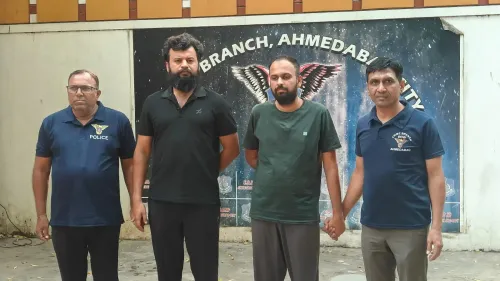
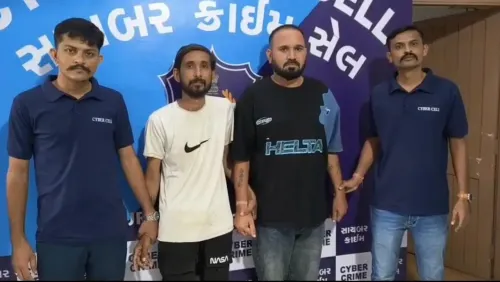
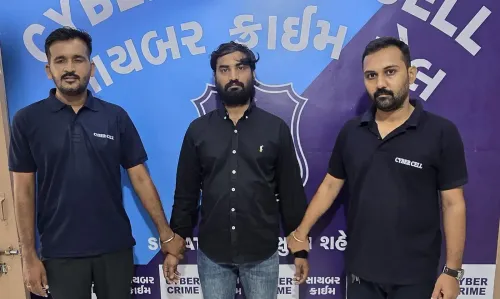
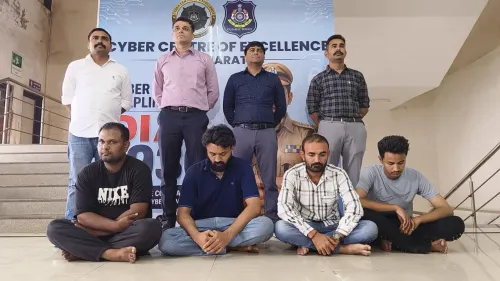
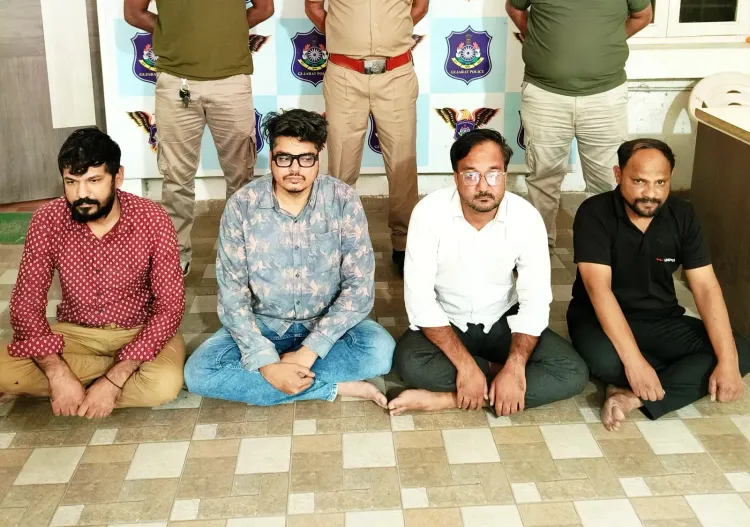
The Ahmedabad City Cyber Crime Branch arrested four men on 30 October 2026 for supplying bank accounts to Dubai-based cyber fraud handlers.
The fraud network is linked to more than 80 complaints across 15 states involving transactions exceeding ₹50 crore .
A single complainant was cheated of ₹67.92 lakh through two fake investment apps — JB X One and ID-QSB — backed by forged SEBI certificates.
More than 30 bank account kits were recovered from the primary accused, Istiyaq Riyawala , who allegedly forwarded them to Dubai associates.
The accused — Irfan Sheikh , Soheb Jojavarwala , Shehzad Ajmerwala , and Istiyaq Riyawala — operated in a structured commission-based chain.
Further investigation is underway to identify other members of the network.
The Ahmedabad City Cyber Crime Branch has arrested four men from Ahmedabad and Vadodara for allegedly supplying bank accounts to Dubai-based cyber fraud handlers, with investigators linking more than 30 recovered accounts to over 80 fraud complaints across 15 states and transactions exceeding ₹50 crore. The arrests, made on 30 October 2026, follow a case in which a complainant was cheated of ₹67.92 lakh through two fake investment applications.
How the Fraud Operated
The complainant was initially contacted via multiple WhatsApp numbers and persuaded to invest through an application called 'JB X One', purportedly operated by Julius Baer. The fraudsters bolstered their credibility by sending a forged certificate bearing the name, logo, signature, and stamp of the Securities and Exchange Board of India (SEBI), falsely claiming the company was registered with the market regulator. The complainant subsequently transferred ₹47.14 lakh through the application.
In a second stage of the alleged fraud, a person identifying herself as 'Anju Garg' from ICICI Securities contacted the complainant and offered access to block trading, promising returns of 5 to 20 per cent in a single day. The complainant was persuaded to download a second application, ID-QSB, and invest ₹20.78 lakh. The platform then displayed a fabricated balance of ₹74,32,707.79 from purported share transactions.
When the complainant attempted to withdraw funds, the person posing as Anju Garg demanded payment of a 20 per cent short-term capital gains tax and a 4 per cent health and education cess — a textbook exit-barrier tactic used by organised cyber fraud networks. According to officials, 'the operators of both applications had displayed fabricated electronic information to make the investments appear genuine and had worked together as part of a pre-planned conspiracy to collect ₹67.92 lakh from the complainant.'
The Accused and Their Roles
The four arrested individuals have been identified as Irfan Sheikh (41) and Soheb Jojavarwala (37), both residents of Vadodara, and Shehzad Ajmerwala (35) and Istiyaq Riyawala (38), both from the Jamalpur area of Ahmedabad. Investigators say the accused operated in a structured chain: Irfan provided his bank account to Soheb in exchange for a commission; Soheb then aggregated multiple accounts — including his own and Irfan's — and supplied more than five accounts to Shehzad for a commission.
Shehzad allegedly procured the accounts, identified additional account holders, and passed everything on to Istiyaq, who reportedly played the principal role in the network by forwarding the collected accounts to associates in Dubai in return for commissions. More than 30 bank account kits were recovered from Istiyaq alone.
Scale of the Network
Cross-checks on the National Cyber Crime Reporting Portal (NCCRP) revealed that the recovered accounts were linked to more than 80 complaints registered across more than 15 states, with total transactions exceeding ₹50 crore. This comes amid a broader surge in organised cyber fraud operations in India that route victim funds through layered domestic accounts before transferring proceeds offshore — a pattern seen in several high-profile cases this year. Notably, the use of forged SEBI certificates and impersonation of established financial institutions signals a more sophisticated social-engineering approach than earlier phishing-only schemes.
Investigation Status
The Ahmedabad City Cyber Crime Branch said further investigation is underway to establish the full extent of the network and identify other individuals involved. Authorities used a combination of technical inputs and human intelligence to trace the accused in Ahmedabad and Vadodara, suggesting the probe may extend to handlers and money-laundering nodes both within India and in Dubai.
Point of View
Earning commissions to solve a fundamental problem for Dubai-based operators: moving rupees without a traceable identity. The forged SEBI certificates and impersonation of Julius Baer and ICICI Securities reveal a fraud playbook that has grown considerably more sophisticated, one that exploits the public's genuine trust in regulated institutions. With 80-plus complaints across 15 states, this is not a local crime story — it is a systemic failure of financial KYC enforcement, and every arrest at the mule level leaves the command structure in Dubai intact.
NationPress
30 Oct 2026
Frequently Asked Questions
Who were the four men arrested in the Ahmedabad cyber fraud case?
The four arrested men are Irfan Sheikh (41) and Soheb Jojavarwala (37) from Vadodara, and Shehzad Ajmerwala (35) and Istiyaq Riyawala (38) from the Jamalpur area of Ahmedabad. They were arrested by the Ahmedabad City Cyber Crime Branch for allegedly supplying bank accounts to Dubai-based fraud handlers.
How did the fake investment app fraud work?
Fraudsters contacted the complainant via WhatsApp and persuaded them to invest through two apps — JB X One and ID-QSB — using forged SEBI certificates and impersonating ICICI Securities. When the complainant tried to withdraw a displayed balance of over ₹74 lakh, the operators demanded taxes and cess to block the withdrawal, a classic exit-barrier tactic.
How large is the cyber fraud network uncovered in this case?
Checks on the National Cyber Crime Reporting Portal (NCCRP) linked the more than 30 recovered bank accounts to over 80 fraud complaints across 15 states, with total transactions exceeding ₹50 crore. The Cyber Crime Branch says the full scale of the network is still being established.
What role did Dubai play in this fraud network?
According to investigators, Istiyaq Riyawala — the principal accused — collected bank accounts from the other accused and forwarded them to associates based in Dubai in exchange for commissions. The Dubai-based handlers are believed to have directed the fraud operations remotely.
What happens next in the investigation?
The Ahmedabad City Cyber Crime Branch has said further investigation is underway to map the full extent of the network and identify other individuals involved, including potential overseas handlers. Technical and human intelligence inputs are reportedly being used to trace the broader operation.