Gujarat clears 12-hour shifts at Micron Sanand chip plant, 48-hr week cap retained
Synopsis
Gujarat has become the first state to approve 12-hour shifts at a semiconductor facility — Micron's Sanand plant — under the OSH Code, without raising the 48-hour weekly limit. With ₹1.4 lakh crore in chip investments and six India Semiconductor Mission projects already lined up, the decision signals how far Gujarat will stretch labour flexibility to anchor India's chip ambitions.
Key Takeaways
Gujarat approved 12-hour daily shifts at Micron's Sanand semiconductor facility — the first such approval under the OSH Code, 2020 in the state.
The 48-hour weekly cap is retained; longer daily shifts are offset by additional paid leave days .
Worker consent must be voluntary and in writing ; violations can result in cancellation of approval and legal action.
Micron's Sanand plant targets tens of millions of chips in 2026 , scaling to hundreds of millions annually from 2027 .
Gujarat has six semiconductor projects under the India Semiconductor Mission involving nearly ₹1.4 lakh crore and an estimated 50,000 jobs .
Gujarat has approved 12-hour work shifts at Micron Semiconductor Technology India Private Limited's assembly and test facility in Sanand, making it the first such approval of its kind in the state under the Occupational Safety, Health and Working Conditions (OSH) Code, 2020. The statutory ceiling of 48 working hours per week remains unchanged, with the longer daily shifts offset by additional paid leave days.
What the Approval Allows
Under the new arrangement, adult workers may work up to 12 hours a day provided they give written consent voluntarily. Their total hours must not exceed 48 hours a week, with the remaining days treated as paid leave. The total spread of work, including rest intervals, is capped at 12 hours per day, and rest breaks must comply with the OSH Code and the Gujarat Occupational Safety, Health and Working Conditions Rules, 2025.
Companies operating under this framework must maintain separate records for employees on 12-hour shifts and adhere to any additional conditions set by the Chief Inspector-cum-Facilitator for Factories. Violations can lead to cancellation of approval and legal action.
What the Government Said
Labour, Skill Development and Employment Minister Kunvarji Bavaliya framed the decision as an exercise of the state's power under the OSH Code to grant factory exemptions in the public interest. 'The Occupational Safety, Health and Working Conditions (OSH) Code focusses on promoting Ease of Doing Business and Ease of Compliance. While the Code prescribes a maximum of 48 working hours per week, it also empowers the appropriate government to grant exemptions in the case of factories. Gujarat has exercised this provision keeping in view the larger public interest, economic growth and employment generation in the state,' Bavaliya said.
Minister of State for Labour Kantilal Amrutiya added that the relaxation was designed to support industries of strategic national importance. 'The relaxation reflects the state's commitment to accelerating industrial development, expanding economic activity and creating new employment opportunities while supporting industries of strategic national importance, particularly the semiconductor sector,' Amrutiya said.
Why Semiconductor Plants Need Longer Shifts
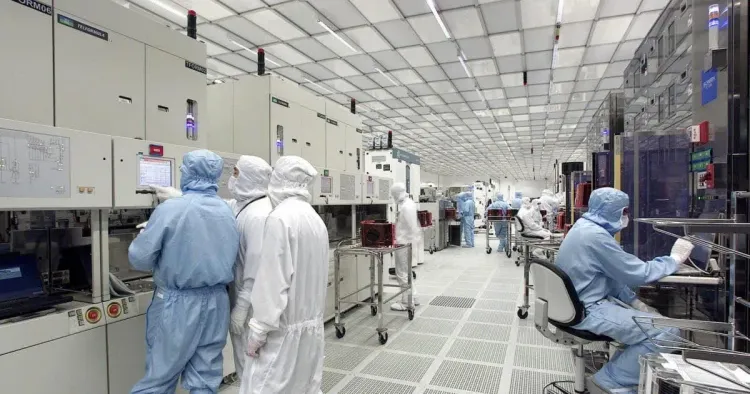
Semiconductor manufacturing requires continuous operations inside highly controlled cleanroom environments where automated equipment runs around the clock. Reducing the number of shift changes also reduces cleanroom entries, improving equipment utilisation and yield. The 12-hour shift model is designed to align human work schedules with these operational realities without breaching statutory weekly limits.
Micron opened its first semiconductor assembly and test facility in India at Sanand in February 2025 and expects to assemble and test tens of millions of chips during 2026, with output projected to scale to hundreds of millions annually from 2027. The first phase includes more than five lakh square feet of cleanroom space processing DRAM and NAND wafers into memory and storage products.
Gujarat's Semiconductor Ambitions
Gujarat was the first state in India to introduce a dedicated semiconductor policy, according to the state government. Six major projects approved under the India Semiconductor Mission in the state involve investments of nearly ₹1.4 lakh crore and are expected to generate approximately 50,000 direct and indirect jobs. The Micron facility is a key anchor in this broader industrial strategy, and the shift-hour approval is timed to coincide with the plant moving into commercial production.
Notably, this is the first time Gujarat has invoked the OSH Code's exemption provision for a semiconductor facility, setting a potential precedent for other chip-related investments in the state's pipeline.
Point of View
But enforcement in a high-pressure production ramp is what will determine whether workers genuinely benefit or merely absorb longer days. The broader question is whether this precedent, set for Micron, becomes a template quietly extended to other manufacturers with less strategic leverage. India's semiconductor ambitions require investor confidence, but they also require a labour compact that can withstand scrutiny.
NationPress
19 Aug 2026
Frequently Asked Questions
What has Gujarat approved for Micron's Sanand semiconductor plant?
Gujarat has approved 12-hour daily work shifts at Micron Semiconductor Technology India Private Limited's assembly and test facility in Sanand, under the OSH Code, 2020. The statutory 48-hour weekly working limit remains unchanged, with longer daily shifts offset by additional paid leave days.
Does the 12-hour shift approval increase total weekly working hours?
No. Workers on 12-hour shifts must still not exceed 48 hours per week. The remaining days in the week are treated as paid leave, keeping total weekly hours within the statutory limit.
Is the 12-hour shift mandatory for Micron workers?
No. Adult workers may opt into 12-hour shifts only by providing voluntary written consent. The arrangement cannot be imposed, and companies must maintain separate records for employees on such schedules.
Why does semiconductor manufacturing require longer shift windows?
Semiconductor cleanroom environments run automated equipment continuously. Fewer shift changes mean fewer cleanroom entries, reducing contamination risk and improving equipment utilisation — both critical for chip yield and quality.
How significant is Gujarat's semiconductor pipeline beyond Micron?
Gujarat has six projects approved under the India Semiconductor Mission, with combined investments of nearly ₹1.4 lakh crore and an expected 50,000 direct and indirect jobs. Gujarat was also the first Indian state to introduce a dedicated semiconductor policy.