Gujarat's Bhildi centre to produce 25,000 cattle embryos a year, boost milk yields
Synopsis
A ₹38.83 crore facility in Gujarat's Banaskantha is about to flip cattle breeding on its head — using lab embryos to make one elite cow the genetic mother of up to 20 calves a year. With PM Modi inaugurating the Bhildi centre on 30 October and 316 farmer 'breedpreneurs' already enrolled, this is India's most ambitious bet yet on science-driven dairy productivity.
Key Takeaways
The Bharat Bovine Breeding and Research Centre (BBBRC) at Bhildi, Banaskantha targets 25,000 embryos annually using OPU-IVEP-ET technology.
PM Narendra Modi is scheduled to inaugurate the centre on 30 October .
The Centre has sanctioned ₹38.83 crore under the Rashtriya Gokul Mission ; technical support comes from the NDDB .
A single elite donor cow can contribute to 10–20 calves per year through the embryo-transfer method, versus one under conventional breeding.
Initial embryo price is set at ₹1,000 , with remaining costs subsidised by the state government, GCMMF , and Banas Dairy after confirmed pregnancy.
316 breedpreneurs are already enrolled in the centre's Bovine Breedpreneur Club , serving as distributed local breeding hubs.
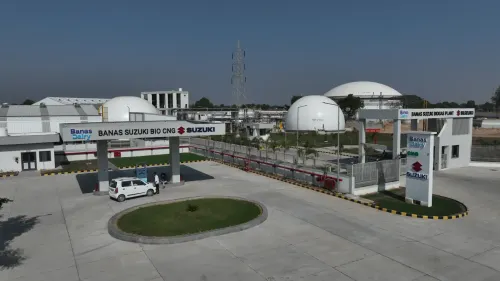
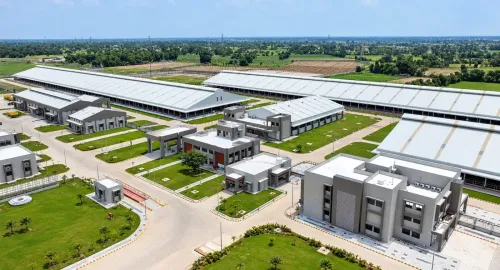
A first-of-its-kind cattle breeding facility in Gujarat's Banaskantha district is set to produce 25,000 embryos annually using cutting-edge reproductive technology, enabling a single genetically superior donor cow to yield 10 to 20 calves per year — compared to just one under conventional breeding. The Bharat Bovine Breeding and Research Centre (BBBRC), spread across 127 acres at Bhildi, is designed to sharply improve milk productivity per animal while reducing production costs across the Banaskantha milk-shed.
Key Details of the Centre
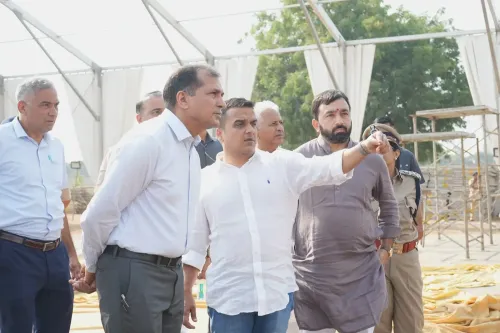
Prime Minister Narendra Modi is scheduled to inaugurate the centre on 30 October. The project has received technical backing from the National Dairy Development Board (NDDB), while the Centre has sanctioned ₹38.83 crore under the 'Rashtriya Gokul Mission' for its establishment.
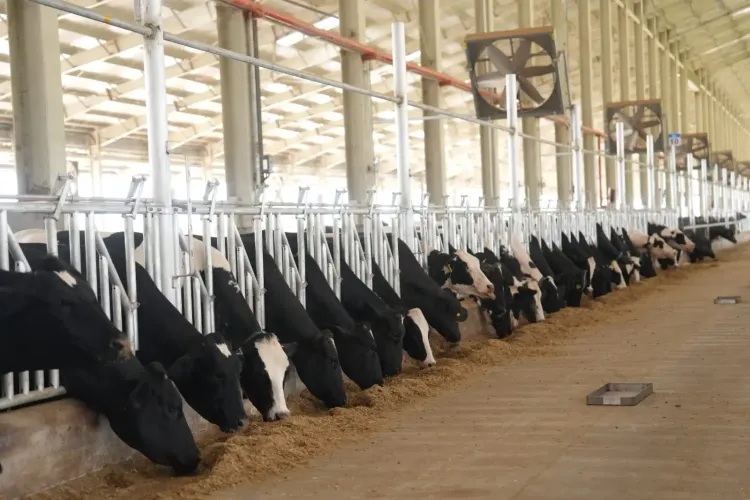
Banaskantha is among Gujarat's most significant dairy-producing regions, with a livestock population of approximately 28 lakh animals — including around 4 lakh Kankrej cows, 14 lakh buffaloes, and 10 lakh crossbred Holstein-Friesian (HF) cows. The region already records milk output exceeding the national average, and the BBBRC aims to push productivity further through genetic selection.
The Technology Behind the Embryos
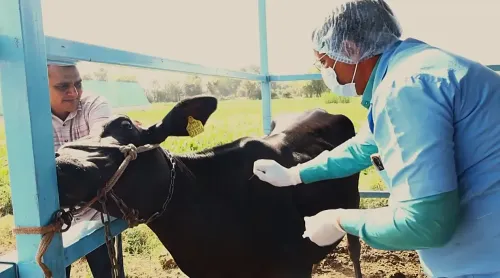
The facility will deploy a trio of advanced techniques: Ovum Pick-Up (OPU), In Vitro Embryo Production (IVEP), and Embryo Transfer (ET). Eggs retrieved from elite donor animals are matured and fertilised in a laboratory using semen from high-quality bulls. The resulting embryos are then preserved through vitrification — an ultra-rapid freezing method — until a suitable recipient animal is ready.
Frozen embryos can be transported directly to villages and transferred into healthy recipient cows or buffaloes, making superior genetics accessible at the grassroots level. The BBBRC will also supply disease-free bulls with superior genetic traits for natural breeding programmes.
Breeds and Pricing
The centre plans to develop embryos from several indigenous cattle breeds — including Kankrej, Gir, Punganur, Sahiwal, Red Sindhi, Rathi, Tharparkar, and Ongole — as well as buffalo breeds such as Mehsani, Banni, Murrah, and Jafarabadi. High-yielding exotic and crossbred varieties including Holstein-Friesian, HF-cross, and Jersey will also be covered.
To keep the technology within the reach of smallholder farmers, the initial price has been set at ₹1,000 per embryo. Once pregnancy is confirmed, the remaining cost will be covered through subsidies jointly provided by the state government, the Gujarat Cooperative Milk Marketing Federation (GCMMF), and Banas Dairy.
The Bovine Breedpreneur Model
Beyond the facility itself, the initiative includes a Bovine Breedpreneur Club that encourages dairy farmers to rear and breed high-quality livestock. As many as 316 breedpreneurs are currently enrolled and have access to animals with superior genetic traits under formal agreements with the BBBRC. Participating farms are expected to maintain detailed records — covering birth dates, lineage, daily milk yields, growth trajectories, and health status — and to conduct annual health screenings.
Under these arrangements, the BBBRC retains first right to purchase calves, embryos, and bulls born on member farms, while farmers remain free to sell other animals at market rates. The farms are intended to function as distributed local breeding hubs, extending the reach of improved genetics well beyond the Bhildi facility.
Wider Significance
The BBBRC model brings together farmer cooperatives, NDDB technical expertise, and government funding under one roof. Notably, the initiative is aligned with the Centre's 'Sahkar Se Samruddhi' vision, which seeks to strengthen rural development through cooperative frameworks. Analysts suggest the model could also support wider use of Indian livestock genetics, with potential applications in breeding programmes that prioritise climate resilience, animal health, and efficient feed-to-milk conversion. The stated objective is to increase milk production per animal without requiring a proportional expansion in herd size — a goal with clear implications for India's dairy sector sustainability.
With the inauguration days away, all eyes will be on whether the BBBRC can scale its embryo-transfer model across Banaskantha's 28 lakh-strong livestock population and serve as a replicable blueprint for other dairy-producing districts nationwide.
Point of View
Pairing NDDB expertise with GCMMF and Banas Dairy subsidies, is sensible, but the real test will be whether the embryo-transfer pipeline scales reliably to village-level recipient animals, where veterinary infrastructure is uneven. The breedpreneur model is worth watching — if it creates genuine income incentives for quality record-keeping, it could be more durable than top-down genetic programmes. What the initiative does not yet address is whether uptake will remain high once post-confirmation subsidies require bureaucratic navigation.
NationPress
28 Oct 2026
Frequently Asked Questions
What is the Bharat Bovine Breeding and Research Centre in Gujarat?
The Bharat Bovine Breeding and Research Centre (BBBRC) is a 127-acre cattle breeding facility at Bhildi in Banaskantha, Gujarat, designed to produce 25,000 embryos a year using advanced reproductive technologies. It aims to improve milk productivity per animal by multiplying superior livestock genetics across the region's dairy farms.
When will PM Modi inaugurate the BBBRC at Bhildi?
Prime Minister Narendra Modi is scheduled to inaugurate the Bhildi centre on 30 October. The facility has received ₹38.83 crore in central funding under the Rashtriya Gokul Mission and technical support from the National Dairy Development Board.
How does embryo transfer technology improve milk yields?
Unlike conventional breeding — where a cow typically produces one calf per year — the OPU-IVEP-ET technique allows eggs from an elite donor cow to be fertilised in a lab and transferred into multiple recipient animals, yielding 10 to 20 calves annually from a single superior donor. This rapidly multiplies high-yield genetics through a herd without expanding its total size.
How much will farmers pay for embryos, and is there a subsidy?
The initial price for an embryo has been set at ₹1,000. Once a successful pregnancy is confirmed, the remaining cost is covered through subsidies jointly provided by the Gujarat state government, the Gujarat Cooperative Milk Marketing Federation (GCMMF), and Banas Dairy.
What is the Bovine Breedpreneur Club and who can join?
The Bovine Breedpreneur Club is a programme that partners dairy farmers with the BBBRC to rear and breed high-quality livestock on their own farms, effectively extending superior genetics beyond the Bhildi facility. Currently, 316 breedpreneurs are enrolled; members must maintain detailed animal records and allow the BBBRC first right to purchase calves, embryos, and bulls born under the programme.