Gujarat CM Patel reviews 4 depts on ₹4.08 lakh cr Budget
Synopsis
Gujarat CM Bhupendra Patel has opened a high-level check on whether the state's ₹4,08,053-crore 2026-27 Budget is landing on the ground, starting with Education, Health, Home and GAD. The first-year review of a 10.2 per cent larger Budget puts high-outlay social and security departments first. Other departments are next.
Key Takeaways
Bhupendra Patel began departmental Budget reviews in Gandhinagar on 25 November 2026 .
The first round covered Education , Health , Home and General Administration .
Gujarat's 2026-27 Budget is ₹4,08,053 crore , 10.2 per cent larger than the previous year.
Education, sports, arts and culture: ₹51,796 crore ; health and family welfare: ₹24,920 crore ; police: ₹10,020 crore .
The Budget was presented by Finance Minister Kanu Desai on 18 February .
Reviews of other departments are expected in the coming days.
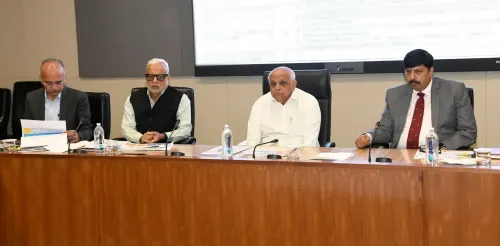
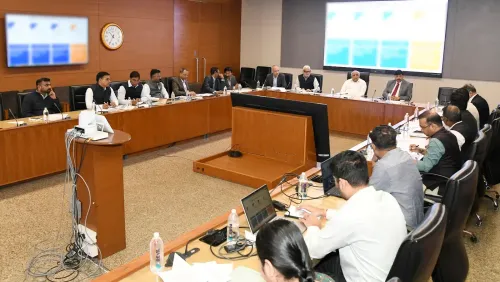
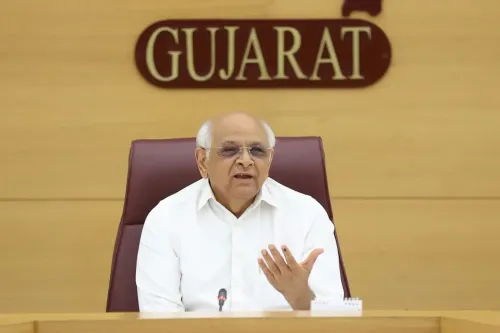
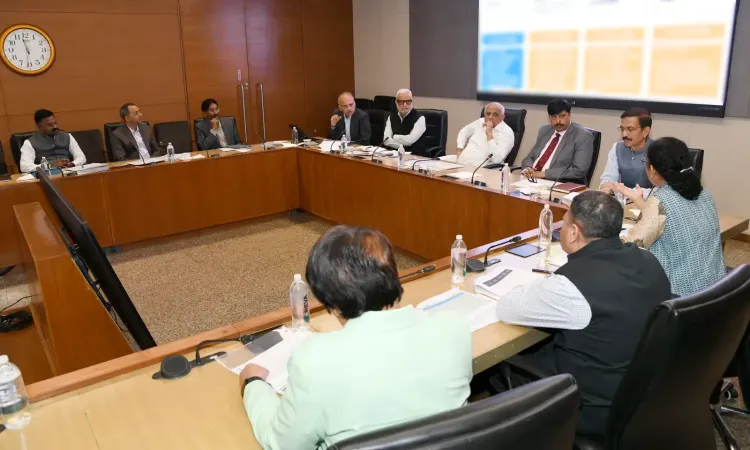
Gujarat Chief Minister Bhupendra Patel on Wednesday, 25 November 2026, began a series of departmental review meetings in Gandhinagar to assess implementation of the state's ₹4,08,053-crore Budget for 2026-27, focusing on ongoing work, financial targets and departmental performance. The first round covered the Education, Health, Home and General Administration departments, with the Chief Minister seeking detailed assessments of activities underway and achievements recorded so far in the current financial year.
Key Developments
The opening round was held in the state capital as the first segment of a wider review of work being carried out by various Gujarat government departments under the current year's Budget. Patel asked senior officials for a granular account of progress against budgetary targets and the status of schemes already in motion. He also provided guidance to the officials on the issues discussed during the meetings.
The departmental reviews are intended to assess how budgetary provisions are translating into implementation on the ground. The Chief Minister examined both the progress of ongoing activities and the extent to which the four departments have met their planned targets in the first year of the new Budget cycle.
What the 2026-27 Budget Provides
The exercise comes in the first year of implementation of Gujarat's ₹4,08,053-crore Budget for 2026-27, presented by Finance Minister Kanu Desai on 18 February. The outlay is 10.2 per cent larger than the previous year's allocation and has placed substantial financial provisions across education, healthcare, infrastructure and other sectors.
The state has allocated ₹51,796 crore for education, sports, arts and culture, while ₹24,920 crore has been earmarked for health and family welfare in 2026-27. The allocation for the police sector stands at ₹10,020 crore. Together, these heads form a large share of the social-sector and internal-security spend that Education, Health and Home are expected to convert into classrooms, hospital services and policing capacity.
Notably, Education, Health and Home were among the first departments called in, pointing to an early focus on high-outlay, citizen-facing portfolios. General Administration was also in the first batch, bringing the coordinating arm of the state secretariat into the same accountability frame. This comes amid the first year of a Budget that is more than a tenth larger than the last, which raises the bar for both fund absorption and physical delivery.
Who Attended the Review
The meetings were attended by Chief Secretary M K Das, Chief Principal Advisor to the Chief Minister Hasmukh Adhia, Additional Chief Secretaries of the concerned departments, including the Finance Department, Principal Secretary to the Chief Minister Sanjeev Kumar, Additional Principal Secretary Vikrant Pandey and Secretary Ajay Kumar.
The presence of the Finance Department's senior leadership alongside the Chief Secretary and the Chief Minister's own office indicates that the reviews are being treated as a financial-performance exercise as much as a programme-delivery check. That mix of administrative and fiscal oversight leaves departments little room to separate utilisation figures from actual works on the ground.
Impact on Citizens and What Follows
Large state Budgets often stall at the gap between allocation and expenditure. By personally chairing the first round, Patel is putting the four departments on notice that physical progress and financial achievement will be measured together. Education's ₹51,796-crore envelope and health's ₹24,920-crore outlay are among the largest social-sector commitments in the 2026-27 plan. Any lag in these two would be visible in schools, colleges, hospitals and public-health programmes across Gujarat.
The Home department's police allocation of ₹10,020 crore similarly ties Budget numbers to law-and-order capacity, infrastructure and personnel. Households that depend on government schools, public hospitals and policing are the first to feel the difference if targets are met — or if they slip. The government is expected to continue the exercise with reviews of other departments in the coming days, requiring remaining portfolios to place similar progress reports against Budget heads.
How quickly those departments are called in, and whether course corrections follow, will decide whether this round of meetings remains a stock-taking exercise or becomes a tool to tighten delivery through the rest of 2026-27.
Point of View
Health, Home and General Administration is the right sequence — these are the departments whose under-performance citizens notice first. The risk is familiar across Indian states: review meetings that produce minutes, not milestones. Unless physical and financial achievement against the ₹4.08 lakh crore outlay is tracked in public, this exercise will stay an internal ritual rather than accountability, and Gujarat's delivery brand will be tested by files, not by headlines.
NationPress
25 Nov 2026
Frequently Asked Questions
What did Gujarat CM Bhupendra Patel review in Gandhinagar?
He began a series of departmental review meetings on 25 November 2026 to assess implementation of Gujarat's ₹4,08,053-crore Budget for 2026-27. The first round covered Education, Health, Home and General Administration.
How large is Gujarat's 2026-27 Budget?
Gujarat's 2026-27 Budget is ₹4,08,053 crore, which is 10.2 per cent larger than the previous year's allocation. It was presented by Finance Minister Kanu Desai on 18 February.
Which departments were reviewed first by Bhupendra Patel?
The first round covered the Education, Health, Home and General Administration departments. Reviews of other departments are expected in the coming days.
How much has Gujarat allocated to education, health and police in 2026-27?
The state has allocated ₹51,796 crore for education, sports, arts and culture, ₹24,920 crore for health and family welfare, and ₹10,020 crore for the police sector. These are among the substantial sectoral provisions in the 2026-27 Budget.
Who attended the Gujarat departmental review meetings?
The meetings were attended by Chief Secretary M K Das, Chief Principal Advisor Hasmukh Adhia, Additional Chief Secretaries of the concerned departments including Finance, Principal Secretary to the CM Sanjeev Kumar, Additional Principal Secretary Vikrant Pandey and Secretary Ajay Kumar. Chief Minister Bhupendra Patel chaired the exercise and issued guidance to officials.