Gujarat Governor Devvrat urges sarpanches: service over status at Bharat AI Panchayat Mission
Synopsis
Gujarat Governor Acharya Devvrat used the first national workshop of the Bharat AI Panchayat Mission to deliver a dual message: that public office is worthless without service, and that chemical farming is silently poisoning India's food and water. With 14,231 gram panchayats now digitally connected in Gujarat alone, the push to merge AI governance with natural farming represents an unusual — and ambitious — convergence at the village level.
Key Takeaways
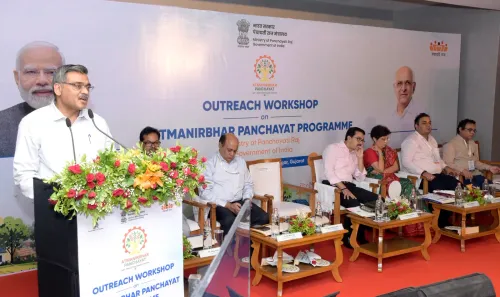
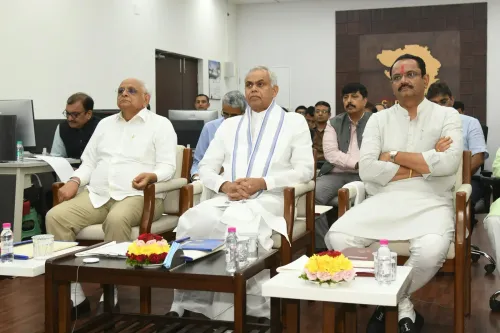
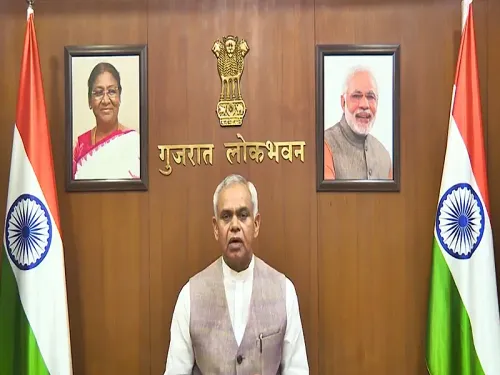
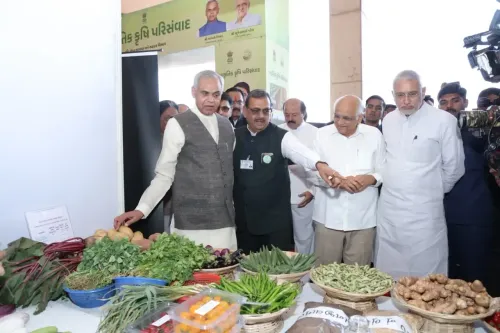
Gujarat Governor Acharya Devvrat addressed the first national workshop of the Bharat AI Panchayat Mission at Lok Bhavan, Gandhinagar on 1 August .
He cited research by 12 agricultural scientists showing 45% of nutrients in wheat and rice have been lost due to chemical farming.
Nitrous oxide from urea is 312 times more harmful than carbon dioxide, according to the Governor.
All 14,231 gram panchayats in Gujarat are connected through the e-Gram Vishwagram initiative, said Panchayati Raj Minister Rushikesh Patel .
The state government offers ₹900 per month to farmers for rearing indigenous cows under its natural farming push.
Three sarpanches received the AI Ambassador Award and tablets at the workshop.
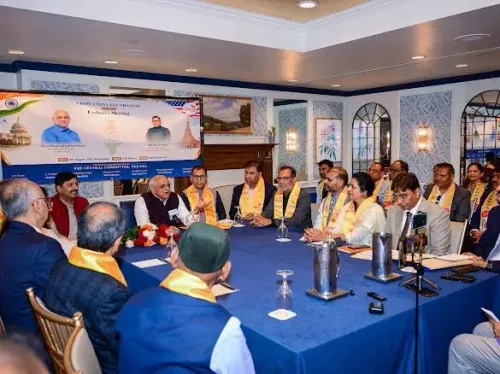
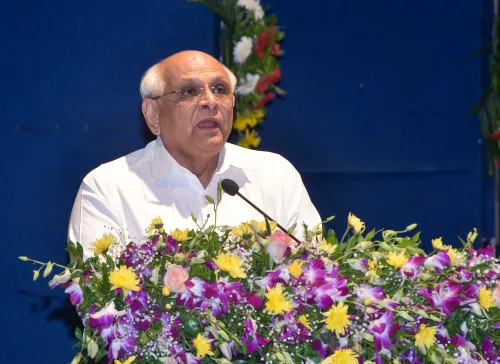
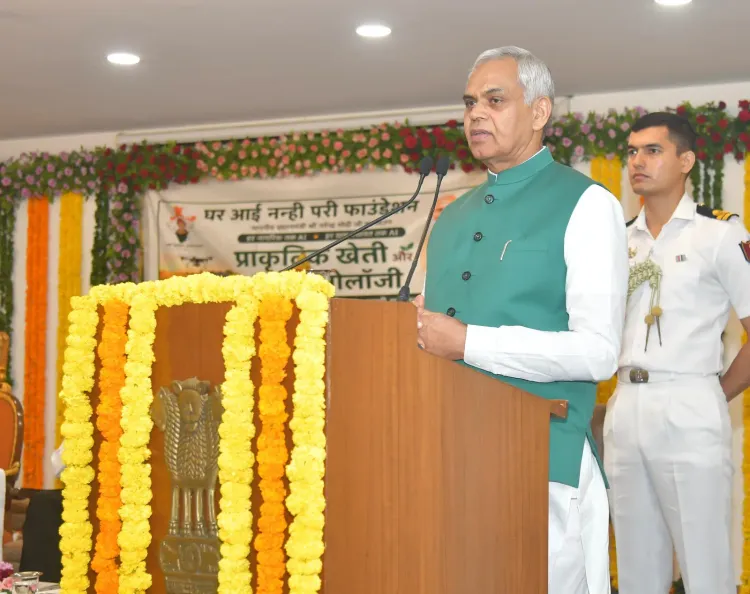
Gujarat Governor Acharya Devvrat on Saturday, 1 August called on village heads across the country to prioritise societal contribution over the prestige of public office, delivering the keynote address at the first national workshop of the Bharat AI Panchayat Mission held at Lok Bhavan, Gandhinagar. The event was organised by the Ghar AI Nanhi Pari Foundation.
Service Over Designation
Addressing sarpanches gathered for the workshop, Governor Devvrat underscored that public office derives its worth from what its holder does with it, not from the title itself. 'More important than a designation or position is what contribution we make to society while holding that position,' he said.
He drew on the legacies of Lord Shri Ram, Lord Shri Krishna, Sardar Vallabhbhai Patel, Mahatma Gandhi, and Bhagat Singh, arguing that these figures endure in public memory because of their deeds — not their designations — and urged sarpanches to aspire to a similar legacy through grassroots service.
Recognition for Ghar AI Nanhi Pari Foundation
The Governor praised Dr Abha Patel, founder of the Ghar AI Nanhi Pari Foundation, saying that her decision to leave a prestigious position to work for the protection, education, and welfare of girls in villages across the country was 'a significant service.' He noted that girls today are excelling across sectors and winning a large number of gold medals at universities, bringing recognition to India.
Chemical Farming: A Public Health Warning
Devvrat raised pointed concerns about the long-term consequences of chemical-intensive agriculture. Citing research by 12 agricultural scientists, he said approximately 45 per cent of the nutrients in wheat and rice produced in India had been lost due to chemical farming, while harmful substances such as arsenic had entered food crops.
He further noted that nitrous oxide released from urea is 312 times more harmful than carbon dioxide, contributing significantly to environmental pollution. Excessive use of chemical fertilisers, he added, has raised nitrate levels in groundwater to the point where it is no longer fit for drinking.
The Case for Natural Farming
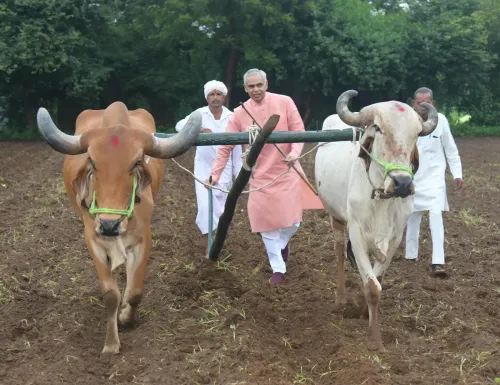
Describing natural farming as India's traditional agricultural system — rooted in indigenous cows and native earthworms — the Governor said it improves groundwater recharge, enhances soil organic carbon, raises productivity, and reduces cultivation costs 'to nearly zero.' He appealed to sarpanches to begin adopting natural farming within their own families before scaling it across their villages, referencing the National Mission on Natural Farming launched by Prime Minister Narendra Modi.
State Government's Panchayat Push
Panchayati Raj Minister Rushikesh Patel said the Prime Minister had transformed the role of panchayats through technology, noting that all 14,231 gram panchayats in Gujarat had been connected through the e-Gram Vishwagram initiative. He urged sarpanches to build small check dams and drainage channels to maximise rainwater recharge and to take up natural farming discussions during gram sabhas.
The state government, he added, provides financial assistance of ₹900 per month to farmers for rearing indigenous cows. During the workshop, the Governor administered a pledge on natural farming and empowered panchayats. Three sarpanches were honoured with the AI Ambassador Award and presented with tablets for their outstanding work. The event signals a broader push to bring AI-enabled governance tools to India's village-level administration.
Point of View
A public health indictment of chemical farming, and a technology-driven vision for panchayats — all in one sitting. The chemical farming data he cited, if accurate, represents a slow-moving nutritional and environmental crisis that rarely gets prime-time attention. The real question is whether the Bharat AI Panchayat Mission can operationalise these ideas at scale, or whether this remains an aspirational workshop moment. Connecting 14,231 panchayats digitally is infrastructure; changing farming behaviour is culture — and the gap between the two is where most rural schemes stall.
NationPress
16 Sept 2026
Frequently Asked Questions
What is the Bharat AI Panchayat Mission?
The Bharat AI Panchayat Mission is an initiative aimed at bringing artificial intelligence-enabled governance tools to India's village-level administration. Its first national workshop was held at Lok Bhavan in Gandhinagar on 1 August, organised by the Ghar AI Nanhi Pari Foundation.
What did Gujarat Governor Devvrat say about natural farming?
Governor Acharya Devvrat said natural farming — based on indigenous cows and native earthworms — improves groundwater recharge, boosts soil organic carbon, raises productivity, and reduces cultivation costs to nearly zero. He urged sarpanches to adopt it within their families first, then scale it across their villages.
Why is chemical farming a concern according to the Governor?
Citing research by 12 agricultural scientists, the Governor said 45% of nutrients in wheat and rice have been lost due to chemical farming, arsenic has entered food crops, and nitrous oxide from urea is 312 times more harmful than carbon dioxide. He also noted that nitrate levels in groundwater have risen to unsafe levels.
How many gram panchayats in Gujarat are digitally connected?
All 14,231 gram panchayats in Gujarat have been connected through the e-Gram Vishwagram initiative, according to Panchayati Raj Minister Rushikesh Patel, who credited Prime Minister Modi's push to transform panchayats through technology.
Who is Dr Abha Patel and what was her role at the event?
Dr Abha Patel is the founder of the Ghar AI Nanhi Pari Foundation, which organised the Bharat AI Panchayat Mission workshop. Governor Devvrat praised her for leaving a prestigious position to work for the protection, education, and welfare of girls in villages across India.