Gujarat lawyers end strike after govt assures Rent Bill judiciary clause will go

Synopsis
Gujarat's statewide lawyers' strike over the Rent Bill 2026 ended Tuesday after Deputy CM Harsh Sanghavi's government assured the Bar Council that the contentious clause shifting rent dispute powers from courts to executive authorities would be scrapped. A joint review committee forms Wednesday — but the real test is whether the revised bill delivers on that promise.
Key Takeaways
The Bar Council of Gujarat deferred its statewide lawyers' strike on 6 October 2026 after the state government gave assurances on the Gujarat Rent Bill, 2026 .
The government assured that the clause transferring rent dispute adjudication from the judiciary to executive authorities would be withdrawn.
A joint committee comprising bar body representatives will be constituted on Wednesday to examine the bill's provisions with the Law Secretary .
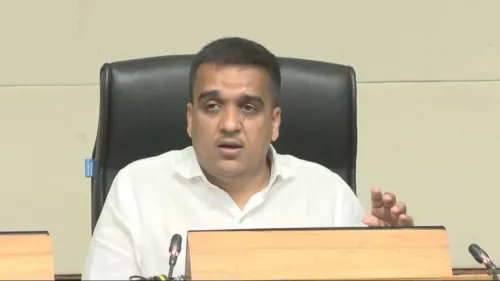
Deputy Chief Minister Harsh Sanghavi led the government side at the over one-hour meeting.
The Gujarat Assembly had passed the Gujarat Rent Bill, 2026 in September ; it proposes written rental agreements and caps security deposits at three months' rent .
Lawyers are set to resume court proceedings from Wednesday, 7 October 2026 .
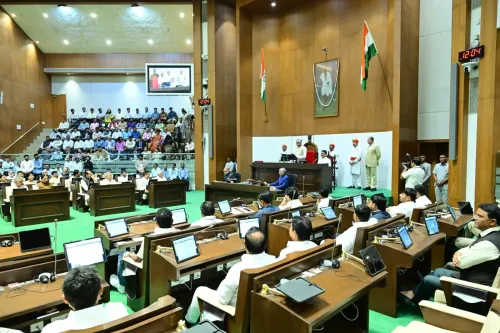
The Bar Council of Gujarat on Tuesday, 6 October 2026, announced that a statewide lawyers' strike over the Gujarat Rent Bill, 2026 has been deferred after the state government assured the legal fraternity that a controversial provision — which sought to transfer rent dispute adjudication from the judiciary to executive authorities — would be withdrawn. Lawyers across Gujarat are set to resume court proceedings from Wednesday.
Key Developments from Tuesday's Meeting
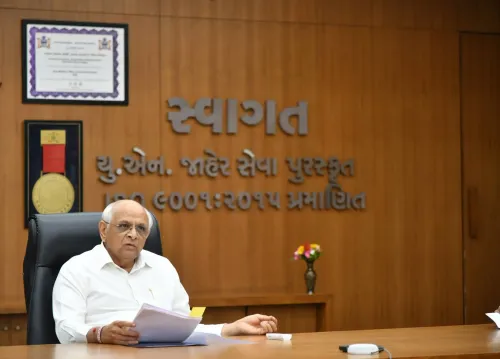
The breakthrough came after a meeting lasting more than an hour between representatives of the Bar Council of Gujarat, the Ahmedabad Bar Association, and the Ahmedabad Small Causes Court Bar Association on one side, and Deputy Chief Minister Harsh Sanghavi, Advocate General Kamal Trivedi, Chief Government Pleader Gurucharan Shirk, Law Department Secretary U.M. Bhatt, and the Revenue and Home secretaries on the other.
The government proposed forming a joint committee comprising representatives from all three bar bodies. The committee is to be constituted on Wednesday and will deliberate on the bill's provisions alongside the Law Secretary.
What the Government Assured
'The government assured that the amendment under which powers were proposed to be taken from the judiciary and given to the executive would be withdrawn and that the powers would remain with the court and the judiciary,' the Bar Council of Gujarat said in a statement.
The committee will examine the shortcomings in the Gujarat Rent Bill, 2026 and submit representations to the government for necessary amendments. The government, in turn, has committed to considering these representations and taking steps to resolve the outstanding concerns.
What the Disputed Bill Proposes
The Gujarat Assembly passed the Gujarat Rent Bill, 2026, in September. The legislation, as drafted, provides for a Rent Authority headed by an officer not below the rank of Deputy Collector or Assistant Municipal Commissioner. Rent Courts, under the framework, would be headed by officers not below the rank of Additional Collector or Deputy Municipal Commissioner.
Appeals would be heard by Rent Tribunals headed by District Judges or Additional District Judges. The bill also mandates written rental agreements and caps security deposits at three months' rent.
Lawyers' core objection centred on the proposed role of executive authorities in adjudicating rent disputes — a function traditionally vested in judicial forums. The Bar Council had argued the shift would place tenancy matters before an already overburdened bureaucracy, effectively bypassing the courts.
Scope of the Lawyers' Agitation
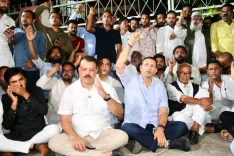
The Bar Council of Gujarat had declared an indefinite statewide abstention from court proceedings on 5 October, bringing proceedings to a halt across the state. The Gujarat High Court Advocates' Association separately announced a two-day boycott of court work on 5 and 6 October in solidarity with the agitation.
Notably, Tuesday's meeting also touched on the proposed Advocate Protection Act and grievances of notaries concerning the issuance of tickets — indicating that the legal community's concerns with the government extend beyond the Rent Bill alone.
What Happens Next
With the joint committee to be formally constituted on Wednesday, the immediate crisis has been defused. However, the bill's final shape will depend on whether the government follows through on its assurance to strip out the executive adjudication clause and acts on the committee's recommendations. The legal community will be watching closely for whether the revised draft addresses their structural concerns before the legislation is notified.
Point of View
But the core tension in the Rent Bill — whether rent disputes belong before courts or collectors — has not been resolved, only deferred. The lawyers' objection is structurally sound: shifting adjudicatory functions to executive authorities with active administrative responsibilities risks both procedural fairness and enforcement delays. The committee mechanism is a sensible safety valve, but committees in India have a well-documented tendency to dilute rather than resolve. The real question is whether the government will formally amend the bill before notification, or rely on administrative circulars that could be reversed without legislative scrutiny.
NationPress
7 Oct 2026
Frequently Asked Questions
Why were Gujarat lawyers on strike over the Rent Bill 2026?
Gujarat lawyers went on strike because the Gujarat Rent Bill, 2026 proposed transferring adjudication of rent disputes from judicial forums to executive authorities — including officers ranked at Deputy Collector level. The Bar Council of Gujarat argued this would undermine the role of courts and place tenancy matters before an already overburdened bureaucracy.
What assurance did the Gujarat government give to end the strike?
The government assured the Bar Council of Gujarat that the amendment proposing to shift adjudicatory powers from the judiciary to the executive would be withdrawn, keeping those powers with the courts. It also agreed to form a joint committee with bar body representatives to review the bill's provisions.
What is the joint committee that has been proposed?
The joint committee will comprise representatives of the Bar Council of Gujarat, the Ahmedabad Bar Association, and the Ahmedabad Small Causes Court Bar Association. It is to be constituted on Wednesday, 7 October 2026, and will examine the bill's shortcomings alongside the Law Secretary before submitting recommendations to the government.
What are the key provisions of the Gujarat Rent Bill, 2026?
The bill, passed by the Gujarat Assembly in September 2026, creates a three-tier framework — Rent Authorities, Rent Courts, and Rent Tribunals — with the top tier headed by District Judges or Additional District Judges. It also mandates written rental agreements and caps security deposits at three months' rent.
When will lawyers in Gujarat resume court work?
The Bar Council of Gujarat confirmed that lawyers will resume court proceedings from Wednesday, 7 October 2026, following the government's assurances and the decision to defer the indefinite statewide strike that began on 5 October.