Gujarat Assembly Approves Bill for Faster Justice for University Staff
Synopsis
In a significant legislative move, the Gujarat Assembly has passed the Gujarat Educational Institutions Service Tribunal (Amendment) Bill-2026, promising accelerated dispute resolution for educational employees. This reform is set to enhance accountability and efficiency within the state's educational framework.
Key Takeaways
Faster resolution of disputes for university employees.
All state universities will now fall under the tribunal's jurisdiction.
Strengthens accountability and efficiency in the education sector.
Allows for the inclusion of additional universities as needed.
Reduces the burden on traditional courts.
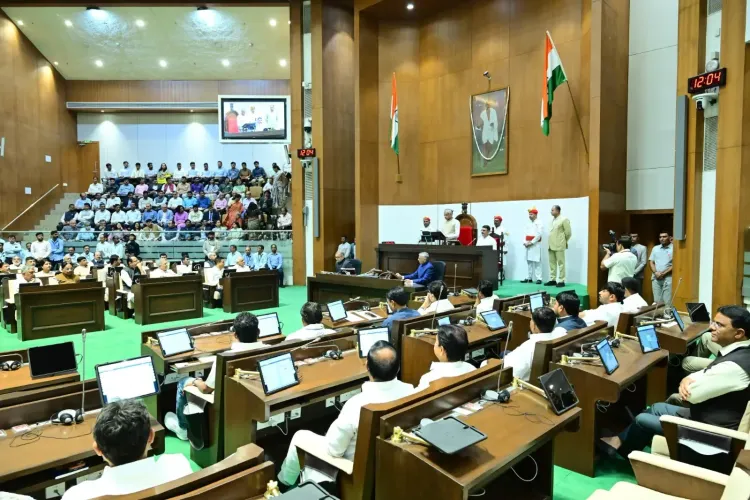
Gandhinagar, March 25 (NationPress) The Gujarat Legislative Assembly has unanimously approved the Gujarat Educational Institutions Service Tribunal (Amendment) Bill-2026, which aims to expedite the resolution of disputes involving both academic and non-academic staff within educational institutions.
Education Minister Pradyuman Vaja emphasized that this legislation will extend the tribunal's jurisdiction to include all state universities, thereby ensuring that service-related and institutional disputes are addressed promptly.
“The enactment of this bill guarantees that university employees will have access to swift justice right at their doorstep,” he remarked.
The Minister pointed out that incorporating all universities under the tribunal’s oversight will fortify the justice framework in the educational domain, alleviate the court's workload, and boost transparency.
Vaja clarified that the 2023 Gujarat Public Universities Act, which unified various university-related regulations, led to the annulment of previous acts pertaining to individual universities.
“Consequently, these universities were excluded from the jurisdiction of the Gujarat Educational Institutions Service Tribunal Act, 2006. This amendment reinstates their inclusion under the tribunal, enhancing accountability and operational efficiency within the higher education sector,” he noted.
The Minister added that the legislation also allows the government the flexibility to notify the inclusion of additional universities when necessary.
In contrast, measures have been instituted to guarantee that no university can be removed from the tribunal’s domain without governmental consent.
Moreover, the bill permits the state government, via Gazette notification, to revoke any enactment listed in Schedule-1 of the law, while respecting university autonomy.
Vaja underlined that subjecting universities to the tribunal’s authority would standardize decisions and decrease the burden on conventional courts.
“Parties can present their cases before the tribunal either personally or through legal representatives, ensuring timely and equitable justice for employees at all levels, extending from primary institutions to universities,” he asserted.
Since 2014, the Educational Tribunal has effectively resolved around 3,650 cases.
In instances where claimants were entitled to benefits, orders were issued accordingly, whereas applications lacking entitlement were dismissed, the Minister concluded.
Point of View
The passage of the Gujarat Educational Institutions Service Tribunal (Amendment) Bill-2026 represents a commendable effort to streamline dispute resolution in the education sector. By extending the tribunal’s jurisdiction to all state universities, the Assembly is enhancing accountability and efficiency, which is crucial for upholding the rights of educational employees.
NationPress
24 Sept 2026
Frequently Asked Questions
What is the Gujarat Educational Institutions Service Tribunal (Amendment) Bill-2026?
The bill aims to expedite the resolution of disputes involving academic and non-academic staff within educational institutions across Gujarat.
How will the bill impact university employees?
It will ensure quicker access to justice for university employees by bringing all state universities under the tribunal's jurisdiction.
What changes does this bill introduce?
The bill reinstates the authority of the tribunal over all universities, enhancing accountability and efficiency in dispute resolution.
Can universities be removed from the tribunal's jurisdiction?
No university can be removed from the tribunal's jurisdiction without the government's authority, ensuring continuity in oversight.
How many cases has the Educational Tribunal resolved since 2014?
The tribunal has resolved approximately 3,650 cases since its establishment in 2014.